Definition & Meaning
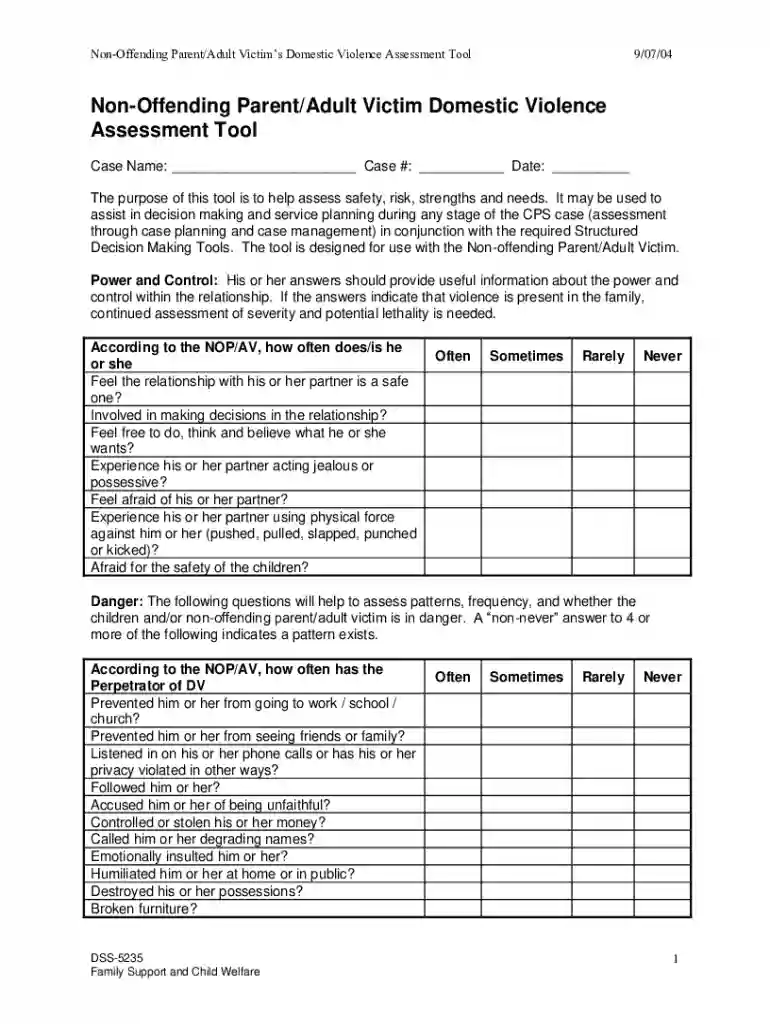
The DSS-5235 Non-Offending Parent Adult Victim Domestic Violence Assessment Tool is a crucial document designed to assist in evaluating the conditions and needs of individuals who have experienced domestic violence yet are not the perpetrators. This assessment tool is vital for understanding safety risks, relationship dynamics, and the impact of violence on children within the context of Child Protective Services (CPS) investigations. By offering structured questions, it helps professionals assess the non-offending parent's strengths, needs, and risk factors specific to their situation.
Importance of the Assessment Tool
- Evaluates Safety Risks: Identifies potential lethality and dangerous patterns in a domestic setting.
- CPS Process Alignment: Helps align evaluations with procedures set by Child Protective Services.
- Focus on Children: Examines the impact of domestic violence on any children involved.
- Victim’s Help-Seeking History: Investigates past attempts to seek help to better plan future interventions.
How to Use the DSS-5235 Non-Offending Parent Adult Victim Domestic Violence Assessment Tool
Professionals should approach the DSS-5235 with care, focusing on transparency and empathy. Here's a structured way to use the tool effectively:
Initial Steps
- Familiarize: Understand the tool’s sections to ensure clarity on the objectives.
- Context Establishing: Explain the tool's purpose and process to the interviewee.
Conducting the Assessment
- Interview Setup: Create a safe and private environment for discussion.
- Open Communication: Encourage honest responses without leading questions.
- Use Structured Sections: Follow each section to ensure a comprehensive assessment.
Post-Assessment
- Review Findings: Document all observations and insights meticulously.
- Collaboration: Discuss findings with appropriate authorities or counseling services.
Key Elements of the DSS-5235 Non-Offending Parent Adult Victim Domestic Violence Assessment Tool
This tool consists of various critical elements:
Safety and Risk Analysis
- Power Dynamics and Control: Analysis of how control and power manifest in relationships.
- Indicators of Danger: Specific signs that point to imminent threats.
Impact on Children
- Child Welfare Considerations: How domestic scenarios affect children's well-being.
- Support Systems: Identification of necessary support for children involved.
Historical Context
- Help-Seeking Patterns: Records of past assistance sought by the victim.
- Family Dynamics: Understanding of broader family interactions and influences.
Steps to Complete the DSS-5235 Non-Offending Parent Adult Victim Domestic Violence Assessment Tool
To fill out the DSS-5235 effectively, follow a systematic approach:
Preparation
- Gather Background Information: Understand the context and specific circumstances of the case.
- Ensure Sensitivity: Prepare to approach sensitive topics with care.
Execution
- Detailed Documentation: Record answers precisely in the provided sections.
- Follow-up Questions: Use supplementary questions where clarity is needed.
Finalization
- Review and Sign-off: Ensure all parts are completed and verified.
- Feedback Loop: Provide feedback on the process for future improvements.
Professionals in Child Protective Services
- Caseworkers: Undertake assessments to ensure child and victim safety.
Social Workers and Counselors
- Support Providers: Utilize the tool to plan interventions and provide targeted assistance.
Law Enforcement Agents
- Collaboration with CPS: Help in understanding the dynamics in domestic violence cases.
Legal Use of the DSS-5235 Non-Offending Parent Adult Victim Domestic Violence Assessment Tool
Using this tool legally requires adherence to specific guidelines and protocols:
Compliance with CPS Policy
- Standard Procedures: Must be followed to ensure the tool's results are valid.
- Confidentiality Requirements: Maintain strict confidentiality of the victim's data.
Ethical Considerations
- Informed Consent: Secure consent from the individual being assessed.
- Non-Bias Approach: Ensure the assessment is free from prejudice or preconceptions.
Examples of Using the DSS-5235 Non-Offending Parent Adult Victim Domestic Violence Assessment Tool
Case Study: Single Parent Scenario
- A mother, previously a victim of domestic violence, undergoes evaluation while deciding child custody matters. The tool assists in presenting a clear picture of the home environment and the potential impact on her children.
Scenario Analysis
- A non-offending adult responsible for elderly care is assessed to understand potential risks to both the victim and the dependents.
Important Terms Related to DSS-5235 Non-Offending Parent Adult Victim Domestic Violence Assessment Tool
Terminology
- Non-Offending Parent: The adult victim not responsible for perpetrating violence.
- Dynamic Risk Factors: The changing variables that might influence the level of danger.
- Protective Factors: Elements that can safeguard victims and children from further harm.
State-Specific Rules for the DSS-5235 Non-Offending Parent Adult Victim Domestic Violence Assessment Tool
Legal requirements and procedures can vary by state:
Compliance Considerations
- State Regulations: Familiarize with specific state rules that may govern the use of such assessment tools.
- Local CPS Guidelines: Ensure alignment with local Child Protective Service policies when applying the tool.
Adaptation Needs
- Cultural Sensitivity: Adapt the assessment to respect cultural norms and values within different communities.
Each of these blocks is designed to provide comprehensive support to professionals using the DSS-5235 Non-Offending Parent Adult Victim Domestic Violence Assessment Tool in real-world scenarios, ensuring proper assessment and protection for victims.