
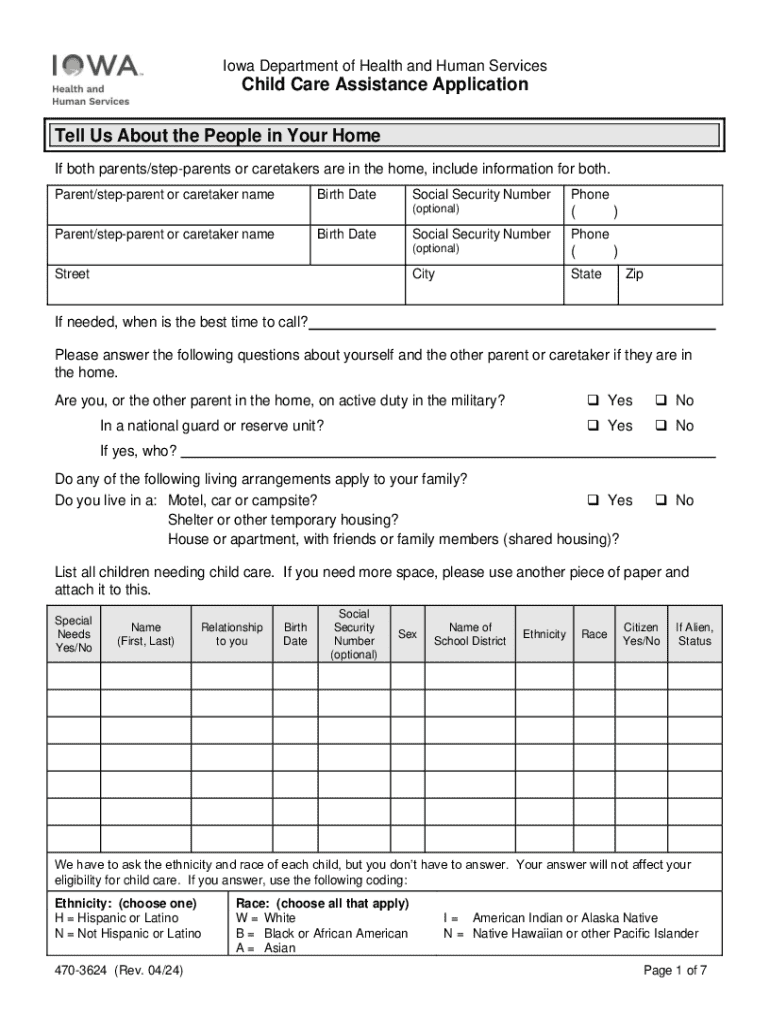







Definition and Purpose of Child Care Assistance from Health and Human Services
Child care assistance provided by the Health and Human Services department is a program designed to support families who need help covering child care expenses. This program is targeted primarily at low-income families, helping ensure that children receive proper care while parents or guardians are gainfully employed, seeking employment, or undergoing necessary training. It aims to facilitate work-life balance and promote child safety and well-being by providing financial assistance to eligible households.
Key Benefits
- Affordability: Eases the financial burden of child care costs for eligible families.
- Access to Quality Care: Enables children to access high-quality child care settings which can enhance their development.
- Work Support: Assists parents in maintaining steady employment by securing safe, reliable child care services.
Eligibility Criteria for Receiving Child Care Assistance
Eligibility for child care assistance is determined based on several criteria, primarily focusing on family income, employment status, and specific state guidelines. Each state may have unique variations in eligibility requirements; however, they typically include:
- Income Level: Families must fall below a specified income threshold, which varies by state and household size.
- Employment Status: Parents or guardians are generally required to be employed, actively seeking employment, or participating in an approved educational or training program.
- Residency Requirements: The family must reside in the state where they apply for assistance.


Additional Considerations
- Special Circumstances: Some programs consider cases where family members are unable to care for children due to disability or illness.
- Child's Age: Assistance is often provided for children up to a certain age limit, typically 12 years.
How to Use Child Care Assistance Programs
Once deemed eligible, families can utilize child care assistance in various ways to cover costs associated with approved child care providers. The assistance can be applied to:
- Daycare Centers: Payments can cover fees charged by licensed daycare facilities.
- In-Home Care: Families may also use the funding for certified in-home child care providers.
- After-School Programs: Assistance can extend to after-school program costs, ensuring children are cared for beyond regular school hours.
Steps to Complete the Application Form
Completing the Child Care Assistance application form involves several detailed steps, ensuring all required information is provided accurately to facilitate a smooth review and approval process.
- Gather Necessary Documents: Before starting the application, collect essential documents such as proof of income, residency, and employment status.
- Complete Personal Information: Enter details about household members, including adults and children, covering ages, living arrangements, and care needs.
- Provide Income Details: List all sources of household income and any additional financial support. This includes salary slips, social security benefits, and any additional financial assistance.
- List Child Care Providers: Identify potential or current child care providers, including pertinent details like facility names and contact information.
- Submit the Application: Send the completed form and supporting documents through your state's designated submission method, which could be online, via mail, or in-person.
Important Terms Related to Child Care Assistance
Understanding key terminology associated with child care assistance can aid in navigating the application process and program use.
- Co-Payment: The portion of child care costs that a family must cover, even with assistance.
- Sliding Fee Scale: A variable fee structure that adjusts based on family income.
- Voucher System: A method of distributing assistance where families receive vouchers to pay for child care services.
Key Elements of the Application Form
The Child Care Assistance application form is comprehensive, aimed at capturing all necessary data to evaluate eligibility. Key components include:
- Household Composition: Information about the family structure and dependents.
- Employment Information: Details about the employment status of each working household member.
- Income Verification: Required documentation proving household income.
- Child Care Needs: Specifics about the type and hours of child care needed.
Legal Use of the Child Care Assistance Program
Participation in the child care assistance program involves adhering to legal and procedural guidelines to ensure compliance and continued support.
- Accurate Reporting: Families must provide truthful and up-to-date information about their financial and living situations.
- Change Notification: Applicants must notify authorities of any significant changes in income, employment, or household composition that could affect eligibility.
- Authorized Spending: Funds must be used solely for approved child care services.
State-Specific Differences in Child Care Assistance
Child care assistance programs can vary widely from one state to another, with differences in eligibility criteria, application procedures, and funding availability.
Examples of State Variations
- Income Limitations: Varies significantly across states based on local economic conditions and policy decisions.
- Funding Availability: The amount and duration of assistance can differ based on state budgets and allocations.
Understanding these variances can be essential for applicants, ensuring they comply with their state's specific requirements and maximize the benefits available to them.




