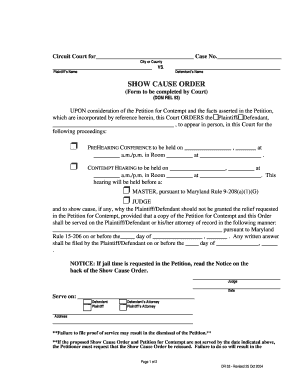
Definition & Purpose of the Michigan FIS 2053 Form
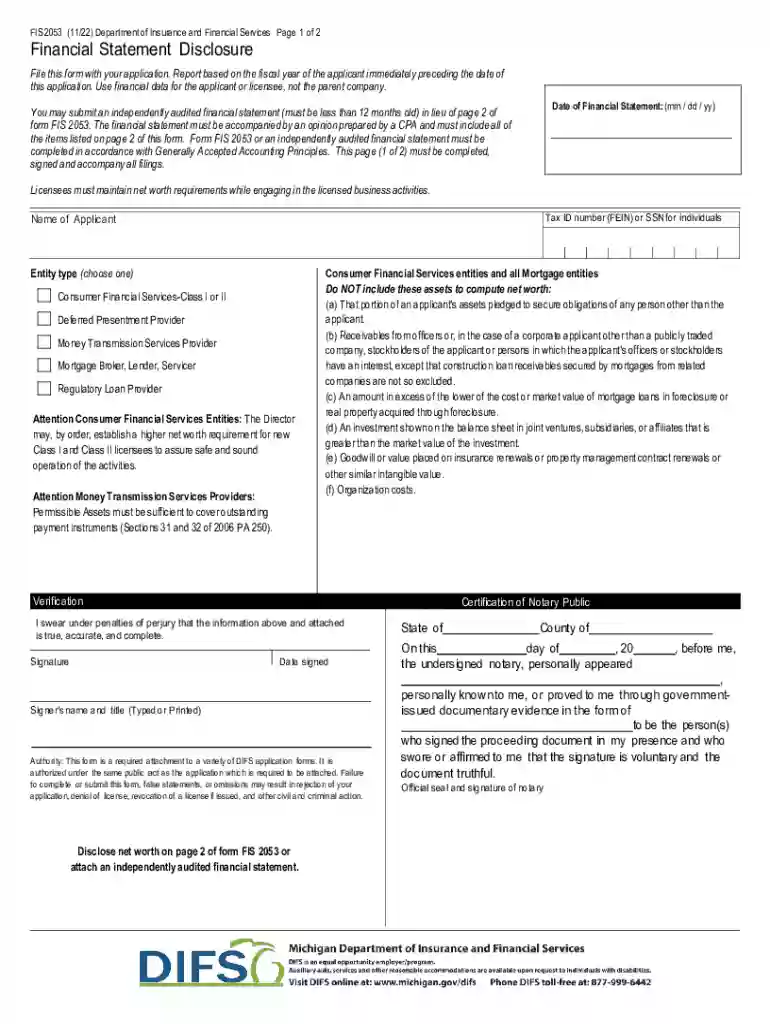
The Michigan FIS 2053 form, officially named the Department of Insurance and Financial Services Statement, is a financial disclosure document required by Michigan's Department of Insurance and Financial Services (DIFS). It serves to provide comprehensive financial information as part of an application process for certain financial services or insurance-related activities within Michigan. Notably, it collects detailed data on an applicant's fiscal standing, compliance with net worth requirements, and assessment of financial transparency, ensuring adherence to state laws and regulations.
Key Elements of the Form
- Applicant Information: Includes personal or business details like name, contact information, and business identification numbers.
- Financial Data: Requires financial figures from the most recent fiscal year to assess net worth and fiscal health.
- Asset Disclosure: Specifies which assets can be included in calculations and requires a declaration of their value.
- Notarization Section: A part of the form is dedicated to notarization, verifying the authenticity and accuracy of the presented information.
Steps to Complete the Michigan FIS 2053 Form
Completing the FIS 2053 requires attention to detail and accurate financial reporting. Here's a step-by-step guide to assist you:
- Gather Required Financial Documents: Collect previous year financial statements, audit reports, and any supporting financial documents.
- Fill Out Applicant Information: Input all necessary business or personal information prominently featured on the form.
- Report Financial Data: Enter financial figures accurately, ensuring they match supporting documentation.
- Verify Asset Information: Ensure assets are categorized correctly and reported as per guidelines.
- Sign and Notarize: Once completed, the form needs signing in the presence of a notary public for validation.
- Review and Submit: Double-check for accuracy and completeness before submission to the DIFS by the specified method.
Importance and Benefits of Using the Michigan FIS 2053 Form
Fulfilling the Michigan FIS 2053 requirements is crucial for anyone seeking to engage in regulated financial services in the state. Its completion ensures:
- Regulatory Compliance: Confirms adherence to Michigan financial regulations and standards set by the state.
- Financial Transparency: Provides a clear and documented picture of an applicant's financial status, fostering trust with the regulatory body.
- Operational Eligibility: Completes a vital step in securing permits or approvals necessary for conducting certain financial or insurance services legally in Michigan.
Legal Use and Regulations Surrounding the Form
State-Specific Rules
Michigan's legal framework mandates that all applicants must use the FIS 2053 form to report their financial reports to ensure regulators have accurate information. Some critical legal aspects include:
- Net Worth Requirements: Applicants must ensure they meet specific net worth criteria before submitting the form.
- Audit Submissions: An option is available to submit audited financial statements in lieu of completing certain form sections.
- Non-Compliance Penalties: Failure to submit accurate or timely forms could result in penalties or disqualification from application or renewal processes.
Entities That Typically Use the Michigan FIS 2053 Form
While various applicants might be required to use the FIS 2053 form, common users include:
- Insurance Companies: Businesses seeking licensure or renewals within Michigan's insurance industry.
- Financial Service Providers: Entities requiring state approval to conduct financial activities or services.
- Corporate Applicants: Companies needing to establish regulatory compliance for financial operations within the state.
Important Terms and Definitions
Key Terminology
Understanding the terminology within the Michigan FIS 2053 form is crucial for accurate completion:
- Net Worth: The total assets minus total liabilities, reflecting the company’s financial standing.
- Audit: An independent examination of financial information, often used in substantiating form data.
- Notarization: The official act of a notary public in certifying the validity of signatures on the form.
Filing and Submission Methods
Applicants can submit the FIS 2053 form through several methods depending on convenience, including:
- Online Submission: Accessible through specific portals, allowing for real-time submission and processing.
- Mail: Traditional mailing options remain available, requiring additional lead time for delivery and processing.
- In-Person: Direct submission at designated DIFS offices, beneficial for obtaining immediate confirmation of receipt.
Software Compatibility
The FIS 2053 can integrate with various software applications often used by businesses to streamline financial reporting:
- Accounting Software: Tools like QuickBooks can aid in gathering accurate financial data for form completion.
- Document Management Systems: Platforms such as DocHub allow for digital signature capture and form edits directly on the form.
Each step and feature of the Michigan FIS 2053 form has been designed to streamline the application process, ensuring efficient and consistent reporting for all applicants. By paying careful attention to requirements and instructions, applicants can successfully navigate the compliance maze and achieve the necessary regulatory approvals for their financial operations within Michigan.