







Definition & Meaning
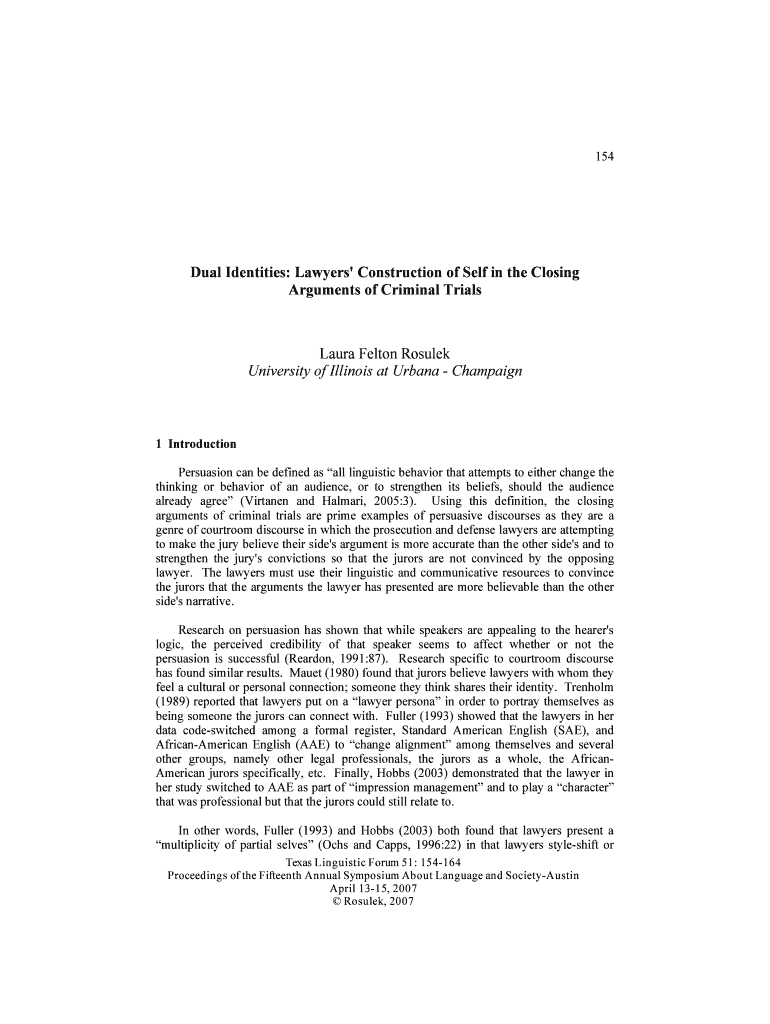
The concept of "Dual Identities: Lawyers' Construction of Self in the Closing" refers to the strategies that lawyers employ during closing arguments in criminal trials to craft dual personas. This involves presenting themselves as both authoritative figures and relatable individuals to connect effectively with jurors. By navigating these dual identities, lawyers aim to influence juror perceptions and decisions through a blend of authority and empathy.
Key Elements of Dual Identities
The construction of these dual identities hinges on several key elements:
- Narrative Techniques: Lawyers use storytelling to present a coherent and persuasive argument that resonates with the jurors' emotions and logic.
- Speech Acts: Effective closing arguments include promises, assertions, and calls to action that reinforce the lawyer's intended message.
- Identity Alignment: Aligning with the values and beliefs of the jurors helps in building trust and credibility.
These elements work together to create a balanced presentation where the lawyer appears both knowledgeable and understanding.
How to Use Dual Identities: Lawyers' Construction of Self in the Closing
To effectively use this dual construction of self, lawyers can follow these steps:
- Prepare Your Narrative: Develop a compelling story that ties evidence to the desired outcome.
- Adopt Different Discursive Roles: Shift between being a narrator, interlocutor, and character to maintain engagement.
- Balance Authority with Relatability: Use legal jargon judiciously while also employing everyday language that jurors understand.
- Incorporate Emotional Appeals: Apply emotional storytelling to appeal to the jurors' values and beliefs.
This structured approach ensures that the lawyer presents a persuasive and authentic persona throughout the closing.
Why Should Lawyers Use Dual Identities in Closings
Utilizing dual identities in closing arguments is crucial for several reasons:
- Enhanced Persuasiveness: By connecting with jurors on both emotional and logical levels, lawyers can present more compelling arguments.
- Building Credibility: Demonstrating both expertise and empathy helps in establishing credibility and trust.
- Increased Juror Engagement: A balanced approach keeps jurors engaged and attentive, increasing the likelihood of favorable decisions.
These benefits underscore the importance of adopting a dual identity approach during closing arguments to ensure effective advocacy.
Steps to Complete Dual Identities Construction
To construct effective dual identities during closing, a structured plan is essential:
- Evaluate Case Evidence: Analyze all evidence to determine which aspects align with emotional appeals and logical reasoning.
- Develop Key Arguments: Formulate arguments that highlight your dual roles effectively.
- Practice Discursive Shifts: Rehearse transitions between different roles to maintain flow and authenticity.
- Solicit Feedback: Gather input from colleagues or mentors to refine your approach before the trial.
Following these steps helps lawyers present a well-rounded persona that can sway jury decisions in their favor.
Important Terms Related to Dual Identities
Understanding certain terms is essential when discussing dual identities:
- Narrator Role: The lawyer as a storyteller, weaving facts into a cohesive narrative.
- Interlocutor Role: Engaging with jurors directly to address concerns or questions.
- Character Role: Portraying oneself as part of the narrative to create a personal connection.
Each of these roles contributes to a comprehensive dual identity strategy during closing arguments.
Legal Use of Dual Identities in Closings
The legal use of dual identities is permissible and strategic:
- Adherence to Ethical Standards: Lawyers must maintain ethical boundaries while leveraging dual identities to ensure fairness.
- Compliance with Procedural Rules: Arguments must align with courtroom procedures and judicial expectations.
- Focus on Factual Accuracy: Even while crafting narratives, factual integrity is paramount.
Employing dual identities within these legal frameworks ensures that the strategy remains a powerful yet ethical advocacy tool.
Examples of Using Dual Identities
Consider a scenario where a defense attorney employs dual identities:
- Authoritative Approach: Presents forensic evidence with technical expertise to assert the defendant's innocence.
- Relatable Persona: Shares a heartfelt story about the defendant's character to foster empathy and understanding among jurors.
These examples demonstrate how effectively shifting between identities can impact jury perceptions and decision-making.




