







Definition & Context of the Study
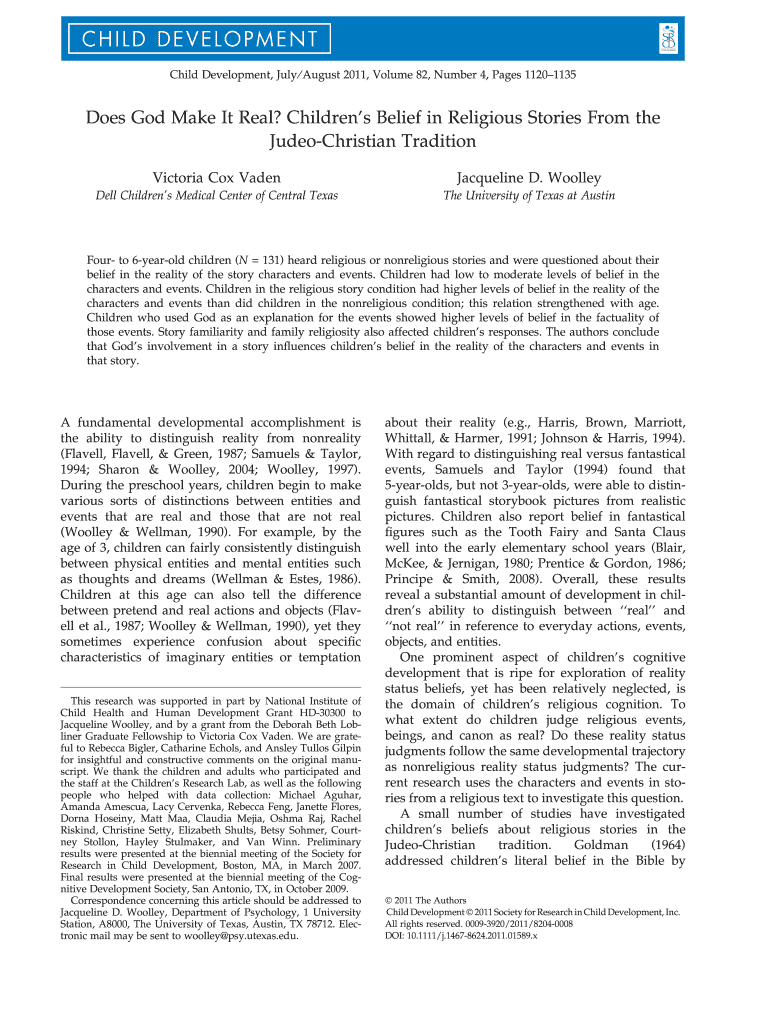
The "Does God Make It Real? Children's Belief in Religious Stories From the Judeo-Christian Tradition - ute" is a study exploring the belief levels of children in religious narratives. Conducted with children aged four to six, it examines how they perceive the reality of characters and events from Judeo-Christian stories. The research highlights that children's belief levels vary, with more exposure to religious contexts increasing their belief in these narratives. This study provides insight into the cognitive and cultural factors influencing how young children distinguish between fiction and reality.
How to Use the Study Findings
Educators and parents can apply the findings from this study to understand better and support children's cognitive development concerning religious stories. By recognizing the factors that influence belief, such as age, familiarity with the narratives, and family religiosity, adults can guide children more effectively. For example, introducing religious stories while discussing their symbolic meanings may help children balance faith with an understanding of reality. Schools and religious educators may also use these findings to tailor their teachings to suit the developmental stages of young children.
Steps to Analyze the Study Data
To analyze the study's data effectively:
- Review the participant demographic details, noting age and religious background variations.
- Examine the methods used to assess belief levels, including any interviews or questionnaires.
- Compare belief levels between children exposed to religious versus nonreligious stories.
- Consider factors such as God's involvement and story familiarity as potential influencers on belief levels.
- Analyze trends to understand how belief evolves with age and exposure.
Why the Study is Significant
This research is significant in highlighting the psychological and cultural factors that shape belief in religious contexts among children. It underscores the role of storytelling in conveying moral and religious education, providing valuable insights for parents, educators, and religious leaders. Understanding how children interpret these stories can lead to improved educational strategies that respect their developmental stage and foster critical thinking alongside faith education.
Key Influences on Children's Beliefs
Several factors influence children's belief in religious narratives:
- Age: Older children show a more nuanced understanding of story reality.
- Exposure: Frequent exposure to religious stories tends to increase belief levels.
- Family Influence: Children from more religious households exhibit higher belief levels.
- Story Familiarity: Familiar narratives increase belief, suggesting comfort with known stories.
- Perception of God's Role: Stories featuring active divine involvement often lead to increased belief.
Important Terminology
Understanding key terms is essential for interpreting study findings:
- Belief Levels: Refers to how strongly children accept stories as real.
- Cognitive Development: The process of children developing thinking abilities.
- Judeo-Christian Stories: Texts and narratives from Jewish and Christian traditions, often with moral or religious lessons.
- Symbolism: The use of symbols to represent ideas or qualities, especially in religious contexts.
Examples of Story Influence in Real Life
To illustrate how religious stories influence children's beliefs:
- In households where biblical stories are a significant part of daily life, children may demonstrate higher belief levels in their reality.
- Schools incorporating Bible stories into their curriculum might notice differing belief levels depending on how these stories are presented—purely historical versus factual.
Variations in Story Reception
Children's reception of religious stories can vary widely based on several aspects:
- Cultural Background: Different cultural interpretations of Judeo-Christian narratives can shape belief levels.
- Educational Settings: Public vs. religious schools may present stories differently, affecting belief.
- Parental Guidance: Active discussion about story meanings can lead to deeper understanding or skepticism toward story literalness.
Conclusion: Applications of Study Insights
The findings from this study offer a roadmap for educators, parents, and religious leaders to engage with children on religious stories meaningfully. By aligning story discussions with cognitive development stages, adults can nurture an environment where children learn to appreciate the value of these narratives beyond their literal interpretation. This balanced approach can help integrate religious storytelling into broader educational objectives, fostering both faith and critical thinking skills.




