Definition and Purpose of the Outpatient Laboratory Order
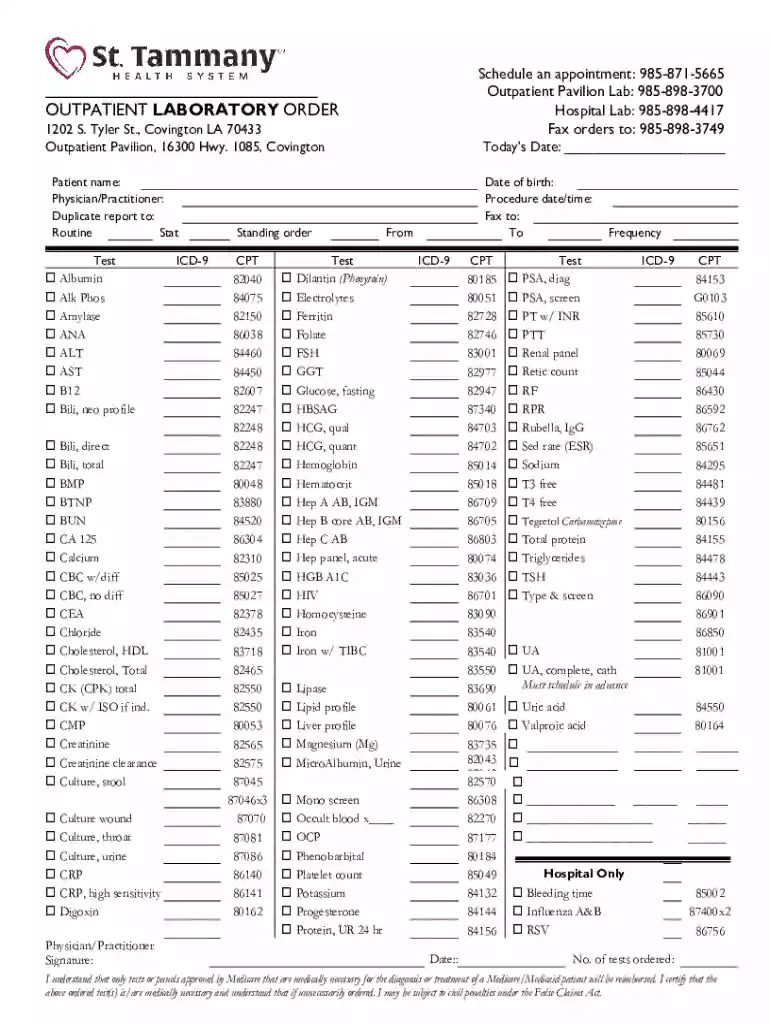
An outpatient laboratory order is a formal request used in the medical field to schedule diagnostic laboratory tests for patients who do not require hospital admission. This form enables healthcare providers to prescribe, manage, and document necessary lab tests with precision and legal compliance. Medical practitioners use it to communicate specific patient needs to laboratory staff, ensuring the prescribed tests are conducted accurately and efficiently. The outpatient laboratory order is crucial for effective patient care as it serves as a detailed roadmap for both the laboratory technicians and healthcare providers.
Steps to Complete the Outpatient Laboratory Order
- Patient Information: Start by entering the patient’s full name, date of birth, and contact details to ensure accurate identification.
- Physician Details: Include the prescribing physician’s name, contact number, NPI (National Provider Identifier), and signature, confirming the order's authenticity.
- Test Selection: Specify the needed laboratory tests by marking the relevant checkboxes or writing in additional tests not listed. Ensure each test has the corresponding CPT code for billing and insurance clarity.
- Insurance Information: Provide the patient's insurance details, including policy number and provider, to facilitate billing.
- Special Instructions: Note any particular preparation or handling instructions, such as fasting requirements or specific collection times, to guide laboratory staff.
- Date and Time of Order: Enter the exact date and time the order was created to track the timeline for compliance and test scheduling.
Why the Outpatient Laboratory Order is Essential
The outpatient laboratory order is fundamental for numerous reasons:
- Compliance: It ensures adherence to Medicare and private insurance guidelines, facilitating accurate billing.
- Accuracy: Provides a clear and organized request for the laboratory to follow, reducing the likelihood of errors.
- Efficiency: Streamlines the process between ordering physicians and laboratories, enhancing workflow and patient service delivery.
- Legal Protection: Acts as a legal document detailing ordered medical tests, which can be referenced in case of disputes or inquiries.
Obtaining the Outpatient Laboratory Order
To acquire an outpatient laboratory order form, patients or healthcare providers typically follow these methods:
- Healthcare Facilities: Most hospitals and outpatient clinics maintain stock of these forms for immediate use.
- Electronic Health Records (EHR) Systems: Many modern practices integrate the ordering process into their EHR systems, allowing providers to generate and submit orders electronically.
- Third-party Providers: Some forms are available through medical supply companies or laboratory service providers that distribute them as part of their service packages.
Key Elements of the Outpatient Laboratory Order
The outpatient laboratory order contains critical components to facilitate medical testing:
- Test Name and CPT Code: Ensures that the laboratory conducts the correct tests and processes payment efficiently.
- Patient and Physician Credentials: Both sets of information are crucial to establishing the context and authenticity of the order.
- Insurance Details: Required for billing purposes and ensuring patient coverage for prescribed tests.
- Special Instructions: Provides additional context that may affect how tests are conducted or handled, such as instructions for specimen preservation or transport.
Legal Use of the Outpatient Laboratory Order
The legality of the outpatient laboratory order arises from its role in the documentation and authentication of medical services. Legally, it serves as proof of prescribed medical tests and compliance with healthcare regulations. The order must be signed by a licensed healthcare provider to be valid and should follow state and federal healthcare laws, including those related to insurance, confidentiality, and patient consent. Failing to adhere to legal requirements when issuing such orders can result in penalties or denied insurance claims.
Examples of Using the Outpatient Laboratory Order
- Case Study 1: A patient with suspected anemia has their doctor complete an outpatient laboratory order specifying a complete blood count (CBC), reflecting the need for precise test requests.
- Case Study 2: A diabetic patient requires regular testing to monitor their glucose levels. Their doctor uses the order form every six months to request glycohemoglobin and routine blood glucose tests.
- Case Study 3: For pre-surgical assessments, the order can include comprehensive metabolic panels to ensure the patient's safety during and post-surgery.
Software Compatibility and Submission Methods
Outpatient laboratory orders can be efficiently managed through integrated software solutions:
- Electronic Health Record Systems: Most healthcare facilities employ EHR systems compatible with outpatient laboratory orders for digital submissions.
- Online Submission Portals: Many laboratories offer online portals where orders can be submitted electronically, ensuring quicker processing.
- Paper-Based Submissions: Though less common in the digital age, these may still be used, especially in non-urban locations or facilities without full digital adoption.
Balancing electronic and traditional methods enables providers and laboratories to tailor their processes for efficiency and compliance.