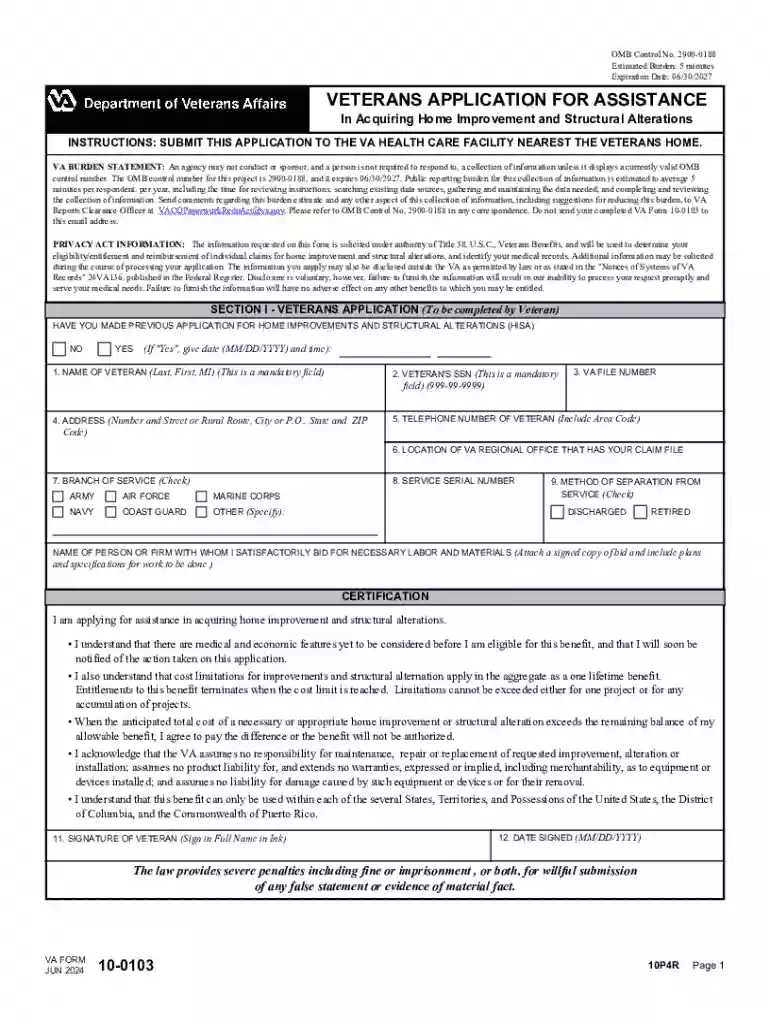
01. Edit your 10 0103 online
Type text, add images, blackout confidential details, add comments, highlights and more.

Type text, add images, blackout confidential details, add comments, highlights and more.

Draw your signature, type it, upload its image, or use your mobile device as a signature pad.

Send form 10 0103 via email, link, or fax. You can also download it, export it or print it out.
The term "Expiration Date: 06 30 2027" refers to a specific date used as a reference for determining the validity or applicability of a document or agreement until June 30, 2027. This date often marks the final day that certain terms, conditions, or approvals remain effective. In contexts such as legal agreements, financial instruments, or contractual obligations, an expiration date signifies the termination of a particular period within which certain actions must be completed or rights can be exercised.
Items commonly associated with expiration dates include contracts, licenses, permits, warranties, and financial instruments like options or insurance policies. These dates are critical for managing obligations and ensuring compliance with time-sensitive terms.
To effectively utilize the expiration date of June 30, 2027, it is essential to understand its application within the context of your document or agreement. Here's how you might approach it:
Review Document Terms: Familiarize yourself with the specific document or agreement to which the expiration date applies. Identify the provisions or conditions that are affected by this date.
Track Deadlines: Use the expiration date as a point of reference for scheduling tasks that need to be completed prior to its arrival. Set reminders for critical actions, such as renewals, reviews, or submissions, well in advance.
Seek Renewals: If applicable, initiate renewal processes before the expiration date to avoid lapses in validity or coverage. This is common for licenses, permits, or service contracts.
Evaluate Extensions: Determine if there are provisions for extending the expiration date and what steps need to be taken to request such an extension.
By managing the expiration date effectively, you ensure continuity and compliance with essential agreements and contracts.
Completing tasks associated with an expiration date involves a series of strategic steps. While not every form or document is identical, adhering to a structured approach can enhance efficiency and accuracy:
Identify Relevant Actions: List all tasks that need to be completed in relation to the expiration date. This could include renewals, verifications, and confirmations necessary before June 30, 2027.
Gather Necessary Documents: Ensure that all required documents, such as proof of identity, prior agreements, and renewal forms, are compiled and accessible.
Contact Stakeholders: Reach out to relevant parties involved in the document or agreement to confirm roles, responsibilities, and expectations leading up to the expiration date.
Complete Required Steps: Follow through on each action item, ensuring accuracy and completeness in submissions or updates.
Confirm Task Completion: Verify that each necessary action has been completed successfully before the expiration date arrives.
Various entities might need to use expiration dates to manage compliance, validity, and renewal processes. Below are examples of who might typically use such dates:
These entities leverage expiration dates to ensure processes are maintained properly and deadlines are met.


Understanding critical components associated with an expiration date can provide clarity on its usage and implications:
Validity Period: Clarifies how long a document or agreement remains effective.
Associated Rights: Details any rights that are limited to the validity period defined by the expiration date.
Impact of Expiry: Explains what happens upon reaching the expiration date without renewal or extension—such as termination of services or cessation of coverage.
Renewal Procedures: Offers insight into methods of extending or renewing the document's validity beyond the expiration date.
Knowledge of these elements aids users in managing the expiration date effectively.
State-specific regulations can influence how expiration dates are managed for certain documents or agreements. These rules may address:
Renewal Requirements: States might have differing procedures or lead times for renewing permits or licenses before expiration.
Notification Protocols: Variations in how and when stakeholders must be notified of impending expirations.
Application Fees: States could impose different fees related to renewing or extending validity periods.
Understanding state-specific regulations ensures compliance with regional obligations related to expiration dates. Consulting legal counsel or local government resources can provide guidance tailored to specific jurisdictions.
Real-world scenarios illustrate how expiration dates are utilized to manage deadlines and obligations:
Business Contracts: A service agreement between two companies might stipulate an expiration date to reassess terms and continue collaboration under renewed conditions.
Insurance Policies: A homeowner reviews and renews their insurance policy well in advance of its expiration on June 30, 2027, ensuring continuous coverage.
Licenses and Permits: Professionals such as real estate agents or healthcare providers track their license expiration dates to fulfill continuing education requirements and maintain active status.
Familiarity with related terminology enhances understanding of expiration dates and their implications:
Renewal: Process of extending the validity of a document beyond the expiration date.
Grace Period: A designated timeframe post-expiration where actions can be completed without penalties or interruptions.
Lapse: Occurs when an expiration date is reached without renewal, often leading to loss of rights or services.
Extension: Formal agreement to prolong the expiration date for a specified period.
Understanding these terms equips users with the knowledge to manage and utilize expiration dates effectively.
We've got more versions of the 10 0103 form. Select the right 10 0103 version from the list and start editing it straight away!
At DocHub, your data security is our priority. We follow HIPAA, SOC2, GDPR, and other standards, so you can work on your documents with confidence.