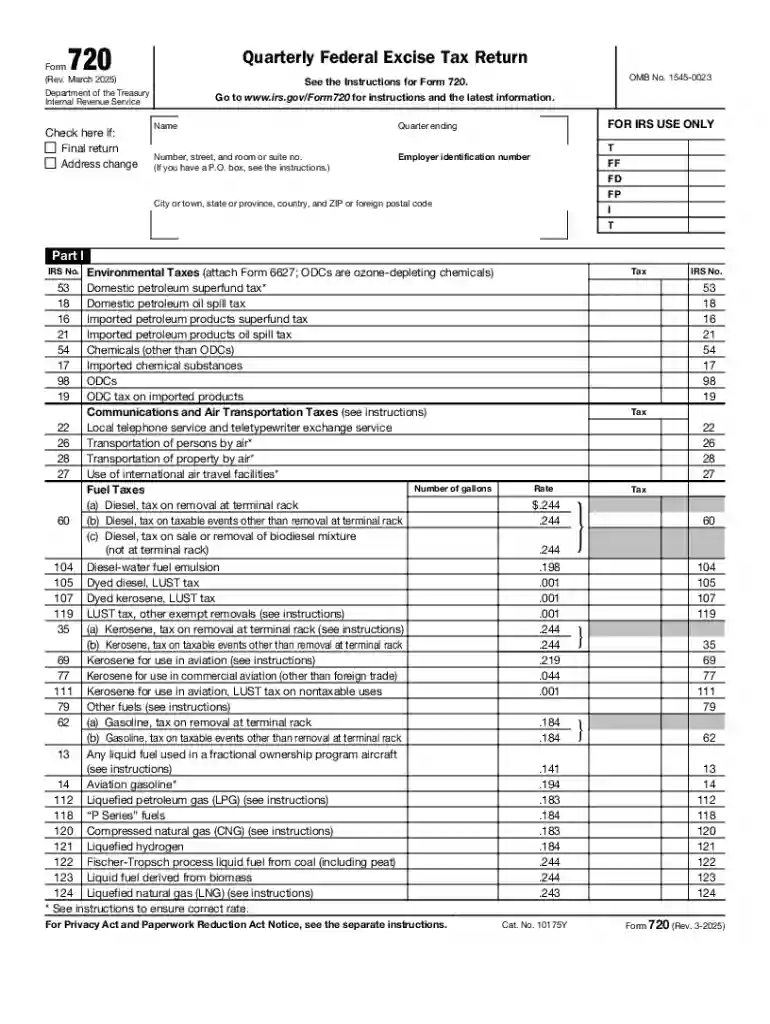
Form 720 2026

Get Form
form 720 Preview on Page 1

Here's how it works

01. Edit your form 720 online
Type text, add images, blackout confidential details, add comments, highlights and more.

02. Sign it in a few clicks
Draw your signature, type it, upload its image, or use your mobile device as a signature pad.

03. Share your form with others
Send it via email, link, or fax. You can also download it, export it or print it out.

Definition & Meaning

Form 720, known as the Quarterly Federal Excise Tax Return, is a critical document issued by the Internal Revenue Service (IRS) to report and pay federal excise taxes. These are specific taxes imposed on the sale of particular goods or services and are often included in the cost of the product. Businesses involved in manufacturing, selling, or using certain products may be required to file this form. The taxes covered by Form 720 include environmental taxes, fuel and transportation taxes, and taxes on communication services, reflecting a broad range of sectors impacted by these excise taxes.

Key Components

  • Environmental Taxes: Target industries contributing to pollution, incentivizing businesses to adopt eco-friendly practices.
  • Fuel Taxes: Imposed on various fuel types, crucial for businesses in transportation and logistic sectors.
  • Communication Services: Covers taxes for local and long-distance communication services, affecting telecom companies.

Steps to Complete Form 720

Completing Form 720 accurately involves several key steps. The form is structured to capture detailed information about the excise taxes owed.

  1. Download the Form: Start by obtaining the latest version of Form 720 from the IRS website.
  2. Fill Out Basic Information: Include the business's name, employer identification number (EIN), and the quarter for which the tax is being reported.
  3. Calculate Each Tax Type: Use the supplemental sections to determine the amount owed for each applicable tax type.
  4. Report Claims and Adjustments: If applicable, note any claims or adjustments for overpayments or credits from previous quarters.
  5. Review and Sign: Carefully review the form for accuracy, ensuring every section is completed and signed before submission.

Common Errors to Avoid

  • Incorrect EIN: Always double-check the EIN for accuracy, as errors can delay processing.
  • Missed Deadlines: Ensure timely submission to avoid penalties and interest.

How to Obtain Form 720

Businesses can easily obtain Form 720 through various channels:

  • IRS Website: Download the form directly from the official IRS website as a PDF.
  • Tax Software Platforms: Major tax software like TurboTax or QuickBooks usually provide access to tax forms, including Form 720.
  • Tax Professionals: Accountants and tax preparers can supply the form as part of their services.

Accessing Instructions

It's essential to also download the IRS instructions for Form 720, as they provide detailed guidance on completing the form, including nuanced explanations of each tax type.

Important Dates for Filing

Meeting deadlines for Form 720 is crucial to maintaining compliance and avoiding penalties:

  1. Quarterly Filing: The form must be filed quarterly; deadlines are typically the last day of the month following the end of the quarter (April 30, July 31, October 31, and January 31).
  2. Penalty for Late Filing: Missing deadlines can result in fines. It's important to file on time to avoid accruing interest on unpaid taxes.

Planning and Preparation

Maintaining a calendar of tax deadlines can help businesses stay organized, ensuring timely completion and submission each quarter.

IRS Guidelines

The IRS provides comprehensive guidelines for filing Form 720, which outline the specific requirements and processes businesses need to follow:

  • Eligible Tax Types: Only specific excise taxes need reporting on this form. Businesses should verify if they're subject to such taxes.
  • Record-Keeping: Retain all relevant records, including sales receipts and purchase invoices, for at least four years in case of an audit.

Updates and Changes

Regularly check the IRS website for updates or amendments to Form 720 rules, which can occur frequently given changes in tax laws.

Filing Methods: Online vs. Mail

Form 720 can be submitted both online and via mail, offering flexibility to businesses based on their convenience:

  • Electronic Filing: Accommodates online submissions, using approved IRS e-file providers. It's a quick and reliable method to submit the quarterly return.
  • Mailing Paper Forms: For those preferring traditional methods, a completed form can also be mailed to the IRS address designated for Form 720 submissions.

Benefits of e-Filing

  • Speedy Processing: Electronic submissions are typically processed faster.
  • Confirmation Receipts: Immediate acknowledgments reduce the uncertainty of successful filing.

Who Typically Uses Form 720

A range of businesses and entities are required to file Form 720:

  • Manufacturers and Importers: Those producing or importing excisable goods.
  • Telecommunication Companies: Providers of local and long-distance services.
  • Transport Firms: Businesses in the logistics sector dealing with taxable fuel.

Specific Scenarios

  • Mixed-Use Vehicles: If a company repurposes vehicles not primarily for highway use (e.g., agricultural, construction), certain portions could be exempt from standard fuel taxes.

Penalties for Non-Compliance

Failing to comply with Form 720's filing requirements can lead to serious penalties:

  • Late Filing Penalties: An initial penalty of 5% of the owed tax per month, up to a maximum of 25%.
  • Fraudulent Filing: Significant fines or criminal charges could apply if deliberate falsification is discovered.

How to Mitigate Risks

To minimize risk, companies should regularly audit their compliance measures and seek professional advice if unfamiliar with tax obligations.

be ready to get more

Complete this form in 5 minutes or less

Get form

Got questions?

We have answers to the most popular questions from our customers. If you can't find an answer to your question, please contact us.
Contact us
This form is used to figure the excise tax on repurchases of corporate stock. Form 7208 is attached to Form 720.
Filing Form 720 isnt difficult, but some common mistakes can make it a headache. One of the biggest issues is filling out the entire form when only a few sections apply this can lead to confusion and errors. Many businesses also miss the quarterly deadlines, which can trigger penalties.
The IRS strongly encourages taxpayers to opt for electronic filing when submitting Form 720, the Quarterly Federal Excise Tax Return. One reason electronic signatures are not permitted for manual filings is that the IRS promotes the use of the electronic filing method.
Reporting and Paying for Excise Taxes Schedule A of Form 720 is used to show the total amount of excise taxes you must pay for the quarter. You can send your completed Form 720 by mail or online through an IRS-approved software provider.
You must file a Form 720 if you collect any excise tax during the current quarter or if you were responsible for collecting excise taxes during any quarter during the year and you have not filed a final excise tax return. Form 720 is due on the last day of the month following the end of the quarter.

Security and compliance

At DocHub, your data security is our priority. We follow HIPAA, SOC2, GDPR, and other standards, so you can work on your documents with confidence.

Learn more
ccpa2
pci-dss
gdpr-compliance
hipaa
soc-compliance

People also ask

Simple720 is an IRS-Approved 720 online portal designed to make your federal excise tax filings effortless and stress-free.
Tax form 720, Quarterly Federal Excise Tax Return, is used to calculate and make excise tax payments on certain categories of income/assets. Excise taxes are taxes paid when purchases are made on a specific good. Most excise tax in some ways resembles a state sales tax. They are paid on purchases of specific goods.

Related links