







Definition and Purpose of a Phone Message Template
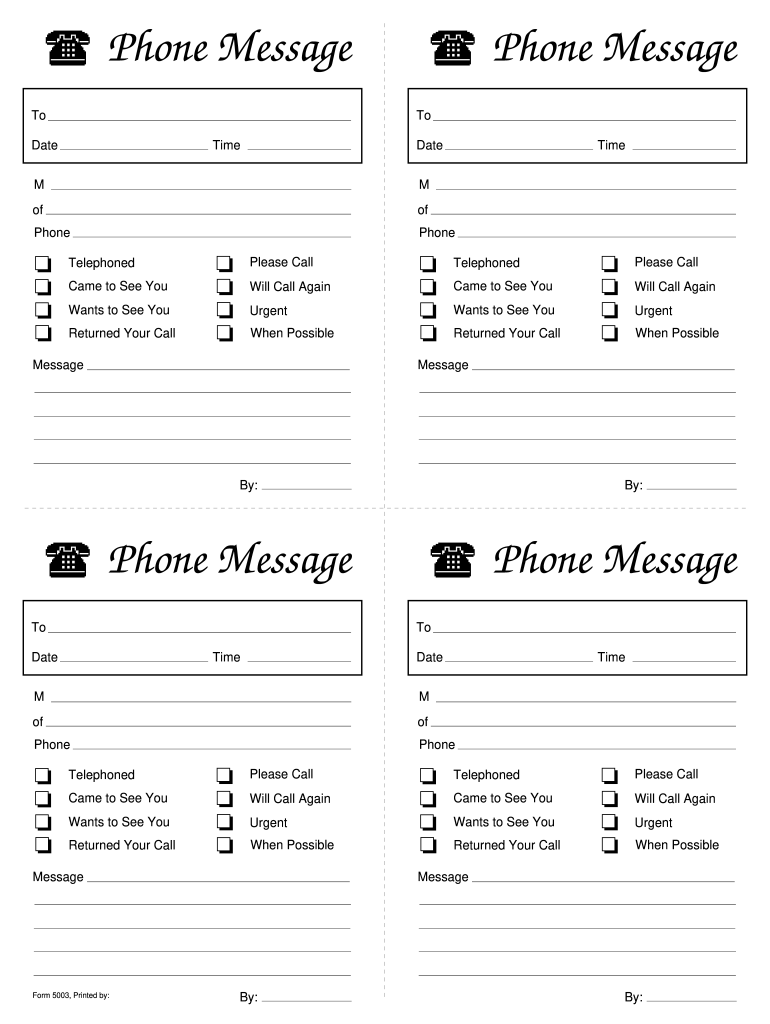
A phone message template is a structured tool designed to facilitate effective communication about calls or visits, capturing essential details in an organized manner. Typically featuring sections for date, time, caller information, and message content, these templates help users maintain clarity when relaying important information to others.
Businesses of various sizes and functions often leverage phone message templates to ensure consistent communication. For example, receptionists can use a standardized template to record messages for team members, thereby preventing miscommunication and ensuring that no vital information is lost. These templates can also be advantageous in keeping track of customer inquiries, appointments, or any urgent matters needing attention.
With the availability of printable and editable options, users can customize their templates to fit specific organizational needs, making it easier to manage telephone communications effectively.
Steps to Complete the Phone Message Template
Completing a phone message template involves several straightforward steps. Following these guidelines can enhance the clarity and effectiveness of your communication.
-
Gather Necessary Information: Before filling in the template, collect all pertinent details from the call or visit. This includes the caller's name, contact number, the time and date of the call, and the purpose of the message.
-
Fill in the Template:
- Date and Time: Start by recording the exact date and time of the call.
- Caller Information: Input the caller's full name and any relevant contact details.
- Message Details: Clearly outline the message's content, including any specific actions requested by the caller.
-
Prioritize Messages: If multiple messages are being recorded, include urgency indicators (e.g., ‘Urgent’ or ‘Follow-Up Required’) to ensure timely responses.
-
Distribution: Once the message is completed, distribute it to the relevant team member(s) either electronically or by placing a printed copy in an accessible location.
-
Record Keeping: Retain copies of phone messages in a log for future reference, which can help track ongoing inquiries or issues.
This approach not only ensures that messages are documented accurately but also enhances accountability within the team.
Key Elements of a Phone Message Template
A well-designed phone message template incorporates several key elements that facilitate communication and improve record-keeping.
- Header Section: This typically includes the title "Phone Message" or "Telephone Message" for easy identification.
- Date and Time: A dedicated area for noting when the call was received is crucial for context.
- Caller Information: Sections for capturing the caller’s name, contact number, and possibly their organization help organize details for easy retrieval.
- Message Body: This is the core section where the details of the communication are entered. It should be structured to allow for clear, concise messaging.
- Action Required: An indication of any follow-up actions or deadlines allows recipients to prioritize their responses.
Optional fields may include:
- Urgency Level: Weighting the message based on importance can assist in triaging responses.
- Signature Line: A space for the message-taker's name can enhance accountability.
By maintaining these elements in a phone message template, users can ensure thorough communication while minimizing misunderstandings.
Examples of Using the Phone Message Template
Real-world scenarios illustrate the practical application of a phone message template in various contexts.
-
Reception Desk: At a corporate reception, when a receptionist receives a call from a client inquiring about a service, they can fill out the template with the client’s contact information and their question, ensuring that the service representative can follow up promptly.
-
Medical Office: In a healthcare setting, a phone message template can capture patient queries or appointment cancellations. For example, if a patient calls to reschedule a medical appointment, the receptionist records the details, indicating the urgency if the rescheduling is required within a short timeframe.
-
Real Estate: In a real estate office, agents can use a phone message template to track messages from prospective buyers or sellers. If a potential buyer expresses interest in a property, the agent records the message with specific follow-up instructions, streamlining the communication process.
These examples highlight the versatility of phone message templates across different industries, providing a standardized approach to maintaining clear communication pathways.
Versions or Alternatives to the Phone Message Template
While phone message templates serve a specific purpose, there are various versions and alternatives that cater to different organizational needs.
-
Digital Phone Message Template: Many businesses opt for digital templates that can be easily edited and distributed via email or collaboration platforms. Digital formats can enhance accessibility and integration with other communication tools.
-
Printable Phone Message Pads: For environments that require physical documentation, printable message pads can be popular. These pads often feature pre-printed formats for quick use, which can promote efficiency in high-traffic areas.
-
Specialized Templates: Some industries may require tailored phone message templates, such as medical telephone message forms. These forms can include specific fields related to patient care and confidentiality.
Selecting the appropriate version of a phone message template is crucial for meeting specific requirements and optimizing communication within different operational contexts.




