
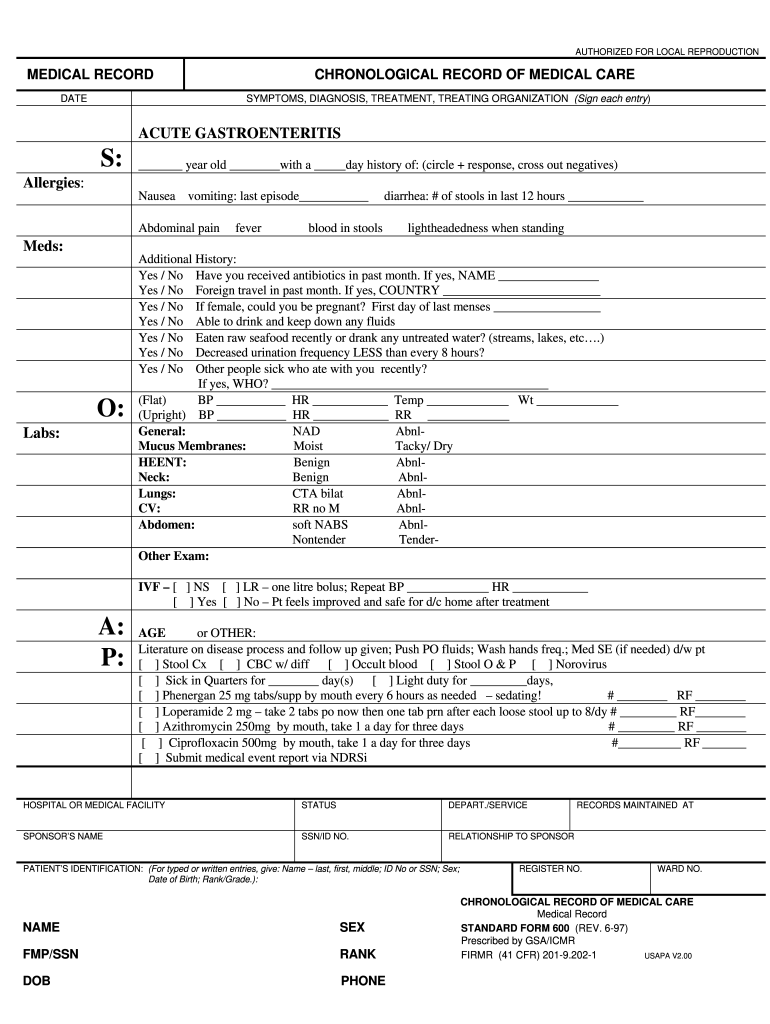







Definition & Meaning of Standard Form 600 Medical Record
The standard form 600 medical record, often referred to simply as SF 600, serves as an official medical record document used primarily within military contexts. This form is crucial for documenting the healthcare provided to military personnel and is utilized by various branches of the armed forces, including the Army, Navy, and Air Force. The SF 600 captures patient information such as medical history, symptoms, diagnosis, treatments, and significant findings, ensuring that all healthcare encounters are systematically recorded. The precise structure allows for consistent entries across different healthcare providers and facilities.
This form is foundational for both continuity of care and legal documentation. When completed correctly, the standard form 600 facilitates tracking the patient’s health outcomes over time, making it critical for both treatment planning and regulatory compliance. Moreover, it aids in the efficient management of medical records, contributing to holistic healthcare delivery within military settings.
Key Elements of the Standard Form 600 Medical Record
Understanding the essential components of the standard form 600 is vital for its effective use. Key sections of this medical record typically include:
- Patient Identification: Basic details such as name, rank, and service number are documented to ensure accurate record keeping.
- Medical History: A comprehensive overview of the patient’s previous medical issues, allergies, and surgeries, providing context for current treatment plans.
- Symptoms and Presenting Issues: Clear articulation of the symptoms that led to the medical visit, which assists healthcare professionals in diagnosis and treatment.
- Diagnosis and Treatment: Entries that specify the diagnosis made based on the presenting symptoms and any immediate treatments administered.
- Follow-Up Instructions: Information regarding future appointments or additional required medical interventions, ensuring continuity of care.
Each of these segments plays a crucial role in creating a robust medical history that can be followed by various healthcare providers, ultimately influencing patient outcomes and facilitating communication between medical teams.
Steps to Complete the Standard Form 600 Medical Record
Completing the standard form 600 requires a methodical approach to ensure accuracy and comprehensiveness. Here are the main steps involved:
- Gather Patient Information: Start by collecting the patient's essential details, including their full name, military identification number, and contact information.
- Assess Medical History: Document the patient’s medical history accurately, paying particular attention to pre-existing conditions, allergies, and previous treatments.
- Record Current Symptoms: Clearly record the symptoms that prompted the visit, ensuring that they are described in detail to help with diagnosis.
- Diagnosis Documentation: After a thorough examination, the healthcare provider should succinctly note the diagnosis given, linking it to the presenting symptoms.
- Outline Treatment Provided: Note any treatments administered during the visit and specify follow-up actions required. This section should also indicate any prescribed medications.
- Finalize and Review: Ensure the form is reviewed for completeness and accuracy before filing. Any changes or corrections should be consistently applied to maintain the integrity of the record.
Successfully completing the SF 600 not only provides a legal document of care but also serves as an essential tool for ongoing patient management and treatment continuity.
How to Use the Standard Form 600 Medical Record
Utilizing the standard form 600 involves understanding its integration within military healthcare systems and recognizing its legal significance. This form is primarily used to document patient care during medical visits.
- In Clinical Settings: Healthcare providers use the SF 600 to record vital medical data during consultations, ensuring that both the patient’s history and present conditions are adequately captured for ongoing care.
- At Health Assessments: Military personnel may be required to fill out this form during routine health assessments or evaluations for deployment, highlighting any medical history relevant to operational readiness.
- For Referral and Continuing Care: The completed SF 600 serves as a critical communication tool between different healthcare providers, ensuring that all involved parties are aware of the patient's medical background, which aids in seamless continuity of care.
- In Legal and Compliance Contexts: As an official medical record, the SF 600 holds legal weight, making it essential in cases where documented healthcare encounters may be reviewed for compliance with military medical standards or in legal circumstances.
Effective use of the SF 600 can lead to better-informed medical decisions, compliance with military health regulations, and improved health outcomes for service members.
Legal Use of the Standard Form 600 Medical Record
The standard form 600 medical record is not only a crucial document for information flow within healthcare systems but also carries significant legal implications. Understanding its legal use is essential for both patients and healthcare providers:
- Legal Documentation: The SF 600 serves as an official medical record, which may be required in legal proceedings or investigations relating to patient care. Accurate documentation is paramount for defending against any claims of malpractice or providing evidence in disputes.
- Patient Confidentiality: Adherence to privacy regulations, such as the Health Insurance Portability and Accountability Act (HIPAA), is required when handling and storing SF 600 records. Proper safeguards must be in place to protect patient information from unauthorized access.
- Retention Requirements: Military healthcare systems are often governed by specific record retention policies that dictate how long the standard form 600 must be kept. Understanding these requirements ensures compliance with military standards and regulations.
- Audit and Review Compliance: The SF 600 may be subject to audits to ensure proper care protocols are followed. Maintaining accurate and complete records can protect healthcare providers during such reviews.
Healthcare personnel must be trained in the legal aspects of using the standard form 600, ensuring that it meets legal standards while prioritizing the wellbeing and privacy of patients.
Examples of Using the Standard Form 600 Medical Record
Practical examples demonstrate the versatility and importance of the standard form 600 within military healthcare practices:
- Routine Check-Ups: During a standard physical examination, a clinician records a soldier's vital signs, health history, and findings from the exam using the SF 600. This documentation ensures that any health changes are tracked systematically over time.
- Deployment Readiness Assessments: Prior to deployment, military personnel undergo rigorous health assessments where the SF 600 is filled out to confirm they meet health standards. The documented information becomes crucial if health issues arise in the field.
- Follow-Up Care: After a surgery, a follow-up visit uses the SF 600 to record the recovery process. The healthcare provider notes any complications, prescribed medications, and further treatment plans to ensure comprehensive care.
- Referral to Specialists: When a soldier requires specialized care, the SF 600 is shared with the specialist as part of the referral process. This ensures that the specialist has direct access to the soldier’s medical history and current health status.
These examples illustrate the SF 600's essential role in documenting care within military contexts, highlighting its importance for ongoing patient management and legal compliance.


