







Definition & Meaning
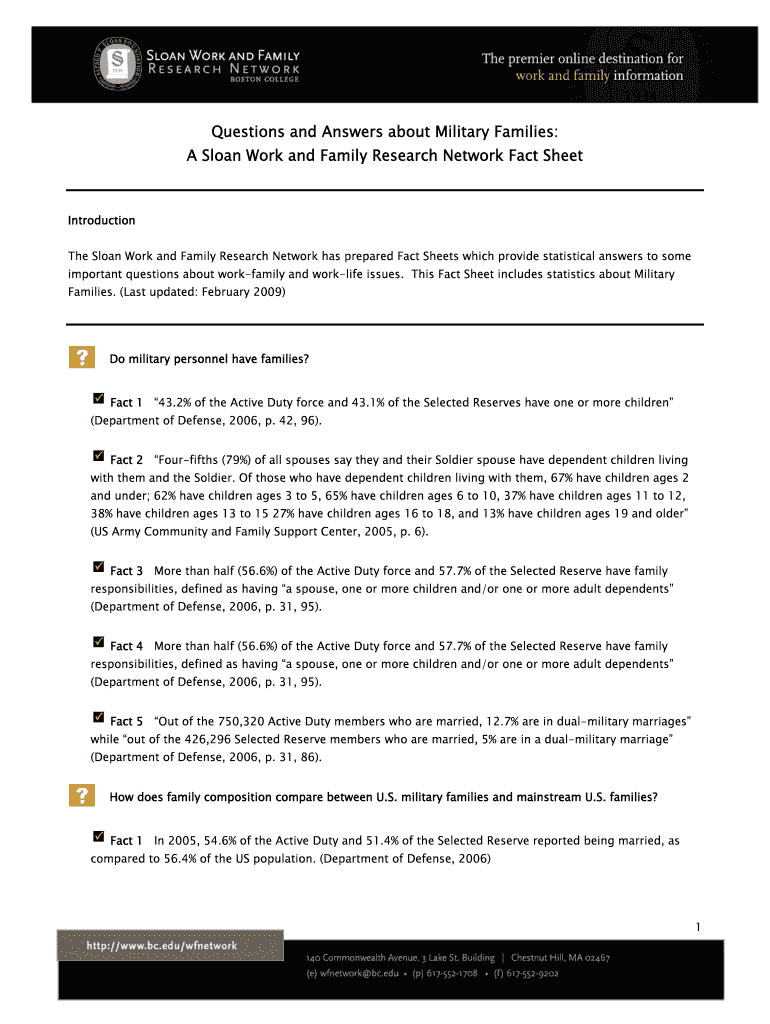
The "Questions and Answers about Military Families" form is a comprehensive resource that provides valuable insights into various aspects of military family life. It addresses common queries regarding the demographics, challenges, and support systems available to military families in the United States. This form aims to inform service members, their families, and interested parties about military family dynamics, covering topics such as deployment, marital satisfaction, and employment.
Composition and Structure
- The form discusses the different components of military families, including active duty members, spouses, and children.
- It outlines how family structure can affect personal and professional aspects of life, such as job opportunities and educational pursuits.
- Provides statistical data and analysis to understand the prevalent trends among military households.
Employment Status of Military Spouses
- Examines the employment rates of military spouses compared to their civilian counterparts.
- Discusses barriers to employment, such as frequent relocations and lack of local job networks.
- Highlights initiatives designed to improve job prospects for military spouses.
Steps to Complete the Questions and Answers about Military Families
To effectively use this form, follow these steps:
-
Identify the Relevant Sections: Determine which areas of the form are most pertinent to your situation or interest, whether it's deployment impacts or family support systems.
-
Gather Necessary Information: Collect any relevant data or documents that can complement the insights gained from the form, such as marital status or employment history.
-
Review the Content Thoroughly: Read through each section carefully to grasp the full extent of information provided. Pay attention to the statistics and anecdotes that may inform your understanding.
-
Apply the Insights: Use the information to make informed decisions concerning career changes, relocation, or when seeking support services.
Example Application of Steps
- A military spouse looking for employment can utilize the employment statistics to approach job applications with a well-informed perspective on industry gaps.
Key Elements of the Questions and Answers about Military Families
The form encompasses various components critical to understanding military family life:
-
Deployment Experiences: Details the effects of deployment on family dynamics and the psychological impact on returning service members and their families.
-
Marital Satisfaction: Offers insights into how military service influences marriage, including stressors and coping mechanisms.
-
Coping Mechanisms: Lists resources and strategies used by military families to manage the unique challenges they face, such as support groups and counseling services.
Detailed Statistics and Analysis
- Statistical data is provided to support claims about military family dynamics, offering a quantitative basis for understanding these issues.
Important Terms Related to Questions and Answers about Military Families
Understanding key terminology is beneficial for navigating the form:
-
Active Duty: Refers to service members currently serving full-time in their military capacity.
-
Deployment Duration: The length of time a service member spends away from home due to military commitments.
-
Military Lifestyle: Encompasses the unique cultural, social, and professional aspects associated with life in military service.
Legal Use of the Questions and Answers about Military Families
This form can serve as a legitimate resource for various stakeholders:
-
Military Personnel and Families: Gain insights into rights, responsibilities, and available resources.
-
Researchers and Policymakers: Provides data for academic and legislative purposes to improve military family policies.
-
Support Organizations: Utilizes information to tailor services and programs to better meet the needs of military families.
State-Specific Rules for the Questions and Answers about Military Families
While primarily a guideline, some content may vary by state:
-
Support Services: Availability of state-specific programs aimed at assisting military families can differ based on local government initiatives and resources.
-
Legislative Variations: Certain states may have unique policies related to military family support, affecting employment, education, and healthcare.
Tailoring Information
- It is important for users to verify state-specific rules and resources as applicable when using the form to ensure compliance and optimize support utilization.
Examples of Using the Questions and Answers about Military Families
Several scenarios illustrate the practical application of the form:
-
Scenario 1: A service member returning from deployment uses the form to explore available counseling services, aiding in a smooth reintegration with their family.
-
Scenario 2: Policymakers use statistical data from the form to advocate for increased funding for military family support programs.
-
Scenario 3: Nonprofit organizations tailor their outreach efforts using the insights on employment challenges faced by military spouses, offering targeted job training programs.
Who Typically Uses the Questions and Answers about Military Families
This form is utilized by diverse groups:
-
Military Families: To better understand their own dynamics and access support services.
-
Support Organizations: To enhance the effectiveness and reach of their programs.
-
Researchers and Academics: As a basis for studies on military family life and related social phenomena.


Specific User Examples
- A civilian employer might refer to the form to better accommodate military spouses within their workforce, recognizing the unique needs and strengths these individuals bring.
State-by-State Differences
The form acknowledges that experiences and resources can vary significantly by state:
-
Support Systems: Differences in available state-funded programs for healthcare, education, and employment assistance for military families.
-
Community Organizations: Presence of local community organizations offering specialized support to military families.
Considering Variations
- When using the form, it is advisable to check specific state provisions and supports that are relevant to your current or planned residence.
In essence, the "Questions and Answers about Military Families" form serves as a fundamental guide, filled with detailed insights and practical applications for military families and stakeholders involved in supporting these communities.




