Definition & Meaning
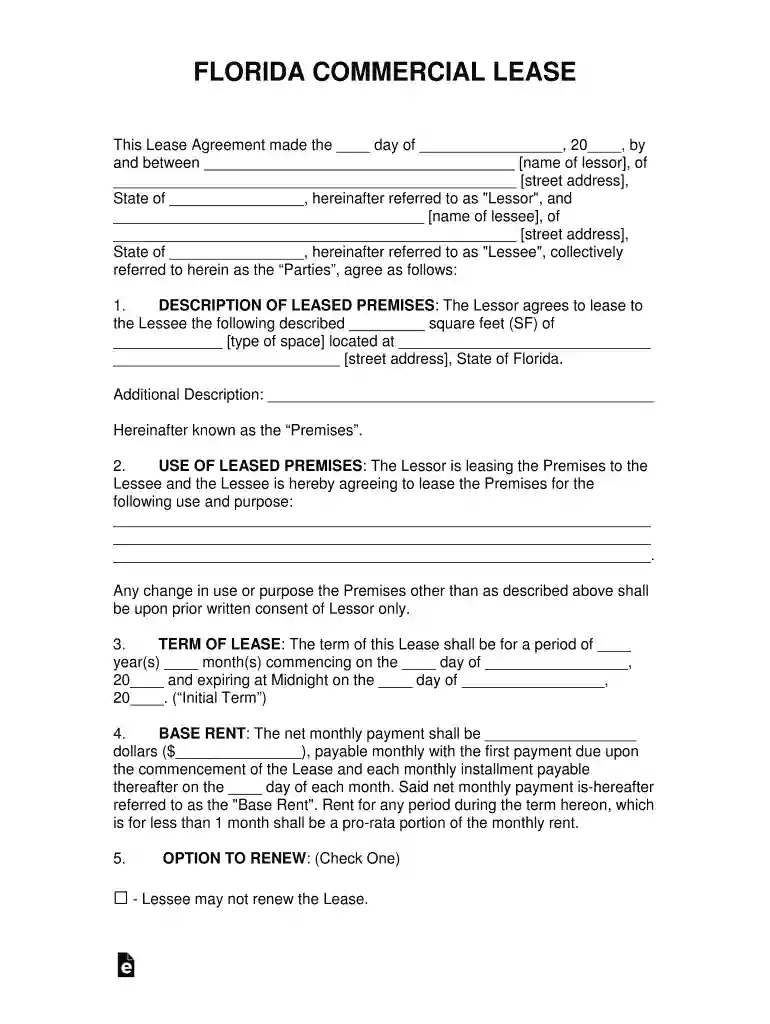
A Commercial Lease Agreement in Florida is a legally binding contract between a lessor (landlord) and a lessee (tenant) for the rental of commercial property. It specifies the terms and conditions under which the tenant may use the property for business purposes. The agreement covers essential aspects such as the description of the leased premises, the duration of the lease, the rental amount, and both parties' responsibilities and rights. This document is crucial in formalizing the landlord-tenant relationship and ensuring both parties' obligations are clear and enforceable.
Components of a Commercial Lease Agreement
- Leased Premises: Detailed description of the property being leased.
- Lease Term: Duration of the lease, including start and end dates.
- Rent: Amount, frequency, and payment details of rent.
- Renewal Options: Terms under which the lease can be extended.
- Permitted Use: What the property can be used for legally.
- Security Deposit: Amount and conditions for its return.
- Maintenance and Repair Obligations: Responsibilities of each party.
- Insurance Requirements: Types and amounts of insurance needed.
How to Use the COMMERCIAL LEASE AGREEMENT - Florida
Using a Commercial Lease Agreement in Florida involves several key steps to ensure the document meets all legal requirements and serves both parties' interests.
- Review the Draft: Carefully read the agreement to understand all terms and conditions.
- Consult with a Legal Professional: Consider having an attorney review the document to ensure compliance with state laws and protection of rights.
- Customize the Agreement: Modify sections based on mutual agreements such as specific terms for rent, renewal options, and maintenance responsibilities.
- Signing the Agreement: Both lessor and lessee must sign the document, and it's often notarized to add an extra layer of validation.
- Record Keeping: Keep a signed copy for future reference in case of disputes.
Considerations for Specific Clauses
- Rent Adjustments: Include clauses on how and when rent can be adjusted.
- Alterations: Detail any permissions or restrictions regarding modifications to the property.
- Subletting and Assignment: Specify conditions under which the property can be sublet or the lease assigned to another party.
Steps to Complete the COMMERCIAL LEASE AGREEMENT - Florida
Completing a Commercial Lease Agreement in Florida involves a structured process to ensure all necessary information is accurately captured.
- Gather Information: Collect details about the property, both parties, and business details.
- Identify Lease Terms: Define the lease duration, rent amount, and payment schedule.
- Include Specific Clauses: Customize clauses for insurance, property maintenance, and legal compliance.
- Draft the Agreement: Fill out the document template with all necessary information.
- Review and Revise: Both parties should review the document, making necessary amendments.
- Sign the Agreement: Upon agreement, all parties sign the document, and it is often recommended to notarize it.
- Distribute Copies: Provide signed copies to each party for their records.
Key Information Required
- Property Details: Address and description.
- Parties' Information: Full names and contact details.
- Financial Terms: Rent, deposit, and any additional fees.
- Lease Conditions: Use of premises and renewal terms.
Important Terms Related to COMMERCIAL LEASE AGREEMENT - Florida
Understanding the critical terms in a Commercial Lease Agreement is vital for clarity and legal compliance.
- Triple Net Lease (NNN): Tenant pays base rent plus property taxes, insurance, and maintenance.
- Gross Lease: Tenant pays a flat fee, and the landlord covers property-related expenses.
- Default: Conditions under which failure to comply with the agreement results in penalties.
- Indemnification Clause: Legal protection for the landlord against liabilities due to tenant activities.
- Force Majeure: Events outside of control that can excuse contract obligations.
Common Legal Terms Explained
- Lessor and Lessee: The landlord (lessor) and tenant (lessee) in the agreement.
- Premises: The property being rented, as described in the lease.
- Term: Duration of the lease period.
Key Elements of the COMMERCIAL LEASE AGREEMENT - Florida
The critical components of a Commercial Lease Agreement must reflect the parties' mutual understanding and comply with state-specific legal standards.
- Property Description: Detailed specification of the leased space.
- Lease Duration: Clearly stated start and end dates.
- Payment Structure: Exact rent amount and payment method.
- Responsibility Assignments: Roles in maintaining the property.
- Legal Compliance: Acknowledgment of adherence to local laws and regulations.
Special Clauses to Include
- Escape Clauses: Options for lease termination under specific conditions.
- Environmental Regulations: Compliance requirements for hazardous materials.
- Dispute Resolution: Agreed-upon methods for resolving contractual disagreements.
Legal Use of the COMMERCIAL LEASE AGREEMENT - Florida
The legal enforceability of a Commercial Lease Agreement rests on its compliance with Florida law and mutual consent.
- State Compliance: Ensure alignment with Florida’s landlord-tenant laws.
- Legally Binding: Once signed, the agreement is enforceable in court.
- Modification Policy: Specifies how and when the contract can be modified legally.
Legal Considerations
- Zoning Laws: Reflects permissible business activities on the property.
- Rental Regulations: Adheres to state-specific landlord/tenant rules.
- Notarization: Strengthens the enforceability of the agreement.
State-Specific Rules for the COMMERCIAL LEASE AGREEMENT - Florida
Florida has unique regulations affecting commercial leases, and understanding these is vital for compliance.
- Deposit Limitations: Guidelines on the amount and use of security deposits.
- Eviction Procedures: Outlines legal paths for landlords to reclaim property.
- Environmental Compliance: Local mandates for waste disposal and environmental safety.
Specific State Laws
- Florida Business Rent Tax: Applicable taxes for leasing commercial property.
- Insurance Requirements: Minimum coverage requirements for landlords and tenants.
Examples of Using the COMMERCIAL LEASE AGREEMENT - Florida
The application of a Commercial Lease Agreement can be seen across various business setups in Florida.
- Retail Stores: Outlines terms for leasing retail space in shopping centers.
- Office Space: Used for agreements between businesses leasing office premises.
- Industrial Warehouses: Details unique considerations for storage and operational spaces.
Real-World Scenarios
- Downtown Miami Office: An agreement outlining high-rise office space terms.
- Orlando Retail Outlet: Lease covering space in a large commercial complex.
- Tampa Warehouse: Specific clauses for industrial use in a manufacturing district.