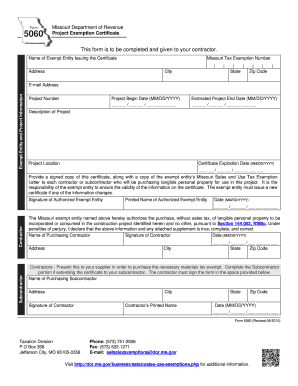
TCEQ Form 20683 TAP SAMPLE SUBMISSION 2026

Get Form
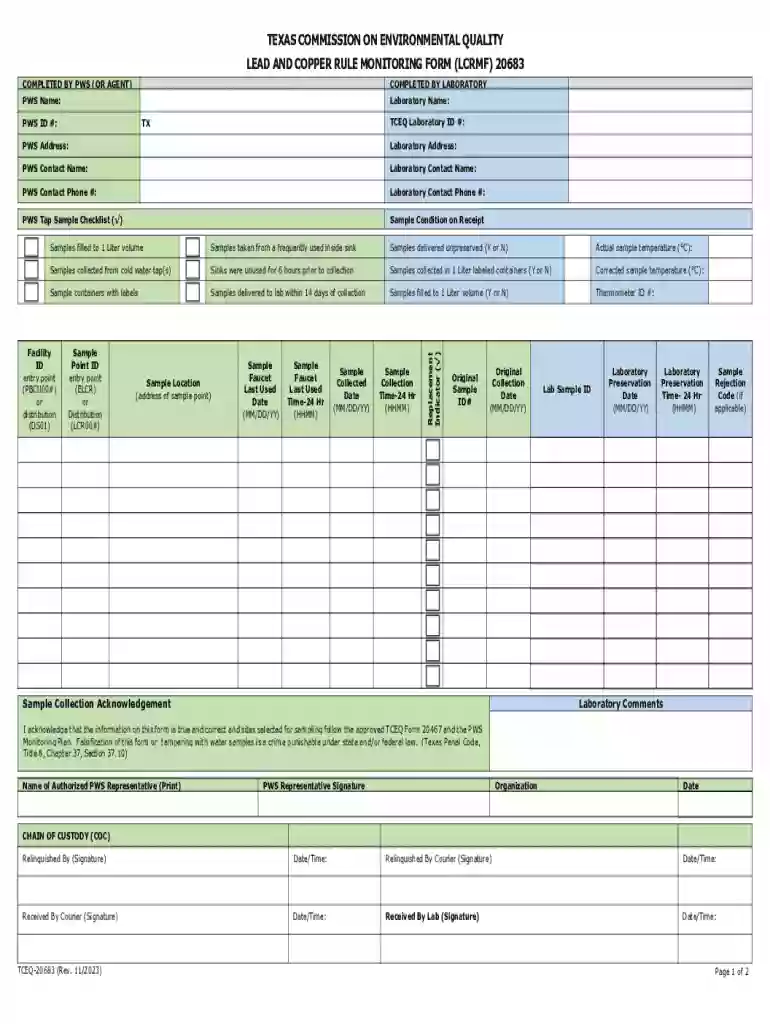
TCEQ Form 20683 TAP SAMPLE SUBMISSION Preview on Page 1

Here's how it works

01. Edit your form online
Type text, add images, blackout confidential details, add comments, highlights and more.

02. Sign it in a few clicks
Draw your signature, type it, upload its image, or use your mobile device as a signature pad.

03. Share your form with others
Send it via email, link, or fax. You can also download it, export it or print it out.

Definition & Meaning

The TCEQ Form 20683 TAP SAMPLE SUBMISSION is used for reporting lead and copper sampling data. This form is critical for maintaining compliance with the Lead and Copper Rule, an EPA regulation designed to control levels of lead and copper in public drinking water systems. The Texas Commission on Environmental Quality (TCEQ) requires public water systems (PWS) to utilize this form to ensure accurate tracking and transparent reporting of water quality data. By filling out this form, PWS are able to systematically report on the quality of water dispensed, which helps protect public health and ensures adherence to state and federal standards.

How to Use the TCEQ Form 20683 TAP SAMPLE SUBMISSION

Using the TCEQ Form 20683 requires attention to detail and adherence to specific procedures:

  1. Identify Sample Collection Sites: Before collecting samples, ensure that the locations meet the criteria set by the TCEQ for lead and copper monitoring.
  2. Record Keeping: Maintain precise records of sample times, locations, and personnel responsible for collecting samples. This data must be accurately transferred to the form.
  3. Laboratory Coordination: Collaborate with accredited labs to process the samples. Ensure that lab information, including certification numbers, is entered accurately on the form.
  4. Data Entry: Input the laboratory results for lead and copper levels. Verify that results align with TCEQ action levels.
  5. Review and Submission: Check the form for completeness and accuracy before submitting it to the TCEQ.

Steps to Complete the TCEQ Form 20683 TAP SAMPLE SUBMISSION

Completing the form involves several critical steps:

  1. Download the Form: Obtain the latest version of the form from the TCEQ website to ensure compliance with any updates.
  2. Gather Required Information: This includes PWS identification numbers, sample site details, and laboratory results.
  3. Fill Out Sampling Details: Enter the date and time of sample collection, as well as the specific points where samples were taken.
  4. Input Laboratory Results: Add any comments from the lab regarding the condition or unusual readings of the samples.
  5. Ensure Compliance: Verify that all details match the requirements set by the TCEQ, as incorrect or incomplete submissions could result in non-compliance.
  6. Submit the Form: Depending on the preferred submission method, you might send the form electronically or via mail.

Key Elements of the TCEQ Form 20683 TAP SAMPLE SUBMISSION

Several essential components must be included:

  • Public Water System Information: This section requires input, including PWS ID, name, and contact details.
  • Sample Collection Data: Information on where and when samples were collected.
  • Laboratory Analysis Report: Details such as lab ID, date of analysis, and the results for lead and copper concentrations.
  • Chain of Custody Documentation: This ensures the integrity of the samples from collection to analysis.

Who Typically Uses the TCEQ Form 20683 TAP SAMPLE SUBMISSION

This form is primarily used by employees of public water systems, environmental compliance officers, and laboratory technicians involved in water quality testing. Operators of PWS need to report the quality of water to ensure safe drinking standards are met and to maintain the public’s trust. Additionally, regulatory bodies may reference these submitted forms to audit and ensure adherence to related environmental standards.


decoration image ratings of Dochub

Legal Use of the TCEQ Form 20683 TAP SAMPLE SUBMISSION

The submission of this form has legal implications, as it is part of the mandatory compliance process outlined by the TCEQ to protect public health. Non-compliance or false reporting can result in legal penalties and endanger community safety. The form must be completed with accuracy, reflecting true sample results and collection details to avoid sanctions from state and federal agencies.

Form Submission Methods (Online / Mail / In-Person)

Methods of Submission:

  • Online: The TCEQ often provides electronic submission options through their official online portals.
  • Mail: Physical copies of the form can be mailed directly to the relevant TCEQ offices.
  • In-Person: Occasionally, forms may need to be submitted in person, particularly if supporting documentation must be reviewed directly.

Considerations:

  • Ensure that the method chosen aligns with current TCEQ directives and deadlines.
  • Retain copies of the submission for personal records and future compliance checks.

Form Variants (Related or Older Versions)

The TCEQ Form 20683 TAP SAMPLE SUBMISSION may have several iterations to reflect updates in regulatory requirements or procedural guidelines. Public water systems need to use the most current version to ensure compliance with the most up-to-date standards. Users should periodically check the TCEQ website for any notices regarding form changes.

be ready to get more

Complete this form in 5 minutes or less

Get form

Got questions?

We have answers to the most popular questions from our customers. If you can't find an answer to your question, please contact us.
Contact us
EPAs 2021 Revised Lead and Copper Rule improves protections for children and communities from the risks of lead exposure by better protecting children at schools and child care facilities, identifying lead service lines, and empowering communities through information.
These new standards, the Lead and Copper Rule Revisions and Lead and Copper Rule Improvements, mandate that all drinking water utilities in the United States, including Texas, must investigate whether lead service lines are present in their water distribution systems and plan for service line replacements.
These non-enforceable levels, based solely on possible health risks and exposure, are called Maximum Contaminant Level Goals (MCLG). The MCLG for copper has been set at 1.3 parts per million (ppm) because EPA believes this level of protection would not cause any of the potential health problems described below.
Action Levels and Treatment Techniques Ninety percent of tap samples for a water system must measure at or below the action level (AL) of 0.015 milligrams per liter (mg/L) for lead and 1.3 mg/L for copper for compliance under the LCR.
Program Homeowner Tap Sample Collection Procedures A house that is in exceedance is over 0.015 mg/L for lead and over 1.3 mg/L for copper. Your water system provider will help you with a re-sample if your results come back over one or both of these levels.

Security and compliance

At DocHub, your data security is our priority. We follow HIPAA, SOC2, GDPR, and other standards, so you can work on your documents with confidence.
Learn more
ccpa2
pci-dss
gdpr-compliance
hipaa
soc-compliance