







Definition & Meaning
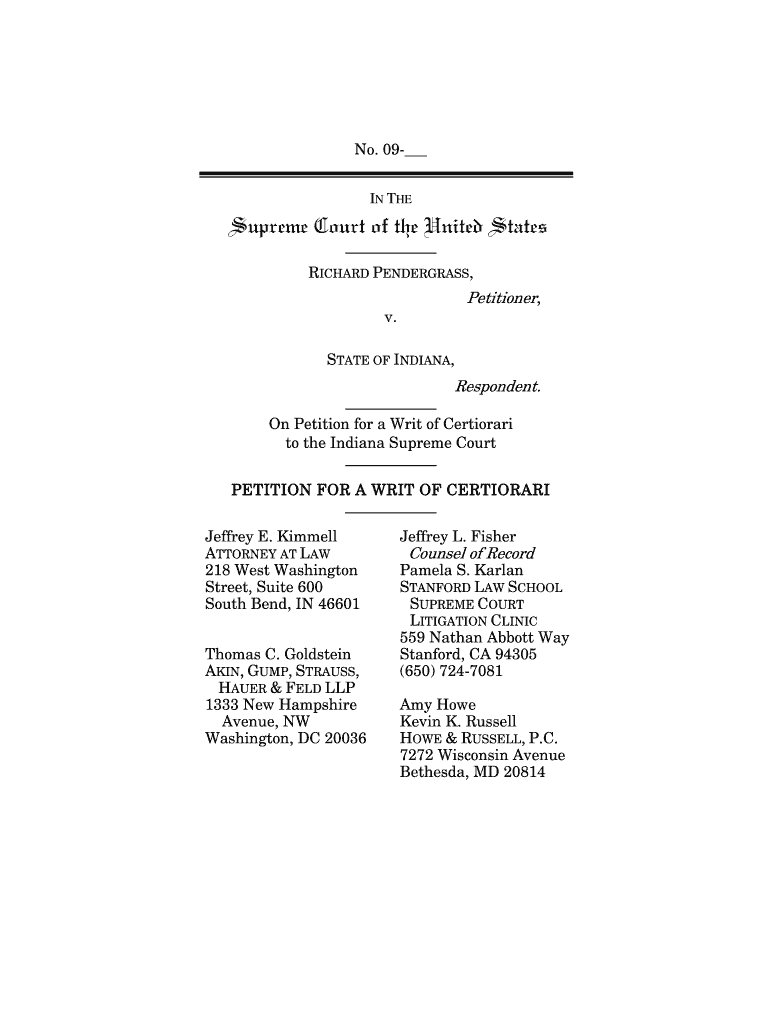
The term "Petitioner, v Respondent On Petition for a Writ of Certiorari to the" refers to a legal document filed by a petitioner (the party that lost in a lower court) requesting a higher court to review and possibly overturn the decision of a lower court. In the United States, this is most commonly associated with a petition to the Supreme Court seeking review of a lower court's decision. The 'writ of certiorari' is a procedural device used by the Supreme Court to choose most of the cases it hears. The petitioner disagrees with an aspect of the lower court's decision and asks the Supreme Court to review the case for errors. It serves to highlight conflicts in lower court decisions, significant legal principles, or the need to resolve pressing federal questions.
Steps to Complete the Petition for a Writ of Certiorari
-
Preparation and Research:
- Conduct a thorough review of the lower court's decision and prepare the arguments that highlight legal mistakes or important points overlooked in the ruling.
- Organize relevant documents, including previous opinions, records, and case summaries.
-
Drafting the Petition:
- Write a clear and concise petition that outlines the case's background, legal questions, and reasons for granting the writ.
- Follow specific Supreme Court rules regarding formatting and language.
-
Submission:
- File the petition with the Supreme Court, adhering to deadlines and additional submission requirements.
- Ensure service of the petition to all parties involved, usually by mail or electronic filing where applicable.
-
Awaiting Response:
- The opposing party files a response, and the Supreme Court decides whether to accept the case for review.
- The decision to grant certiorari requires agreement by at least four Supreme Court justices.
Key Elements of the Petition
- Questions Presented: A clear, concise statement of the legal issue the Supreme Court should address.
- Statements of Facts: Objective summary of the facts relevant to the legal questions.
- Argument: Detailed discussion of why the case merits Supreme Court review; this includes pointing out lower court errors, conflicting decisions among lower courts, or the case's significance in federal law.
Eligibility Criteria
- Standing: The petitioner must demonstrate a personal stake in the outcome and that the review can potentially affect their rights.
- Exhaustion of Lower Court Options: The case must have been fully processed through appropriate lower courts.
- Timeliness: Adhering to deadlines set by the current Supreme Court rules for filing petitions is essential.


Who Typically Uses the Petition for a Writ of Certiorari
- Parties in Federal and State Courts: Mainly used by parties who have exhausted their options at appellate levels and seek Supreme Court intervention.
- State Governments: Occasionally state governments petition when legislative or judicial decisions at state levels conflict with federal law.
- Interest Groups: Sometimes, interest groups partake in such processes as petitioners or through amicus briefs, although the latter does not itself request certiorari but may support a petition.

Legal Use of the Petition for a Writ of Certiorari
The petition has both legal strategy and procedural significance. By focusing on issues of broad legal impact or conflicts between different jurisdictions, the petition ensures that the nation's highest court can address consequential legal questions and harmonize law applications. Typically it seeks to correct profound errors in legal interpretation that hold wider ramifications beyond the immediate parties.
Important Terms Related to the Petition
- Certiorari: A Latin term meaning "to be made certain," it refers to the process where higher courts review decisions of lower courts.
- Petitioner vs. Respondent: The petitioner initiates the petition, and the respondent is the party opposing the petition.
- Brief: A legal document outlining the petitioner's arguments, supported by legal precedents.
State-Specific Rules for Filing
While a petition for a writ of certiorari to the U.S. Supreme Court is governed by federal rules, each state has its protocols when addressing a state supreme court's petition. States have unique procedural guidelines, which may include submission styles, filing fees, and unique grounds for review acceptance that must be reviewed before submission.
Examples of Usage of the Petition
- Significant Precedent Cases: Numerous landmark Supreme Court decisions began as petitions for writs of certiorari, such as Brown v. Board of Education or Roe v. Wade.
- Recent Cases: A petition recently filed challenged forensic evidence admission practices, highlighting disagreements in legal interpretations across jurisdictions.




