
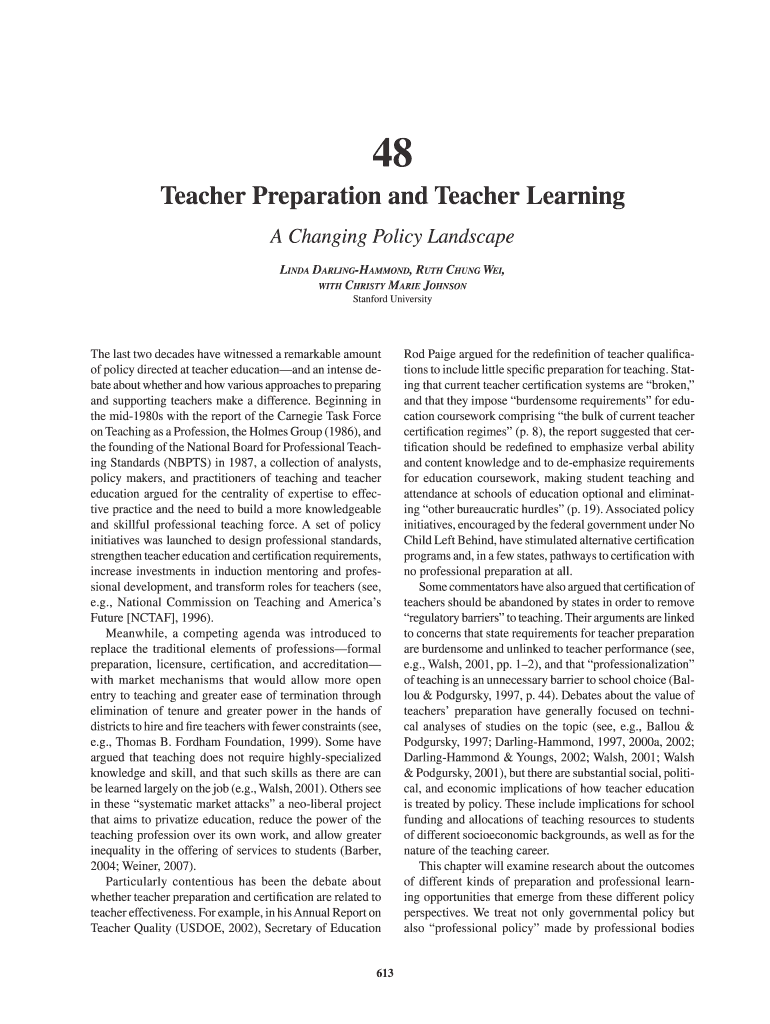







Definition and Meaning of Teacher Preparation and Teacher Learning
Teacher Preparation and Teacher Learning revolve around the processes and educational programs designed to equip aspiring educators with the knowledge, skills, and competencies necessary to foster effective teaching environments. This concept involves a comprehensive understanding of both pre-service training and ongoing professional development for educators already in the field. Central to this topic are discussions about the evolution of educational policies, the balance between rigorous traditional certification standards, and the emerging market-driven alternatives that promote more accessible pathways into the teaching profession.
Importance of Teacher Preparation and Teacher Learning
Teacher Preparation and Teacher Learning are crucial for ensuring that educators are capable of delivering high-quality education, which directly impacts student achievement and outcomes. The focus on robust teacher training programs is underpinned by research that links teacher qualifications to student performance, highlighting the disparities in teacher distribution across different socioeconomic contexts. Emphasizing high standards in teacher education leads to the development of competent educators who can adapt to diverse classrooms and meet the needs of all students.
Key Elements of Teacher Preparation and Teacher Learning
- Rigorous Certification Standards: Traditional pathways often require educators to complete comprehensive certification programs that include pedagogical theory and practical classroom experience.
- Alternative Certification Programs: These programs provide more flexible routes into teaching by allowing candidates to enter the profession while completing their training.
- Professional Standards: Organizations like the National Board for Professional Teaching Standards influence the quality and expectations of teacher preparation.
- Continuous Professional Development: Ongoing learning opportunities for practicing educators ensure they stay up-to-date with the latest educational trends and methodologies.
Steps to Complete the Teacher Preparation Process
- Enrollment in an Accredited Program: Prospective teachers must first enroll in an accredited teacher preparation program that meets state and institutional requirements.
- Completion of Coursework: This involves theoretical and practical courses that cover subjects such as curriculum development, classroom management, and assessment strategies.
- Field Experience: Teacher candidates participate in student teaching or internships, gaining real-world experience in the classroom under the supervision of experienced mentors.
- Certification Exams: Many states require candidates to pass specific exams to demonstrate their proficiency in content knowledge and teaching skills.
- Apply for Licensure: Upon completing the program and passing the necessary exams, candidates apply for a teaching license in their respective states.
Examples of Teacher Preparation and Teacher Learning in Practice
Consider a scenario where a prospective teacher enrolls in a university-based teacher preparation program. Throughout this program, they engage in coursework encompassing educational psychology, diverse teaching strategies, and subject-specific pedagogy. Concurrently, they participate in student teaching at a local school, where they apply their knowledge in a practical setting. After successfully passing state certification exams, they receive their teaching license, allowing them to officially commence their teaching career.
Legal Use of Teacher Preparation and Teacher Learning Standards
Teacher Preparation and Teacher Learning standards are governed by state and federal educational policies that establish the legal framework for teaching credentials. Compliance with these standards ensures that educators meet the qualifications necessary to provide quality education. Legal regulations require background checks, adherence to ethical guidelines, and successful completion of state-approved certification programs, fostering accountability and professionalism within the teaching workforce.
Important Terms Related to Teacher Preparation and Teacher Learning
- Certification: The process and qualification needed to officially teach in schools.
- Pedagogy: The art and science of teaching and educational methods.
- Professional Development: Continuous training for teachers to enhance their skills and knowledge.
- Alternative Certification: Non-traditional routes that allow individuals to enter the teaching field with different qualifications.
- Licensure: The official permission granted by a state to teach, contingent on meeting specific requirements.
Who Typically Uses Teacher Preparation and Teacher Learning Programs
These programs are utilized by individuals aspiring to enter the teaching profession, current educators seeking to update or expand their skill set, and education administrators aiming to support teacher development within their institutions. Additionally, policymakers and educational organizations use these programs to establish and implement standards for educator qualifications, ensuring that teaching practices align with the evolving demands of the educational landscape.
Variations and Alternatives to Traditional Teacher Preparation
The landscape of Teacher Preparation and Teacher Learning includes both traditional and alternative certification pathways. Variations can include:
- Online Programs: Flexible options that allow candidates to complete coursework remotely.
- Teach for America: A program that places participants in classrooms while they complete their teacher training.
- Residency Models: Combining graduate education with a year-long school residency. These alternatives cater to diverse candidates and aim to address teacher shortages in various regions by offering more accessible and pragmatic routes into the teaching profession.




