




01. Edit your ky map 205 online
Type text, add images, blackout confidential details, add comments, highlights and more.

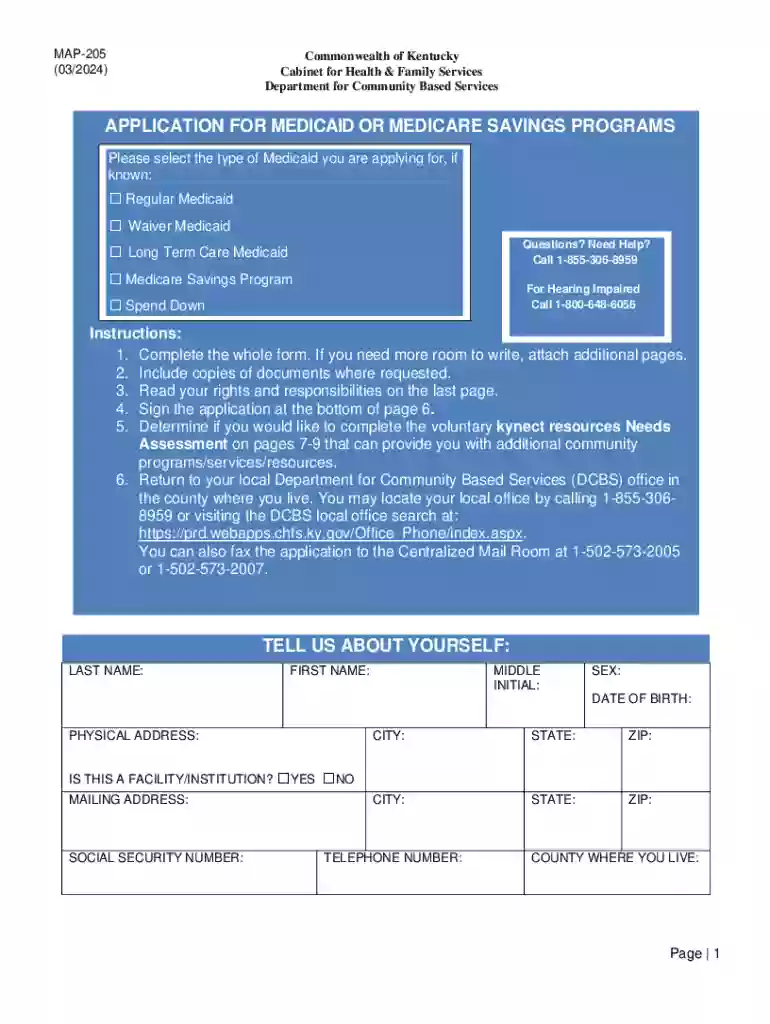
Type text, add images, blackout confidential details, add comments, highlights and more.

Draw your signature, type it, upload its image, or use your mobile device as a signature pad.

Send medicaid medicare savings programs via email, link, or fax. You can also download it, export it or print it out.
The Medicare Savings Program Enrollment refers to the process through which individuals can apply for financial assistance to help cover costs related to Medicare premiums, deductibles, coinsurance, and copayments. These programs are designed to help individuals with limited income and resources, ensuring access to necessary healthcare services without financial burden. Specifics of eligibility and benefits can vary by state, making it crucial to understand local regulations and guidelines.
Eligibility for the Medicare Savings Program depends on various factors, including income level, resources, and specific state guidelines. Typically, individuals must be entitled to Medicare Part A and meet certain financial thresholds, which are often set by the federal poverty level. Resources such as checking and savings accounts, stocks, and some bonds may also be considered when determining eligibility. It is essential for applicants to gather accurate financial information before applying.


Applicants must meet specific income limits, which may vary by state and year. Income limits are generally based on a percentage of the federal poverty level. Resources such as cash or bank accounts should not exceed a set amount; however, certain assets like your home, one car, burial plots, and life insurance policies are often excluded.
To qualify, applicants usually need to be U.S. citizens or legal residents and reside in the state in which they apply. Documentation proving citizenship or lawful presence may be required during the application process.
The enrollment process for Medicare Savings Programs typically involves submitting an application through a variety of channels, including online portals provided by state Medicaid offices, mail, or in-person visits to local offices. Understanding the specific steps involved can streamline the application process and increase the chances of approval.
Many states offer the convenience of online applications for Medicare Savings Programs. Applicants can visit their state’s Medicaid website to access the application form, fill out their personal and financial information, and submit any required documents. Online applications may offer faster processing times and immediate confirmation of receipt.
For those preferring face-to-face interactions or who need assistance, visiting a local Medicaid office can be beneficial. Staff can provide guidance, answer questions, and ensure the application is completed accurately to avoid delays.
Filling out the Medicare Savings Program Enrollment requires attention to detail to ensure all necessary information is included and accurate. Here is a step-by-step guide:
Double-check entries for accuracy, as errors can delay processing. Ensure all required documents are included, and if completing by mail, use certified mail for tracking purposes.
State guidelines can significantly impact the application process and eligibility for Medicare Savings Programs. These differences may include variations in income thresholds, resource limits, and available benefits.
Some states might offer additional benefits beyond the standard Medicare savings, such as covering prescription drug costs or providing additional healthcare services. Applicants should inquire about state-specific benefits to maximize their potential savings.
The application for Medicare Savings Programs typically includes several key sections:
Key documents required for the application might include pay stubs, bank statements, tax returns, and identification. It's important to have these documents ready in advance to ensure a smooth application process.
Individuals benefiting from Medicare Savings Programs often have varied circumstances, demonstrating the program's flexibility and importance.
Many seniors who live on fixed incomes from Social Security or other retirement benefits find these programs crucial for managing their Medicare costs, allowing them to allocate resources to other necessities.
Those who are disabled and have limited income may also benefit from Medicare Savings Programs, helping them access the healthcare services they need without undue financial hardship.
Understanding the documentation required can expedite the application process. Commonly required documents include:
By organizing and preparing these documents beforehand, applicants can ensure a more efficient enrollment process and reduce the possibility of delays in receiving benefits.
We've got more versions of the ky map 205 form. Select the right ky map 205 version from the list and start editing it straight away!
At DocHub, your data security is our priority. We follow HIPAA, SOC2, GDPR, and other standards, so you can work on your documents with confidence.



by K Fox 2007 Cited by 1 Eligibility is generally granted to Medicare enrollees with low incomes, including people with disabilities and seniors. State Solutions is a national program
How to apply for a Medicare Savings Program. These programs are run by your state. Contact your state to apply. What do you want to do next?Read more


