




01. Edit your form online
Type text, add images, blackout confidential details, add comments, highlights and more.

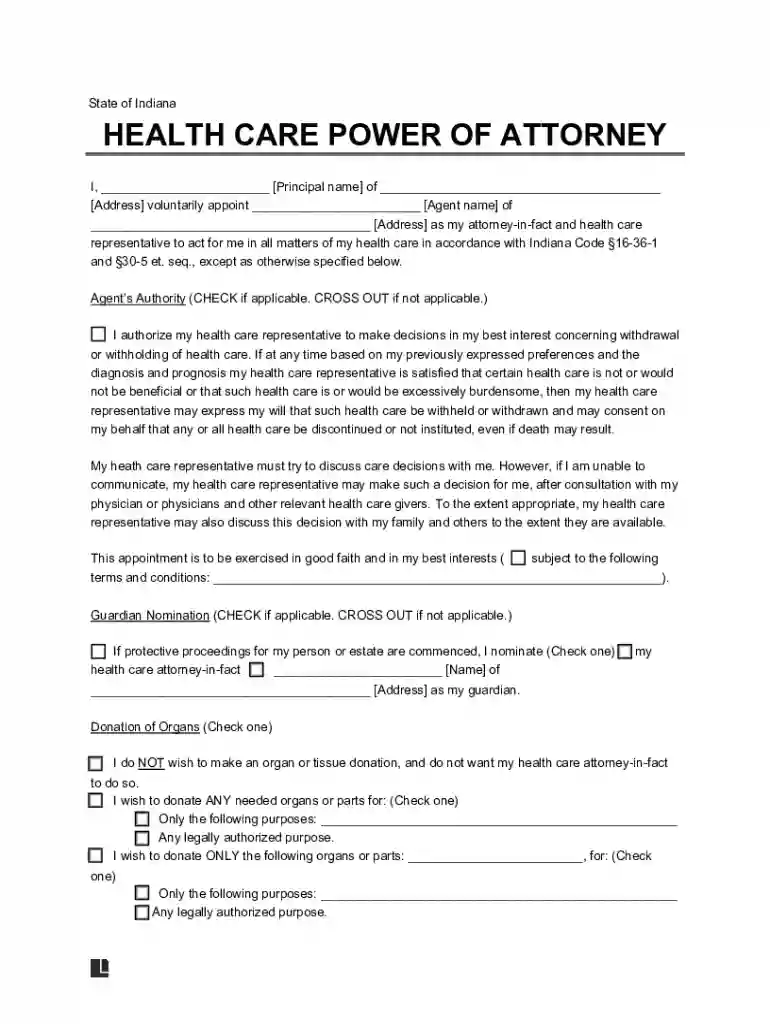
Type text, add images, blackout confidential details, add comments, highlights and more.

Draw your signature, type it, upload its image, or use your mobile device as a signature pad.

Send it via email, link, or fax. You can also download it, export it or print it out.
A Health Care Power of Attorney (HCPOA) is a legal document used in the United States allowing an individual, known as the principal, to appoint an agent to make health care decisions on their behalf in case they become incapacitated. This document ensures that the principal's medical preferences are followed even when they are unable to communicate. In addition to directing medical care, an HCPOA may include provisions such as organ donation permissions and the appointment of a guardian if necessary.
The template includes several critical components to ensure it comprehensively reflects the principal's wishes:
Completing an HCPOA template involves several steps:
In the U.S., the HCPOA must comply with state-specific laws. Users must ensure the template aligns with these regulations to be legally enforceable. For instance, some states may require witnesses or specific language within the document. It is advisable to consult with a legal professional to verify that the HCPOA complies with local legislation and accurately conveys the principal's healthcare decisions.
To effectively utilize the HCPOA template, follow these guidelines:
Each U.S. state has unique rules and requirements for HCPOAs. It is crucial to understand these differences to ensure the document's validity:
Consulting state resources or a legal expert is recommended to tailor the document appropriately.
Real-world examples highlight the utility of having an HCPOA:
Various individuals can benefit from having an HCPOA:
Understanding who benefits most from an HCPOA allows individuals to better plan for future medical scenarios.


At DocHub, your data security is our priority. We follow HIPAA, SOC2, GDPR, and other standards, so you can work on your documents with confidence.



In a health care power of attorney (or health care proxy) you select the family member or trusted friend you want to make health care decisions for you when youRead more
Medical or Health Care Power of Attorney Powers related to making health care or medical decisions on your behalf. Tax Matters Power of Attorney AllowsRead more
The written form is often called an advance directive. You may use this form or another form, as long as it meets the legal requirements of Illinois.Read more


