






Definition and Purpose of the Fall Risk Checklist
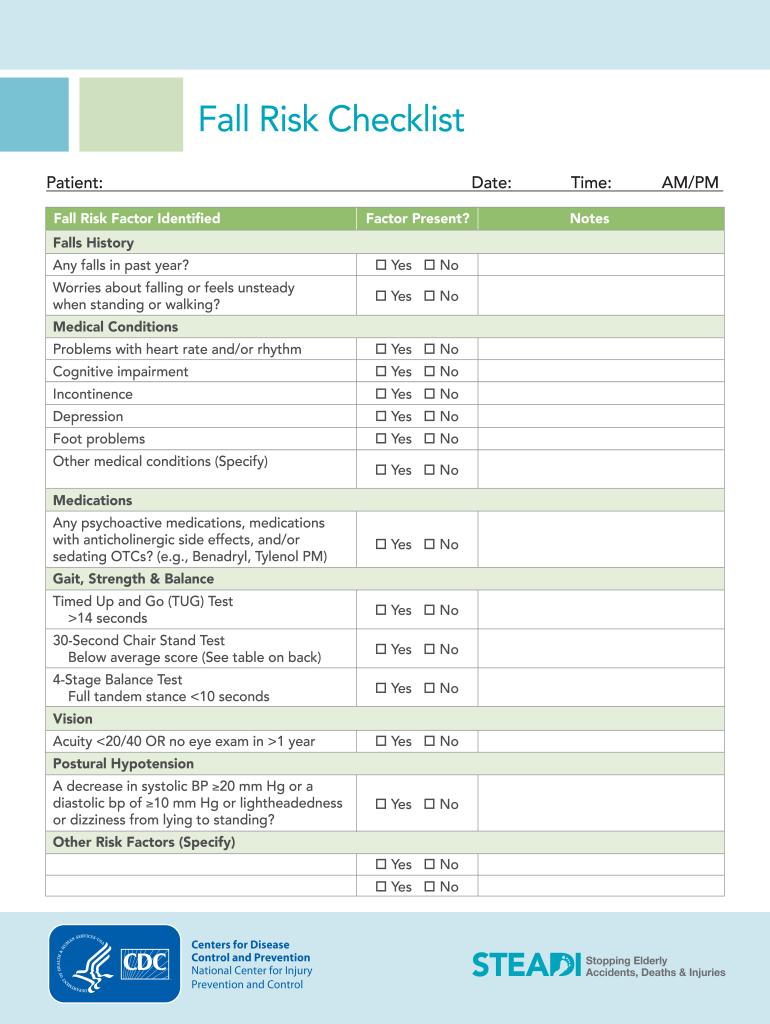
The Fall Risk Checklist is a comprehensive tool designed to evaluate various factors contributing to a patient's risk of falling. This form assesses multiple domains, such as medical conditions, medication usage, and physical capabilities, which can independently or collectively influence fall risk. The checklist guides healthcare providers in systematically identifying and addressing these risks, ultimately aiming to reduce the incidence of falls among patients.
The form includes sections that cover the patient's medical history, medication regimen, and potential physical limitations like gait, balance, and vision impairments. Each factor typically includes a yes/no option, facilitating the identification of specific areas of concern.
Factors Evaluated by the Fall Risk Checklist
- Fall History: Previous incidents of falls are a critical indicator of future fall risk. The checklist inquires about the frequency, circumstances, and outcomes of past falls to assess ongoing vulnerabilities.
- Medical Conditions: Chronic illnesses such as diabetes, arthritis, and neurological disorders can impair mobility and stability, thus increasing the likelihood of falls.
- Medication Use: Certain medications, especially those affecting the central nervous system, can cause dizziness or impaired judgment, elevating fall risk.
The thorough exploration of these components assists in developing a tailored intervention strategy for mitigating fall risk.
How to Use the Fall Risk Checklist Fillable Form
Utilizing the fillable form effectively requires understanding its structure and intended use. The electronic format allows for easy data entry and modifications, aiding healthcare professionals in capturing accurate information.
Steps to Use the Form
- Access the Form: Open the fillable form on DocHub. This can be done on any device with internet access, eliminating the need for paper-based documentation.
- Complete Each Section: Users should methodically go through each category, checking applicable boxes and adding notes where necessary to clarify particular risks or observations.
- Review for Accuracy: Before finalizing the form, review all entries to ensure that no pertinent information is overlooked.
- Save and Share: Once completed, the form can be saved and shared securely with colleagues or stored for personal use, maintaining confidentiality through encryption and password protection.
This process ensures that all health professionals involved in a patient's care are informed of their fall risk status.
Steps to Complete the Fall Risk Checklist Fillable Form
Completing the Fall Risk Checklist involves a systematic approach to ensure comprehensive risk assessment. Given its detailed nature, following structured steps can enhance accuracy and utility.
Detailed Completion Process
- Gather Necessary Information: Begin by compiling all relevant patient information, including past medical records, current medications, and recent health assessments.
- Section-by-Section Analysis:
- Evaluate Fall History: Document any previous falls, circumstances, and resultant injuries.
- Assess Health Conditions: Record chronic illnesses and their potential impact on mobility and balance.
- Review Medication List: Note any medications that could contribute to dizziness or impaired balance.
- Utilize Interactive Fields: Enter data directly into the form's fillable fields, ensuring clarity and legibility.
- Consult with Colleagues: If uncertain about specific risk factors, discuss with fellow healthcare professionals for additional insights.
Completing the checklist meticulously not only aids individual patient assessment but also contributes to broader healthcare quality improvement initiatives.
Key Elements of the Fall Risk Checklist
The Fall Risk Checklist is characterized by key elements crucial for an effective risk assessment. Understanding these components helps to interpret the checklist results accurately.
Significant Components
- Gait and Balance: Evaluates physical capabilities that are core to maintaining stability and avoiding falls.
- Vision Assessment: Good eyesight is essential for navigating the environment safely, and this component helps identify visual impairments that require correction.
- Postural Hypotension: Evaluates the risk of dizziness and falls resulting from sudden blood pressure drops upon standing.
These elements work together to provide a holistic view of the patient's ability to safely engage in daily activities.
Who Typically Uses the Fall Risk Checklist Fillable Form
Healthcare professionals, including physicians, nurses, and physiotherapists, are the primary users of the Fall Risk Checklist.


Common Use Cases
- Clinical Settings: Hospitals and clinics use the checklist to screen patients admitted for various services to ensure fall prevention measures are in place.
- Long-term Care Facilities: Staff use the form to continuously assess and manage resident safety.
- Home Care Providers: Utilizing the form at home environments enables caregivers to adapt living conditions to support patient safety.
These settings benefit from the consistent application of the checklist as part of regular care protocols to minimize the risk of falls.
Legal Implications and Use of the Checklist
The Fall Risk Checklist not only serves a clinical purpose but also has legal implications in patient care. Ensuring compliance with relevant laws and regulations is paramount.
Legal Compliance
- Documentation Standards: Accurate completion of the checklist supports legal defense in case of patient injury or dispute.
- Patient Consent and Privacy: Ensures all sensitive information is handled according to privacy regulations like the Health Insurance Portability and Accountability Act (HIPAA).
By diligently using the checklist, healthcare providers can safeguard against legal repercussions while maintaining high standards of patient care.
Software Compatibility and Integration
The Fall Risk Checklist Fillable Form is compatible with various document management and healthcare software systems, enhancing its utility in digital workflows.
Integration Possibilities
- DocHub Platform: Offers seamless editing and sharing capabilities, which facilitate collaborative risk assessments and data storage.
- Electronic Health Records (EHR) Systems: Can be integrated to synchronize patient data and update records in real-time.
This compatibility ensures that healthcare professionals can effortlessly integrate fall risk assessments into their standard practices without technical barriers.