Definition & Meaning
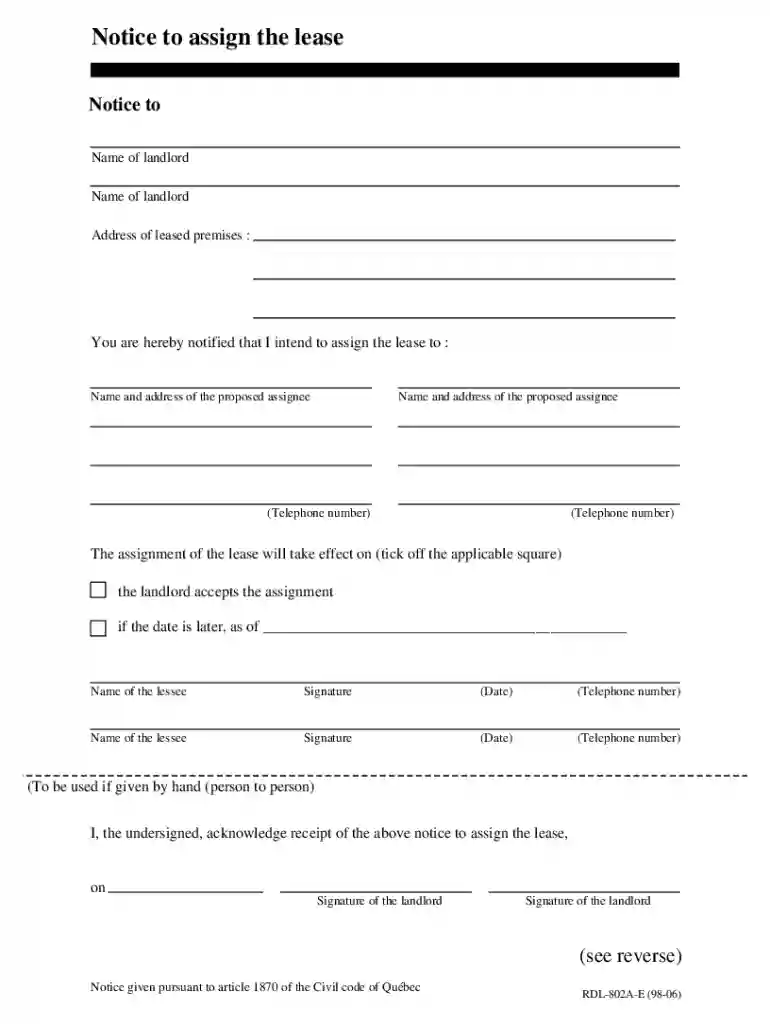
A "Notice to Assign the Lease - blappartbbinfob" is a formal document used by tenants to inform their landlord of an intention to transfer their lease rights to another party, known as the assignee. This notice initiates the process of assigning a lease from a tenant (assignor) to a new tenant (assignee), effectively allowing the latter to assume the responsibilities and rights outlined in the original lease agreement. The use of such a document is crucial in ensuring all legal requirements are met and that the landlord is informed of changes in tenancy arrangements. As per the document specification, the landlord must provide valid reasons if they choose to refuse the assignment and must do so within a specific timeframe, usually 15 days.
Key Elements of the Notice to Assign the Lease - blappartbbinfob
The notice includes several critical pieces of information that ensure the lease assignment process is both clear and enforceable. Key elements are:
- Parties Involved: Includes names and addresses of the current tenant (assignor), the proposed assignee, and the landlord.
- Lease Details: Information about the lease being assigned, such as the property address and the original lease agreement terms.
- Reason for Assignment: Provides context for the assignment, which could include personal, financial, or business-related reasons.
- Assignee's Information: Details about the proposed assignee, often including financial stability and creditworthiness to reassure the landlord of their capability to fulfill lease obligations.
- Landlord's Response Timeframe: Notifies that the landlord must provide any objections within a set period, typically 15 days.
How to Use the Notice to Assign the Lease - blappartbbinfob
Using the notice involves several steps to ensure it is correctly completed and legally binding:
- Gather Required Information: Collect all necessary details regarding the lease, the parties involved, and the proposed assignee.
- Complete the Notice: Fill in all sections of the notice with accurate and up-to-date information. Ensure clarity and completeness.
- Review Legal Requirements: Check state-specific rules as they can vary. Some jurisdictions may have additional requirements for lease assignments.
- Submit to Landlord: Deliver the completed notice to the landlord through a verifiable method such as registered mail or delivery with a receipt.
- Record Keeping: Maintain a copy of the notice and proof of delivery for future reference.
Legal Use of the Notice to Assign the Lease - blappartbbinfob
The notice serves as a legally recognized document providing a formal record of a tenant's intention to assign a lease. It helps protect the rights of the assignor, assignee, and landlord by clearly outlining the change in tenancy and stipulating conditions under which the assignment can occur. It is critical for compliance with lease agreement clauses and state laws concerning tenancy agreements. If the landlord provides an unjust refusal to the assignment, tenants might be able to challenge this legally, potentially deeming the non-respondent landlord as having consented.
Steps to Complete the Notice to Assign the Lease - blappartbbinfob
The completion of the notice involves several steps aimed at ensuring accuracy and validity:
- Tenant Identification: Include the assignor tenant's full legal name and contact information.
- Property Details: Describe the leased property thoroughly, including the full address.
- Assignee Introduction: Clearly state the proposed assignee's full details.
- Assignment Reference: Reference the original lease agreement's relevant sections that allow for assignment.
- Landlord's Observance: Provide a deadline by which the landlord must respond to the notice.
- Execution and Delivery: Both parties (assignor and assignee) should sign the document before delivering it to the landlord.
Important Terms Related to Notice to Assign the Lease - blappartbbinfob
Several terms frequently appear in lease assignment discussions, including:
- Assignor: The current tenant wishing to transfer the lease rights.
- Assignee: The new tenant who will assume the lease responsibilities.
- Lease Assignment: The act of transferring lease obligations and rights to another party.
- Consent: Approval from the landlord to proceed with the lease assignment.
- Objection Period: The timeframe, often 15 days, for the landlord to object to the assignment.
Who Typically Uses the Notice to Assign the Lease - blappartbbinfob
This particular notice is typically used by:

- Residential Tenants: Individuals who want to transfer their residential lease to another person.
- Commercial Tenants: Businesses aiming to transfer a commercial lease, either due to relocation, downsizing, or business closure.
- Legal and Real Estate Professionals: Attorneys and real estate agents who are assisting tenants in managing lease assignments.
State-Specific Rules for the Notice to Assign the Lease - blappartbbinfob
State regulations can affect how lease assignments are handled:
- Notification Requirements: Some states have specific forms or notice requirements.
- Landlord Consent: Variations exist on how consent must be obtained and recorded.
- Period for Response: Different jurisdictions might enforce various response times for landlords.
Understanding these nuances is vital for ensuring compliance and avoiding legal challenges.