






Definition and Importance of a Longitudinal Study in ESOL Acquisition
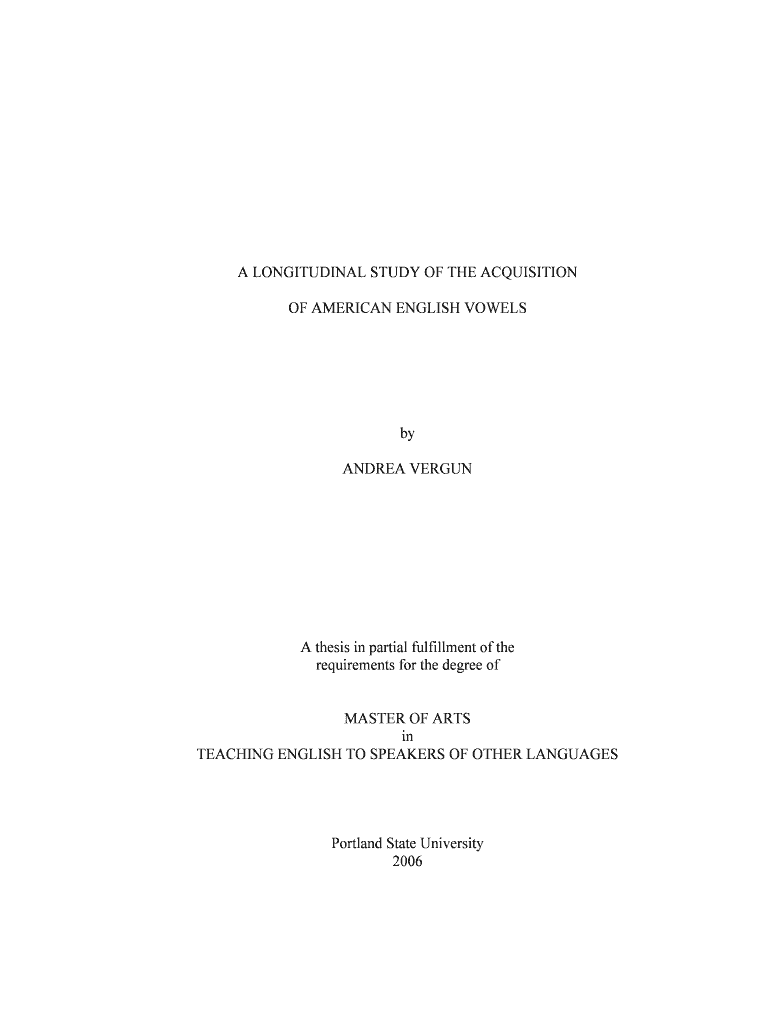
A longitudinal study in the context of ESOL (English for Speakers of Other Languages) acquisition, such as “A Longitudinal Study of the Acquisition of American English Vowels,” refers to research that observes the same subjects repeatedly over a period. The primary aim is to understand the developmental changes in language learners, particularly non-native speakers acquiring American English. This approach is advantageous because it provides insights into the natural progression of language acquisition, allowing researchers to capture detailed changes over time. These studies are critical for identifying patterns and consistencies in learning, which can inform teaching methods and improve educational practices. They allow educators to identify areas where learners, such as a Spanish-speaking adult in Andrea Vergun's study, may struggle, such as with specific vowel sounds, and adjust pedagogical strategies accordingly.
Utilization of the ESOL Lab in Language Acquisition Studies
ESOL Labs serve as controlled environments where researchers can systematically investigate language acquisition processes. In the context of longitudinal studies, these labs are used to gather qualitative and quantitative data, offering a structured setting to observe how learners, like those involved in the research at labschool pdx, develop their language skills over time. Within such labs, participants engage in a variety of tasks designed to elicit naturalistic speech, which is crucial for analyzing the acquisition of phonetic and phonological features of a new language. The ESOL lab settings facilitate consistent data collection through tools such as audio and video recordings, allowing for detailed analysis down to individual phonemes. These analyses can reveal the extent to which learners rely on their native language’s phonetic categories and their progress towards native-like pronunciation.
Steps to Complete a Longitudinal Study in ESOL
-
Research Design: Identify the objectives of the study and the hypotheses to be tested. The design should specify the duration and frequency of observations, ensuring they align with the intended research outcomes.
-
Participant Selection: Recruit individuals relevant to the study’s focus, such as adult Spanish speakers learning American English, ensuring they meet specific criteria to participate.
-
Data Collection: Utilize lab settings to collect data at scheduled intervals. Methods include recording naturalistic interactions and conducting interviews and pronunciation tasks to gather comprehensive data on language development.
-
Data Analysis: Analyze phonetic data to identify patterns in vowel acquisition, comparing learners' vowel production to native norms. This involves assessing reliance on L1 vowel categories and changes over time.
-
Interpreting Results: Contextualize findings within existing linguistic theories, such as Flege’s Speech Learning Model, to understand how adults form new phonetic categories.
-
Reporting Findings: Document and publish observations and interpretations, with implications for ESOL education and potential pedagogical adjustments.
Why Conduct Longitudinal ESOL Studies?
Conducting longitudinal ESOL studies is crucial for several reasons. Firstly, they provide in-depth insights into the progressive nature of language acquisition, documenting both successes and challenges learners face over time. They enable researchers to observe naturalistic learning environments and provide empirical evidence on how specific elements, like phonemic challenges, impede or benefit acquisition. Moreover, these studies contribute to theory development in linguistic acquisition and inform educators about effective teaching methodologies tailored to non-native speakers’ evolving needs. By identifying persistent difficulties, such as learners’ reliance on L1 categories, educators can devise targeted interventions to facilitate better acquisition outcomes.
Key Elements of the Labschool PDX ESOL Study
-
Participant Demographics: Focus on a Spanish-speaking adult learner and their vowel acquisition journey within American English, utilizing extensive classroom interaction data.
-
Data Analysis Methodology: Application of detailed phonetic analysis according to models like Flege’s Speech Learning Model to determine linguistic changes.
-
Focus on Vowel Acquisition: Investigation centers on distinguishing native-like vowel sounds, primarily tricky vowel sounds like /æ/, to see if and how learners transition to these new categories.
-
Naturalistic Speech Data: Collection focuses on real-world language use, reflecting classroom settings to capture authentic language learning progress.
Examples of Applying Longitudinal ESOL Research
A longitudinal study like this one offers practical examples for improving ESOL teaching practices. For instance, findings that learners initially rely on L1 phonetic categories suggest incorporating targeted pronunciation training in ESOL curricula. If a study reveals consistent difficulty with a specific vowel sound, educators might develop specific exercises to master those sounds. Additionally, tracking learner progress over time can serve as a reference for other educators and researchers, offering insight into typical acquisition timelines and allowing for more personalized educational strategies.
Eligibility and Participants' Criteria in ESOL Studies
Criteria for participation in ESOL longitudinal studies are essential to ensure relevant and reliable data collection. Participants typically need to be non-native English speakers often specified by L1 background, age, or specific learning needs, ensuring they align with the study’s focus, such as vowel acquisition. Personal motivation and availability for the study duration are also considered, supporting consistent data collection. This meticulous selection process helps in drawing accurate conclusions about language learning patterns applicable to similar learner populations.
Cultural Context and Educational Implications in ESOL
Understanding the cultural and educational context in which participants learn is fundamental to longitudinal ESOL studies. This context includes prior language exposure, cultural attitudes to language learning, and educational background, which influence language acquisition. These factors need to be incorporated into research analysis to understand participant motivation and learning pace, subsequently impacting ESOL teaching strategies. For educators, these insights can guide the creation of more inclusive and culturally responsive curricula that recognize diverse learner backgrounds.
Comparing Longitudinal and Cross-Sectional ESOL Research
Longitudinal and cross-sectional studies differ in their approach and utility. Longitudinal studies, like the one in the ESOL Lab at labschool pdx, follow the same individuals over time to observe changes in language acquisition, providing detailed insights into personal learning journeys. In contrast, cross-sectional studies assess different individuals at a single point in time, capturing a snapshot of learner differences across a population without temporal tracking. While longitudinal research offers detailed developmental insights, cross-sectional studies are useful for broader demographic comparisons. Both types of research contribute uniquely to understanding ESOL acquisition and should be used complementarily in educational research.