
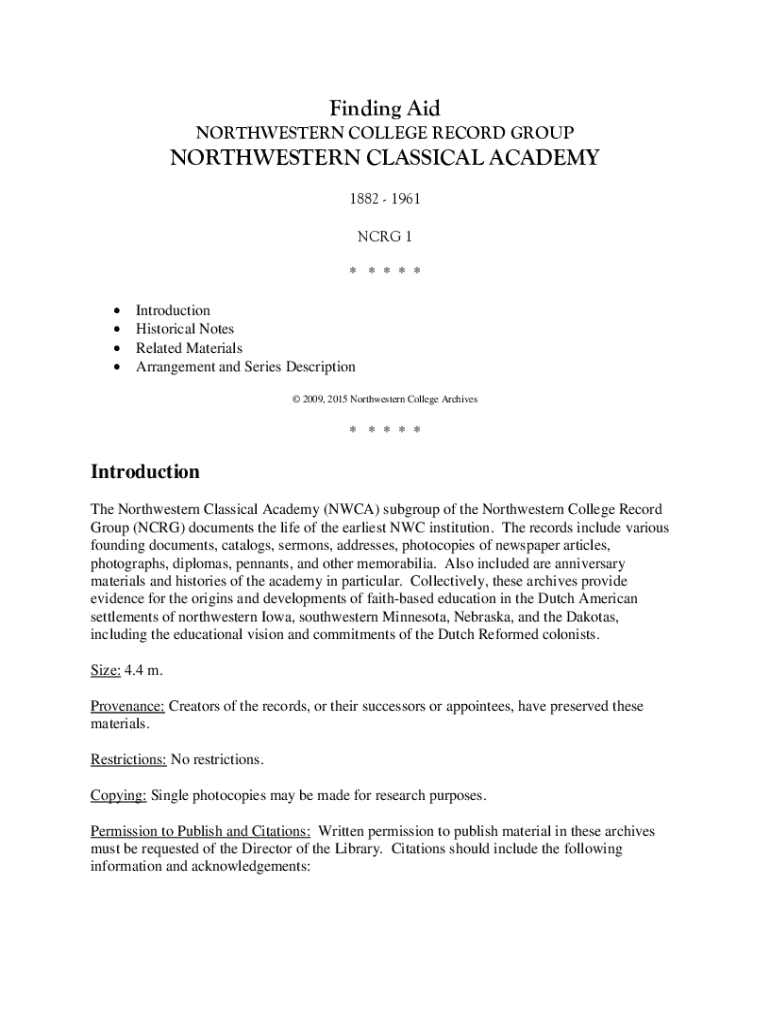







Definition and Significance of Finding Aids
Finding aids are essential tools used in archives and libraries to help researchers locate information within a collection. In the United States, finding aids have evolved significantly, adapting to technological advancements and changing user needs. Originally presented in paper formats, these aids are now often available in digital PDF formats, enabling broader accessibility and easier updates.
How to Use the PDF Finding Aid
To make the best use of a PDF finding aid, it is essential to understand its structure. Typically, these documents include an introduction to the collection, a scope and content note, and a detailed inventory of the material available for research. Users can navigate the PDF using a table of contents or search features to quickly locate relevant sections of interest.
Navigating the Contents
- Table of Contents: Provides a concise overview of major sections.
- Search Functionality: Allows users to search for specific terms or subjects.
- Hyperlinks: Often exist within digital PDFs, enabling quick jumps to related sections.
Steps to Obtain the PDF Finding Aid
Obtaining a PDF finding aid is relatively straightforward. Most institutions provide access through their websites. Here are steps to get it:
- Visit the archive or library's official website.
- Locate the section dedicated to aids or collections.
- Use search tools provided by the site to find the relevant PDF.
- Download the document directly to your device for offline accessibility.
Key Elements Within the PDF Finding Aid
The key elements of a finding aid include several integral parts that assist in research:
- Title Page: Offers a clear title for identification.
- Biographical or Historical Note: Provides context about the collection’s creator or the organization.
- Scope and Content Note: Summarizes the organization's materials.
- Arrangement: Details how the collection is organized, facilitating easier access.
Legal Considerations for Using Finding Aids
While finding aids themselves are not typically bound by legal restrictions, the collections they describe might be. Researchers should be aware of:
- Access Restrictions: Some collections have use limitations due to privacy or conservation concerns.
- Copyright Issues: Understanding who holds the copyright can prevent legal issues when using or reproducing collection materials.
State-Specific Rules for Finding Aids
While the overall format of finding aids remains consistent, certain state archives may have unique practices:
- State Guidelines: Some states provide additional guidance on using their archives.
- Access Regulations: Regulations might differ regarding who can access specific collections.
Digital vs. Paper Versions of the Finding Aid
Modern finding aids are predominantly digital, allowing for ease of distribution and updates. However, paper versions still exist in some archival settings:
- Digital Versions: Offer search capabilities, ease of access, and the ability to hyperlink sections.
- Paper Versions: Provide tangible evidence of research pathways and are useful in areas with limited technological access.
Examples of Using Finding Aids in Research
Finding aids play a crucial role in various research undertakings, especially in historical contexts:
- Case Study on Educational Archives: Researchers studying the NWCA subgroup might use the finding aid to locate materials illustrating its educational principles and evolution.
- Comparative Studies: Scholars can use multiple finding aids to compare thematic or subject matter across different collections.
Important Terms Related to Finding Aids
Understanding common terms used in finding aids can enhance a researcher’s ability to utilize them effectively:
- Repository: The physical or digital location where a collection is housed.
- Collection: A group of materials gathered based on a common origin or theme.
- Series: Subdivision within a collection indicating a thematic grouping.
Software Compatibility for PDF Finding Aids
Most PDF finding aids are designed to be compatible with common software:
- Adobe Acrobat Reader: Universally compatible and free software for viewing and searching PDFs.
- Other PDF Readers: Tools like Foxit Reader or web-based viewers also support opening these documents.
This comprehensive understanding allows users to effectively utilize the "PDF) The evolution of the finding aid in the United States," aiding academic researchers, genealogists, and history enthusiasts alike in their investigative pursuits.




