Definition and Meaning
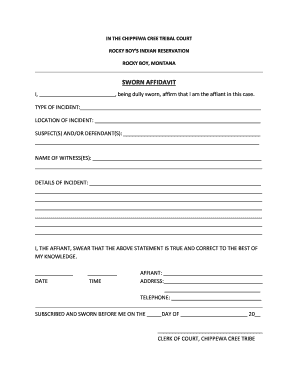
The "Application for Notice of Intent to Claim Paternity" is a legal form used in the United States to officially declare a man's intention to claim biological fatherhood of a child. This application signifies that the individual seeks to establish legal rights or responsibilities associated with being a child's biological parent. In several jurisdictions, filing this notice may be an initial step in securing legal rights such as custody or visitation.
Importance of Legal Recognition
- Parental Rights: Filing this application is crucial for asserting parental rights, including custodial arrangements and decision-making for the child.
- Child Support Obligations: Aside from granting rights, this declaration may also initiate the assessment of financial responsibilities.
- Inheritance and Benefits: Official recognition as a parent can impact a child’s entitlement to inheritance and public benefits.
How to Obtain the Application for Notice of Intent to Claim Paternity
Acquiring this document typically involves contacting the vital records office or the family court in the state where the child resides. Each state may have different protocols or availability standards, reflecting variations in legal requirements.
- Online Access: Many jurisdictions provide downloadable versions of the form through their official websites, allowing for easy access and completion.
- In-Person Collection: Forms can often be obtained directly from local family courts or legal aid clinics.
- Mail Request: Some states offer the option to request the form by mail, requiring a written request or a filled-out application form.
Steps to Complete the Application
The completion process of this form involves detailed steps, ensuring that all necessary information is accurately recorded:
- Personal Details: Start by providing your full legal name, contact information, and social security number. This section establishes your identity and links to the child.
- Child’s Information: Include the child's full name, date of birth, and current residence to identify them within the jurisdiction properly.
- Mother’s Information: Record the biological mother's name and contact information to establish a relationship and context.
- Acknowledge Statements: Sign sections acknowledging the legal implications of claiming paternity, including potential financial responsibilities.
- Notarization: Many forms require an official notary to witness your signature, ensuring the legal validity of your declaration.
Who Typically Uses the Application
The application is primarily utilized by men who wish to declare their paternal rights regarding a child. It is frequently used in situations where:
- Unmarried Fathers: To formally establish paternity when not wed to the child's mother.
- Disputed Parentage: In cases where paternity is contested and needs legal clarification.
- Pending Custody Cases: To proactively assert rights in ongoing family court matters.


Important Terms Related to the Application
Understanding key terms enhances comprehension and proper application:
- Paternity: The state of being a father; legal acknowledgment as a parent.
- Custody: Legal responsibility for the care and control of a child.
- Visitation Rights: The non-custodial parent's legal permission to visit the child.
Required Documents
Supporting documentation is critical for a successful application:
- Proof of Identity: Examples include a driver's license or passport.
- Birth Certificate: The child’s birth certificate often accompanies the application for identity confirmation.
- Affidavit of Paternity: In many cases, confirming paternity through an affidavit may be necessary.
Application Process and Approval Time
The approval process for this application involves several legal checkpoints:
- Submission: Submit the completed form and required documents to the appropriate office.
- Review Period: The processing time can vary, typically ranging from two to eight weeks, based on the jurisdiction.
- Potential Hearings: In certain cases, a court hearing may be required to resolve disputes or review additional evidence.
Approval confers legal acknowledgment of paternal claims, opening pathways to further legal actions regarding custody or child support.
State-Specific Rules for the Application
Legislation around paternity claims varies significantly across states:
- Time Limits: Some states impose deadlines by which a father must file for paternity after a child’s birth.
- Different Forms: States may use unique forms or additional documentation for a formal declaration.
Understanding state-specific rules is vital for accurate filing and compliance with local family law statutes.