01. Edit your form online
Type text, add images, blackout confidential details, add comments, highlights and more.

Type text, add images, blackout confidential details, add comments, highlights and more.

Draw your signature, type it, upload its image, or use your mobile device as a signature pad.

Send it via email, link, or fax. You can also download it, export it or print it out.
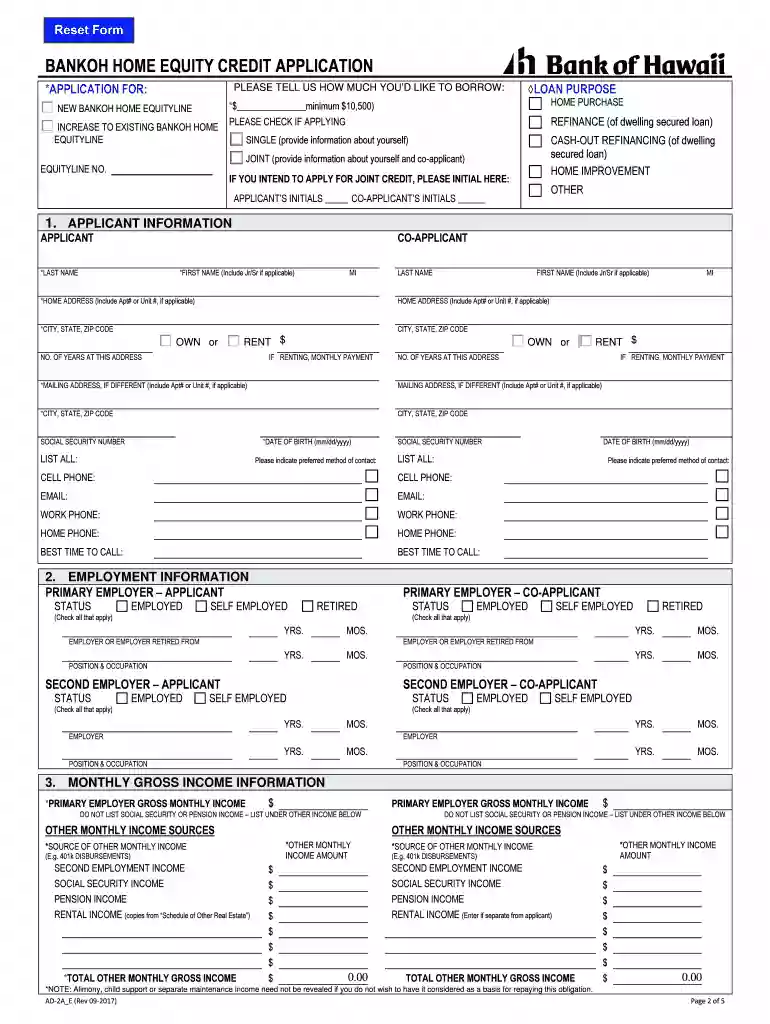
Understanding what the "New Bankoh Home EquityLine Increase to existing Bankoh Home EquityLine No" involves is essential. This form is used to apply for an increase in an already existing Bankoh Home Equity Line of Credit, which allows homeowners to borrow against the equity in their homes. This financial instrument can help finance renovations, consolidate debts, or fund major purchases. By increasing an existing line of credit, applicants can potentially access additional funds without opening a new account, streamlining their financial activities.
The form comprises several critical elements necessary to process a request for an increase in a home equity line. Key elements include:
Each element needs accurate information to ensure the application is processed smoothly.
To successfully use the New Bankoh Home EquityLine Increase form, follow these guidelines:
The correct use of this form is essential for securing the desired credit line increase.
Completing the New Bankoh Home EquityLine Increase form involves a series of steps:
Ensure each section is fully completed before submission to avoid processing delays.
Submitting this form requires various documents to validate the application:
Submitting all required documents alongside the form ensures a smooth review process.
Once the form is submitted, the application process involves:
The approval time can vary, typically ranging from one week to one month, depending on the details provided and the lender’s processing speed.
The use of this form is compliant with federal laws governing home equity lines of credit. It must be filled out with truthful and complete information. Misrepresentation or fraudulent information can lead to penalties or denial of credit. Understanding the legal framework ensures that applicants are fully informed of their responsibilities and rights.
For those who prefer digital management of documents, the New Bankoh Home EquityLine Increase form can be managed with various software:
Leveraging software can enhance precision and maintain records effectively, ensuring the process remains efficient for the applicant.
We've got more versions of the New Bankoh Home EquityLine Increase to existing Bankoh Home EquityLine No form. Select the right New Bankoh Home EquityLine Increase to existing Bankoh Home EquityLine No version from the list and start editing it straight away!
| Versions | Form popularity | Fillable & printable |
|---|---|---|
| 2017 | 4.5 Satisfied (46 Votes) |
At DocHub, your data security is our priority. We follow HIPAA, SOC2, GDPR, and other standards, so you can work on your documents with confidence.