
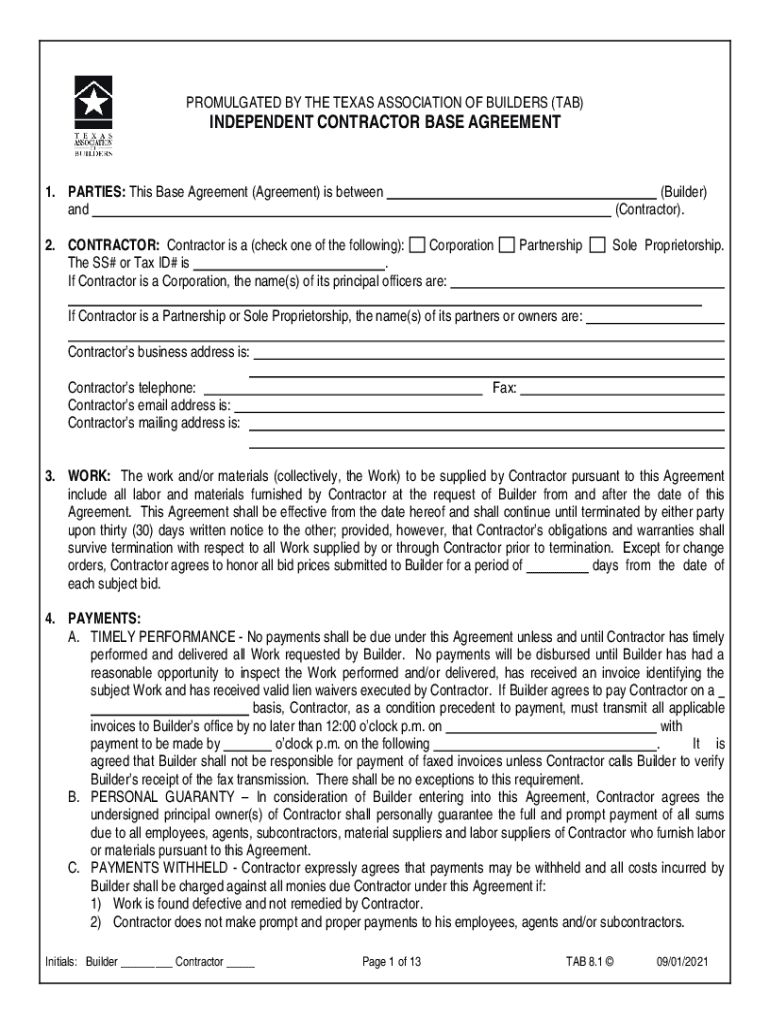







Definition and Meaning
The "Independent Contractor Base Agreement" is a legal document primarily used to formalize the relationship between a contractor and a company or individual hiring their services. The agreement establishes the contractor's independent status, differentiating it clearly from an employee relationship. This distinction is crucial for both legal and financial reasons, as it affects tax responsibilities, liabilities, and the rights of the parties involved. Typically, these agreements outline the scope of work, terms of payment, duration, and confidentiality requirements, ensuring that both parties understand and agree on the terms of their professional engagement.
How to Use the Independent Contractor Base Agreement
Using an Independent Contractor Base Agreement involves several key steps to ensure clarity and legal enforceability. Start by reviewing the template to understand the standard clauses included. Next, customize the agreement to reflect the specific project or service being provided, making adjustments to details such as payment schedules, deliverables, and timelines. It's essential to include information about insurance requirements and any state-specific regulations that may apply. After drafting, both parties should review and sign the agreement, ideally in the presence of a legal adviser to confirm compliance with relevant laws.
Examples of Contractual Terms
- Project Scope: Clearly define the tasks the contractor will perform.
- Payment Terms: Outline the method, frequency, and conditions for payment.
- Confidentiality: Specify any proprietary information that must be kept secure.
- Termination Clauses: Include conditions under which the contract can be canceled.
Steps to Complete the Independent Contractor Base Agreement
Completing an Independent Contractor Base Agreement involves a series of methodical steps. Begin by gathering all necessary information, including business names, contact information, and detailed project plans. Draft the agreement using a reliable template or legal resource, ensuring all pertinent sections are completed with specific details. Both parties should review the document to address any initial concerns or misunderstandings. Once satisfied, each party must sign the agreement to formalize the contract legally. Retain a copy of the signed agreement for your records, stored securely either in digital format or as a hard copy.
Key Elements of the Independent Contractor Base Agreement
Several fundamental elements must be present in any Independent Contractor Base Agreement to ensure its effectiveness and legality. These include clearly defined responsibilities and rights for both parties, explicit definitions of contractual terms like work scope and deliverables, payment modes and schedules, confidentiality commitments, and non-compete clauses if applicable. Legal compliance, including dispute resolution methods and termination conditions, are also critical. Absence of any of these elements might expose the contract to legal challenges, undermining its enforceability.
Important Terms Related to the Independent Contractor Base Agreement
It's important to understand key legal and contract-specific terminology often used in an Independent Contractor Base Agreement:
- Indemnification: A clause ensuring that one party will compensate the other for certain damages or losses.
- Force Majeure: Conditions under which the obligations of the parties can be suspended due to unforeseen events.
- Non-Compete: Restrictions on the contractor's ability to work with competitors during and after the contract term.
- Liability: The extent to which a party can be held responsible for damages or losses.
This understanding ensures accurate communication and reduces potential legal issues.
Who Typically Uses the Independent Contractor Base Agreement
Various entities and individuals utilize the Independent Contractor Base Agreement across different sectors. Freelancers, consultants, and specialized professionals often engage with businesses using such agreements. Small businesses and startups that rely on flexible labor without long-term commitments also frequently employ these legal documents. On the corporate side, companies hiring experts for short-term projects or niche services resort to these agreements to delineate the nature of the working relationship clearly.


Why You Should Use the Independent Contractor Base Agreement
The primary reason for employing an Independent Contractor Base Agreement is to establish clear, legally binding terms between the contractor and the hiring entity. This document helps mitigate misunderstandings and disputes by providing a concrete reference to agreed terms and conditions. It also secures both parties' interests by specifying requirements around payment, confidentiality, and liability, among others. Additionally, a properly crafted agreement reinforces the contractor's independence, thus protecting both parties from misclassification errors that could lead to legal and tax issues.
Legal Use of the Independent Contractor Base Agreement
When drafting and executing an Independent Contractor Base Agreement, it's vital to ensure its legal validity. The agreement must comply with federal and state labor laws, which can vary significantly. It should unambiguously affirm the independent contractor status, avoiding any indications of an employer-employee relationship. This precision helps to prevent potential legal repercussions for misclassification, which might include fines or back taxes. Consulting with a legal professional when creating or entering into such an agreement can further ensure that all legal considerations are adequately addressed, leaving both parties protected.
State-Specific Rules for the Independent Contractor Base Agreement
State-specific rules can significantly impact the stipulations within an Independent Contractor Base Agreement. For instance, some states, including California and New York, have stringent criteria for classifying workers as independent contractors. These rules can influence sections related to work scope, hours, and payment. It is crucial for both parties to be familiar with and adhere to these state-specific regulations to avoid fines or disputes stemming from non-compliance. Incorporating legal counsel familiar with local laws may facilitate adhering to these requirements, ensuring that the agreement remains valid and enforceable across jurisdictions.




