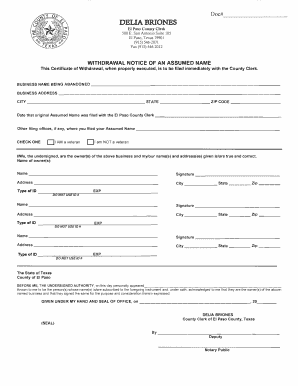
01. Edit your termination notice pursuant to provisions of section 1089 online
Type text, add images, blackout confidential details, add comments, highlights and more.

Type text, add images, blackout confidential details, add comments, highlights and more.

Draw your signature, type it, upload its image, or use your mobile device as a signature pad.

Send termination notice pursuant to provisions of section 1089 via email, link, or fax. You can also download it, export it or print it out.
The "termination notice pursuant to provisions of section 1089" serves as a formal document used in employment law, detailing the circumstances and justifications for the termination of an employee's contract. This notice aligns with specific legal requirements outlined in section 1089, ensuring both the employer's and the employee's rights are maintained. Common reasons for issuing such a notice include voluntary separation, layoffs, leave of absence, discharge, or refusal to accept work. In various U.S. jurisdictions, this form comes with sections that specify the employee's details and changes in employment status, including the effective date and reasons for termination.
Filling out the termination notice pursuant to provisions of section 1089 involves a series of methodical steps to ensure accuracy and legality. Below is a step-by-step guide for completing this document:
Gather Information: Collect all necessary data, including the employee's personal details, employment history, and the specific grounds for termination in alignment with section 1089.
Document the Reason: Clearly articulate the reason for termination. For instance, if it’s based on performance issues, provide documented incidents or evaluations.
Consult Legal Protocols: Verify that your reason for termination aligns with applicable state and federal laws as referenced in section 1089.
Complete the Form: Fill out each part of the form, double-checking for completeness and accuracy. This includes entering all termination specifics and effective dates.
Review with HR or Legal Advisor: It’s advisable to have the completed notice reviewed by HR or a legal advisor to ensure compliance and mitigate potential disputes.
Issue the Notice: Schedule a meeting to personally hand over the termination notice to the employee, allowing space for discussion and clarification.
While section 1089 provides a federal guideline, states may impose additional or variant rules. Employers must be aware of any state-specific requirements before issuing a termination notice.
Understanding these state-specific nuances ensures compliance and avoids potential legal complications.
The issuance of a termination notice pursuant to provisions of section 1089 must strictly adhere to legal frameworks to prevent disputes and legal action. This requires consideration of:
Compliance with these legal considerations can shield employers from grievances and litigation.
Employers find themselves needing to issue termination notices across various scenarios. Here are two typical examples:
An employee submits a resignation, and the employer formalizes the process through the termination notice. The document includes a record of the employee's resignation date, a note of acceptance, and details regarding final compensation.
When an employee consistently fails to meet performance expectations despite admonishments and support, the employer resorts to a termination notice. This notice documents past performance issues, corrective actions taken, and the lack of improvement, forming a basis for dismissal.
These examples underline the importance of the termination notice in providing clear and documented communication during the termination process.
Acquiring the termination notice form pursuant to provisions of section 1089 is typically straightforward and involves either:
Securing the correct version of this form is crucial for legitimate and enforceable termination processes.
Failing to comply with the guidelines set forth by section 1089 in terminating an employee can result in significant unfavorable outcomes, including:
Understanding these penalties underscores the necessity of adhering to all legal standards when using termination notices.
At DocHub, your data security is our priority. We follow HIPAA, SOC2, GDPR, and other standards, so you can work on your documents with confidence.