01. Edit your form online
Type text, add images, blackout confidential details, add comments, highlights and more.

Type text, add images, blackout confidential details, add comments, highlights and more.

Draw your signature, type it, upload its image, or use your mobile device as a signature pad.

Send it via email, link, or fax. You can also download it, export it or print it out.
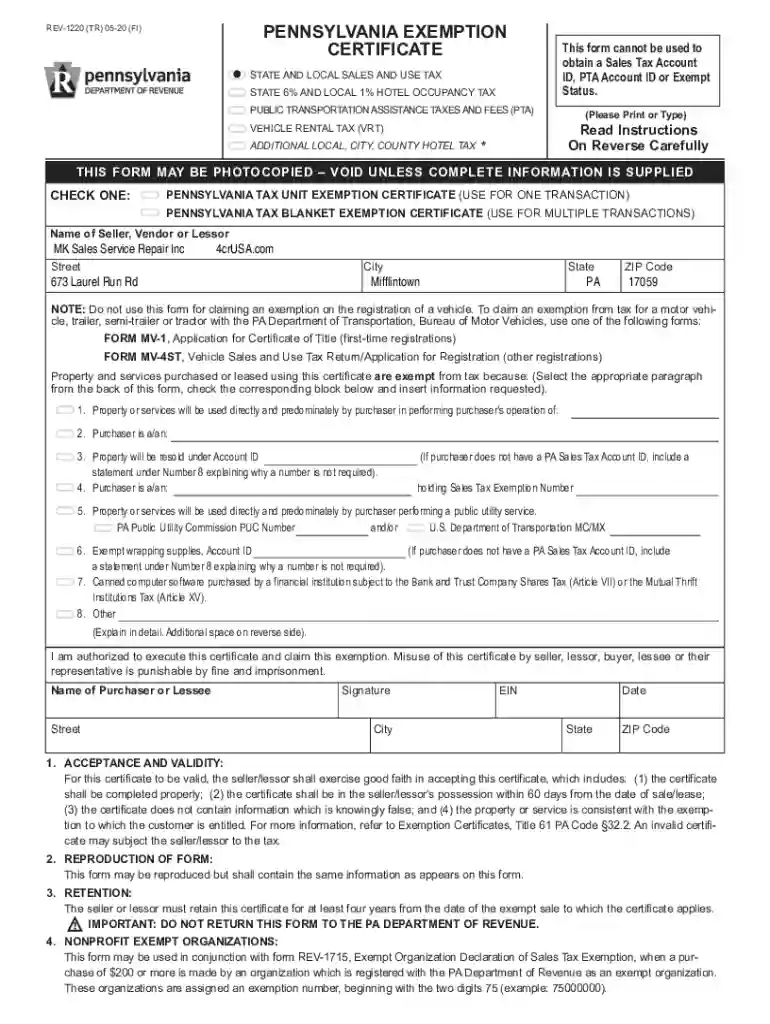
The PA Sales Tax Exemption Form, known as the REV-1220, is a vital document used in Pennsylvania to claim exemptions from state and local sales and use taxes, hotel occupancy taxes, and vehicle rental taxes. This form is essential for businesses and organizations seeking to avoid paying these taxes when purchasing goods or services that qualify for exemption. An exempt status is typically applicable to specific nonprofit organizations, government entities, and other qualifying groups. Understanding the meaning behind this form is crucial for proper tax management and compliance.
Visit the Pennsylvania Department of Revenue Website: The PA Sales Tax Exemption Form can be downloaded directly from the state's Department of Revenue website. Look for the section on sales tax forms and locate the REV-1220.
Request Via Mail: If online access is not possible, request a physical copy by contacting the Department of Revenue through their customer service line. They can mail a copy to your business address.
Tax Professional Assistance: Engage with a tax professional or accountant who can provide you with the form and possibly assist in its completion.
Local Government Offices: Some local government offices or business resource centers may also have copies of the form available for pickup.
Understanding how to obtain this form ensures quick access, whether through digital or physical means, and allows timely processing of tax exemption needs.
Gather Necessary Information: Before filling out the form, collect details about your organization, including its tax identification number, address, and a description of its exempt purpose.
Fill Out Section 1: This section typically requires the organization name, address, and contact details to establish identity.
Complete Section 2 - Exemption Certificate: Indicate the type of exemption you qualify for, such as nonprofit status, government entity, or specific use exemption.
Signature and Date: Ensure the form is signed by an authorized representative of the organization. The signature verifies the accuracy of the information provided.
Retention by Seller/Lessor: Once completed, submit the form to the seller or lessor, who must retain it for at least four years as part of their records.
Following these steps accurately is crucial to successful completion and acceptance of your PA tax exemption requests.
This form plays a pivotal role in helping eligible entities save on costs by legally avoiding taxes on purchases. It ensures compliance with state tax laws while providing a streamlined method for organizations to prove their tax-exempt status to vendors.
Grasping the importance of this form assures that organizations can maximize their financial resources without encountering unnecessary tax burdens.
Nonprofit Organizations: Charitable, religious, or educational organizations benefit significantly from using this form to claim tax exemptions on purchases.
Government Entities: Local, state, and federal government offices apply to avoid paying sales tax in conducting public business.
Qualified Resellers: Businesses that resell goods may use similar certificates to buy products without incurring sales tax.
Recognizing who typically uses this form can help determine its applicability to different organizational needs and ensure proper use in applicable scenarios.


Buyer Information: Complete details of the purchaser, including contact information and tax identification number.
Exemption Type: Clear indication of the type of exemption being claimed, such as nonprofit purpose or governmental function.
Vendor Information: Details of the seller or lessor, which are essential for maintaining clear records.
Signature Line: A vital component ensuring all provided information is certified by a responsible party.
Understanding the key elements of the form aids in ensuring it is filled out correctly and completely, preventing delays or denials of tax-exempt status.
The legal use of this form is critical in maintaining compliance with Pennsylvania's tax rules. It is used strictly for legitimate purchases associated with the exempt purpose as stated by the organization.
Only for Qualified Entities: The form should only be used by those explicitly eligible for exemptions.
Accurate Record-keeping: The seller or lessor must retain the form for audit purposes, ensuring documentation of exemption claims.
Following the legal guidelines of the PA Sales Tax Exemption Form is vital for preventing misuse and ensuring that organizations remain compliant with state tax laws.
Non-compliance with the sales tax exemption regulations can result in significant penalties, including but not limited to:
Fines and Back Taxes: Organizations may be liable for back taxes on improperly exempted purchases, alongside monetary fines.
Revocation of Exempt Status: Repeated misuse or errors might result in the revocation of the exempt status, impacting financial operations.
Audit Consequences: Businesses can face audits that lead to more stringent scrutiny of their financial practices, possibly resulting in further financial penalties.
Understanding these penalties emphasizes the necessity of correct and honest use of the PA Sales Tax Exemption Form, ensuring organizations benefit from the exemptions without facing legal repercussions.
At DocHub, your data security is our priority. We follow HIPAA, SOC2, GDPR, and other standards, so you can work on your documents with confidence.