Definition & Meaning
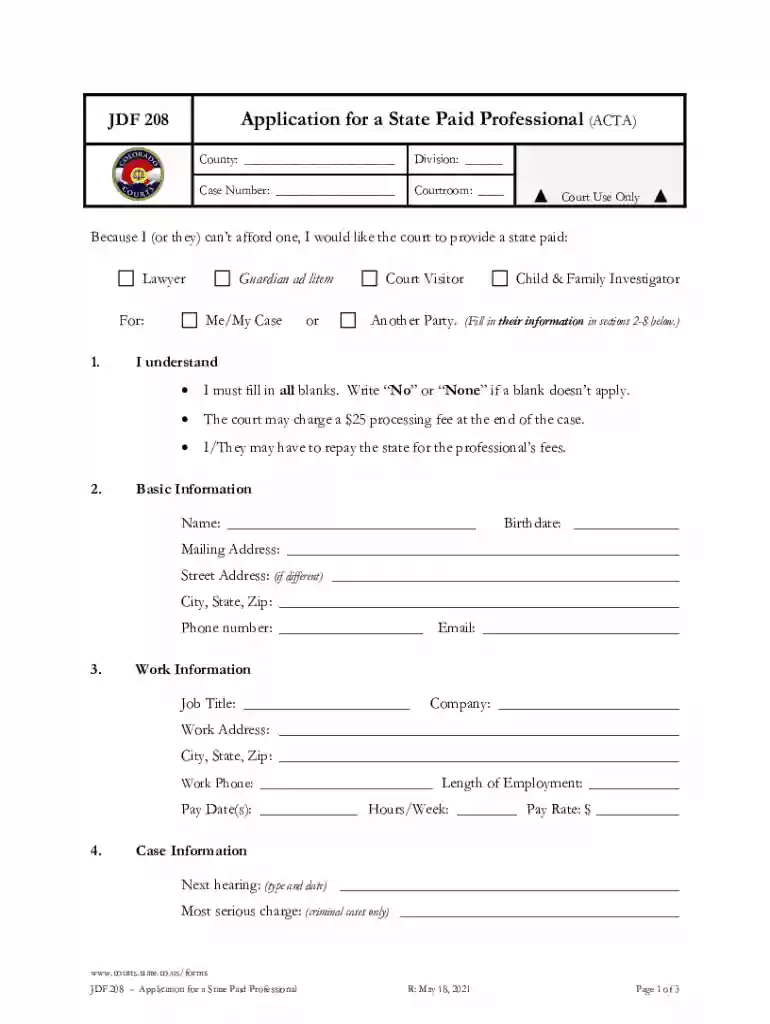
The "Application for a State Paid Professional (ACTA)" is a formal request form that individuals submit to receive assistance from a state-funded professional. This application is used primarily by those who are unable to afford the cost of hiring a professional, such as a lawyer or guardian ad litem, due to financial constraints. The form requires applicants to provide detailed information about their personal and financial circumstances to qualify for state-paid services. By filling out the ACTA, applicants seek legal or protective services supported by state funding, ensuring representation in legal matters when they cannot afford private services.
How to Use the Application for a State Paid Professional (ACTA)
To effectively use the ACTA, applicants need to gather comprehensive personal, financial, and case information. This information aids in assessing eligibility for state-paid professional assistance. The form includes sections for personal information, case details, and financial disclosures, which need to be filled out accurately. Key steps include:
- Personal Information: Provide basic details such as full name, contact information, and identification numbers.
- Case Details: Describe the nature of the legal or professional assistance required, including any ongoing cases.
- Financial Disclosure: Detail income sources, monthly expenses, and assets to demonstrate financial need.
- Acknowledgement: Review potential obligations, such as eventual repayment if applicable.
Practical Tips
- Gather all necessary documents before beginning to ensure accurate completion.
- Double-check for accuracy to avoid delays in processing.
- If necessary, seek assistance from a legal advisor or state office representative.
Steps to Complete the Application for a State Paid Professional (ACTA)
Completing the ACTA involves a structured sequence of steps to ensure each section is thoroughly filled out:
- Read Instructions Carefully: Before starting, thoroughly go through the provided instructions to understand the form's requirements and sections.
- Fill Out Personal Information: Enter your full legal name, address, and contact details.
- Case Information: Provide details about the case, including any existing court dates and the type of professional assistance you need.
- Financial Details: Section requires clarity on:
- Monthly income from all sources.
- Recurring monthly expenses.
- Asset listings, including savings, properties, and investments.
- Review and Sign: Carefully review the form for accuracy, complete any required signatures, and understand the terms of state assistance.
Notable Considerations
- Ensure each section is filled completely to prevent delays.
- Misrepresentation of financial information can lead to form rejection or legal consequences.
- Submitting supporting documents enhances form credibility.
Key Elements of the Application for a State Paid Professional (ACTA)
Certain key elements are vital to the ACTA's function. These ensure thorough evaluation and correct processing:
- Personal and Contact Information: Crucial for identification and communication.
- Financial Disclosure: Essential to establish a basis for financial need assessment.
- Case Details: Provides context and urgency of professional assistance required.
- Acknowledgement & Consent: Applicant's understanding of the process and potential repayment obligations.
- Supporting Documents: Enhances the credibility of claims made within the application.
Document Requirements
- Identification documents (e.g., driver’s license, passport).
- Proof of income (e.g., pay stubs, welfare benefits).
- Financial statements.
Eligibility Criteria
Eligibility for state-paid professional services depends on several factors outlined within the ACTA:

- Income Threshold: Applicants must fall within a specified income bracket.
- Asset Limitations: Total assets should not surpass set limits determined by state guidelines.
- Case Merit: There must be a significant need for the proposed professional assistance.
Edge Cases
- Rejection may occur if financial details are insufficient or eligibility criteria are not met.
- Applicants with significant non-liquid assets might face scrutiny despite low income.
Important Terms Related to Application for a State Paid Professional (ACTA)
Understanding terminology within the ACTA is crucial for proper completion:
- State Paid Professional: Refers to a lawyer or guardian provided and funded by the state.
- Guardian ad Litem: A court-appointed guardian representing minors or those unable to represent themselves.
- Financial Disclosure: Section demanding comprehensive financial information.
- Acknowledgement: Applicant's confirmation of understanding responsibilities associated with the application.
Legal Use of the Application for a State Paid Professional (ACTA)
Using the ACTA legally implies adhering to state guidelines for submission and ensuring truthful portrayal of information:
- Truthful Disclosure: Ensures compliance with legal mandates for financial accuracy.
- Appropriate Documentation: Must accompany form submissions for legal validation.
- Informed Consent: Understanding and agreeing to conditions and potential obligations outlined by the program.
Potential Risks
- Providing false information can result in disqualification and possible legal penalties.
- Incomplete submissions might delay or negate processing.
State-Specific Rules for the Application for a State Paid Professional (ACTA)
Each state may apply specific rules affecting how the ACTA is utilized and processed:
- Income Guidelines: Differ from state to state, reflecting cost of living variations.
- Processing Times: Can vary based on state resources and application volume.
- State-Specific Forms: Some states might require additional forms or documentation unique to their jurisdiction.
Examples
- States with higher living costs might have more lenient income restrictions.
- Rural states may emphasize the necessity for legal assistance due to fewer available resources.
Completing the ACTA correctly ensures access to much-needed professional assistance for those unable to afford it, ensuring equity in accessing essential services.