







Definition & Meaning
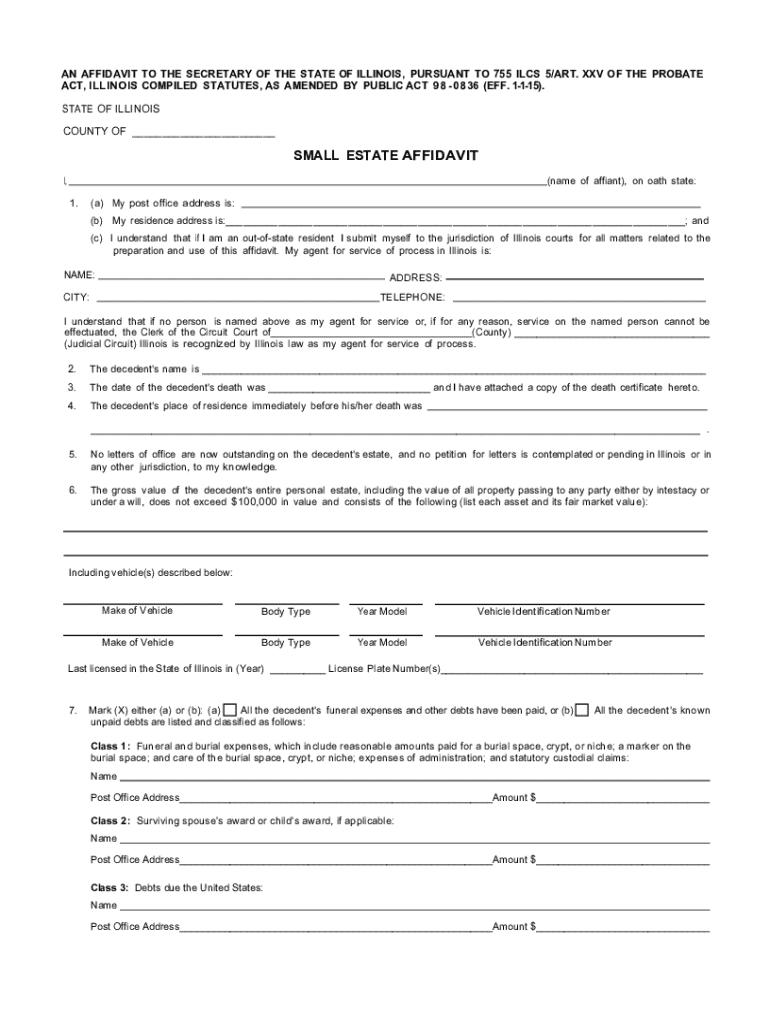
The Small Estate Affidavit for the State of Illinois is a legal document that facilitates the transfer of a decedent's estate without a formal probate process. It is primarily used when the total value of the estate does not exceed $100,000 and allows the affiant to declare details about the decedent’s assets, liabilities, and beneficiaries. The purpose is to simplify asset distribution to heirs or legatees and manage settlement of debts in an efficient manner.
Eligibility Criteria
Eligibility to use the Small Estate Affidavit is specific and governed by state rules. To qualify, the estate must not exceed $100,000 in value, there should be no pending probate cases, and the decedent should not hold real estate interests outside of Illinois. Moreover, the affiant must ensure that all claims, debts, or taxes are duly addressed before distribution of remaining assets to heirs.


Other Eligibility Considerations
- The deceased must have lived in Illinois.
- All inheritors should agree to the affidavit’s use.
- Creditors have to be notified if debts are involved.
How to Obtain the Small Estate Affidavit in Illinois
Obtaining the Small Estate Affidavit involves gathering pertinent details about the deceased’s estate and preparing the document according to Illinois’ legal requirements. The prepared affidavit should accurately list all personal property, identify heirs, and itemize any outstanding debts. It must be notarized to validate its authenticity.
Steps to Obtain
- Gather key documents, including the death certificate and estate details.
- Draft the affidavit ensuring adherence to Illinois-specific guidelines.
- Present the affidavit to a notary for official seal and signature.
Steps to Complete the Small Estate Affidavit
Completing the Small Estate Affidavit requires meticulous attention to detail, ensuring accuracy in listing all financial and personal data related to the estate. This includes calculating the total value of assets, resolving debts, and confirming rightful heirs.
Completion Process
- List Decedent Information: Include name, date of death, and last residence.
- Asset Details: Document descriptions and values of assets.
- Debt Settlement: Address all debts and liabilities.
- Heirs & Beneficiaries: Clearly state the names and relationship to the deceased.
- Sworn Statement: Confirm the information accuracy under notary supervision.
Legal Use of the Small Estate Affidavit
The legal use of the Small Estate Affidavit extends to asset transfer, debt resolution, and distribution of assets to rightful heirs. It serves as a substitute for more costly and time-consuming probate procedures and provides an efficient legal pathway for estate administration under Illinois law.
Legal Framework
- Utilized for simplified transfer of assets.
- Allows legal handling of debts and estate claims.
- Provides a record for legal reference and action.
Key Elements of the Small Estate Affidavit
The Small Estate Affidavit must contain specific elements to meet legal requirements. This includes comprehensive details of the decedent, a thorough list of assets, any claims or debts, and identification of all heirs. It is crucial to ensure compliance with Illinois state laws regarding asset value and notary requirements for legitimacy.
Critical Components
- Decedent's personal information.
- Complete asset and debt inventory.
- Clear statements regarding the affidavit’s purpose and usage.
State-Specific Rules for the Illinois Small Estate Affidavit
The small estate affidavit must comply with Illinois-specific rules, which dictate how the affidavit is structured and employed. Key regulations determine how assets are evaluated, who can act as affiant, and the precise wording required for legal acceptance.
Illinois State Regulations
- Asset value maximum: $100,000.
- Mandatory notifications for creditors.
- Notarization is compulsory for legal standing.
Examples of Using the Small Estate Affidavit
Practical scenarios demonstrate the simplicity and effectiveness of using the Small Estate Affidavit. In cases where the deceased had minimal assets and no conflicting claims from creditors or family members, this affidavit streamlines the estate closure process.
Real-World Scenarios
- Single Heir: An example includes a sole surviving child managing the distribution of a remaining bank account without involving the courts.
- Debt-Free Estate: Efficient transfer of personal items when no debts are owed.
- Multiple Beneficiaries: Coordinated asset division among several heirs where all parties agree on distributions.
Required Documents for Completing the Affidavit
Completing the Small Estate Affidavit necessitates compiling essential documents that substantiate the claim, facilitate asset listing, and verify heir information. These documents ensure the accuracy and integrity of the affidavit process.
Document Requirements
- Death Certificate of the decedent.
- List of all tangible and intangible assets.
- Verified claims and debts if applicable.
- Identification documents for the affiant and heirs.
These blocks have been selected to provide in-depth insight and comprehensive coverage on the use, application, and legalities of the Small Estate Affidavit in Illinois, ensuring that users have a thorough understanding of the form and its implications.




