







Definition and Meaning
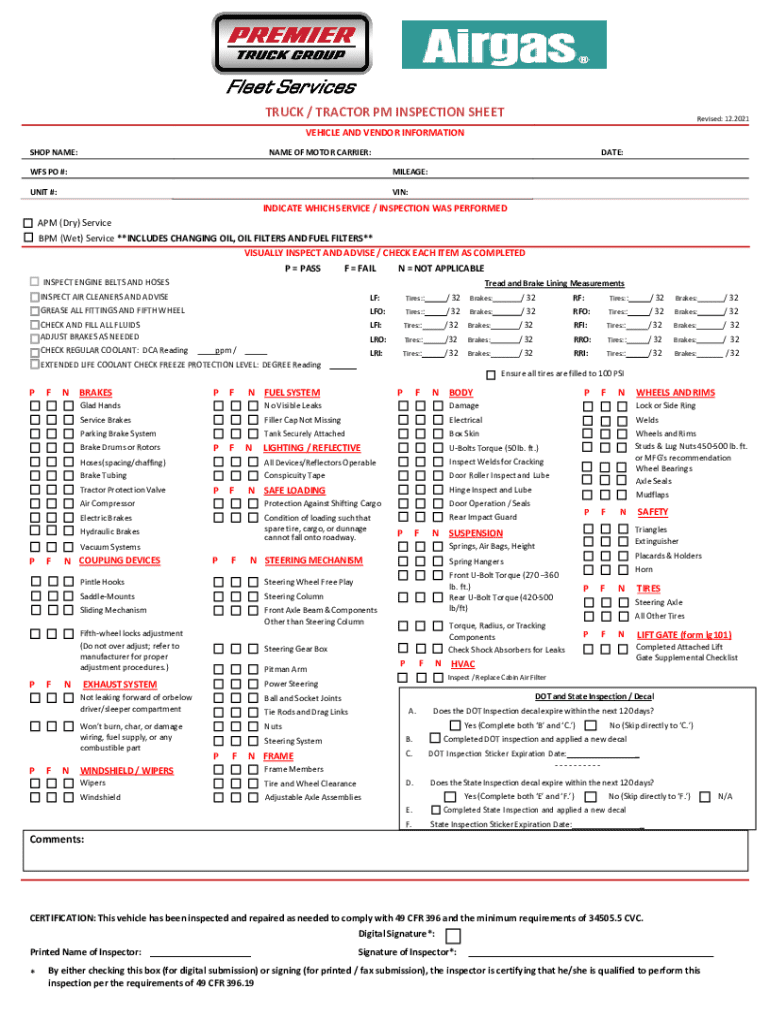
The Truck Tractor Preventive Maintenance (PM) Inspection Sheet 12 Vehicle and is an essential document used in the maintenance of commercial vehicles like trucks and tractors. It ensures that all critical components are inspected, maintained, and certified for optimal performance and safety. The document serves as a comprehensive checklist detailing the conditions and service requirements of different vehicle parts such as the engine, tires, brakes, fluids, and other safety equipment. It plays a crucial role in keeping vehicles in compliance with safety regulations and minimizing downtime through timely maintenance.
Steps to Complete the Truck Tractor PM Inspection Sheet
- Prepare the Vehicle: Ensure that the vehicle is stationary, secured, and accessible for inspection.
- Gather Necessary Information: Enter the vehicle information, including make, model, vehicle identification number (VIN), and mileage.
- Inspect Critical Components:
- Engine Belts and Hoses: Check for wear, tension, and proper functioning.
- Tires and Wheels: Inspect for tread depth, pressure, and alignment.
- Brake System: Test performance and inspect brake pads and discs.
- Fluids: Check levels and quality of oil, coolant, and brake fluid.
- Safety Equipment: Verify the availability and condition of fire extinguishers, reflective triangles, and first aid kits.
- Record Inspection Results: For each component, mark pass/fail based on its condition and function.
- Finalize and Certify: The inspector signs to certify the inspection results.
Key Elements of the Truck Tractor PM Inspection Sheet
The PM inspection sheet is divided into several sections to ensure a thorough inspection:
- Vehicle Information: Captures essential details such as VIN, license plate number, and the current odometer reading.
- Inspection Checklist: A detailed list of components such as lights, brakes, suspension, and drive systems with criteria for assessment.
- Certification of Inspection: A section where the inspector notes findings and certifies the condition of the vehicle.
- Additional Notes: Allows for detailed observations, recommendations for repairs, or parts requiring replacement.
Who Typically Uses the Truck Tractor PM Inspection Sheet
- Fleet Managers: Responsible for overseeing multiple vehicles and ensuring compliance with maintenance schedules.
- Certified Mechanics: Conducting regular inspections to identify and address mechanical issues.
- Truck Drivers: Monitoring their own equipment by regularly performing visual checks and documenting findings.
- Regulatory Inspectors: Ensuring vehicles meet specific legal safety standards.


Importance of Using the Truck Tractor PM Inspection Sheet
Using this inspection sheet has multiple benefits:
- Safety: Helps in identifying potential safety hazards before they lead to accidents.
- Cost Efficiency: Reduces unexpected repairs by addressing small issues early.
- Regulatory Compliance: Ensures that the vehicle complies with local and federal safety regulations, reducing the risk of fines.
- Longevity: Regular checks increase the vehicle's lifespan by maintaining optimal operating conditions.
Legal Use of the Truck Tractor PM Inspection Sheet
The legal requirement for using an inspection sheet is dictated by federal and state regulations in the U.S., ensuring that vehicles meet specific safety standards. These documents are often audited during inspections or after accidents to verify regular maintenance and proper vehicle condition. By adhering to these legal guidelines, companies and drivers protect themselves from liability in the event of vehicle malfunctions or accidents.
Digital vs. Paper Version
- Digital Version: Offers benefits such as seamless updates, easy transfer to databases, and integration with maintenance management software.
- Paper Version: Allows manual entry, suitable for on-site inspections without digital infrastructure.
Examples of Using the Truck Tractor PM Inspection Sheet
- Routine Monthly Checks: A logistic company schedules monthly inspections to maintain fleet readiness, documenting all findings.
- Pre-trip Inspections: Drivers perform checks before beginning long-haul journeys to ensure compliance and avoid delays en route.
- Post-Repair Assessments: Following repairs, an inspection is conducted to ensure that all issues are resolved and the vehicle is roadworthy.




