







Definition & Meaning
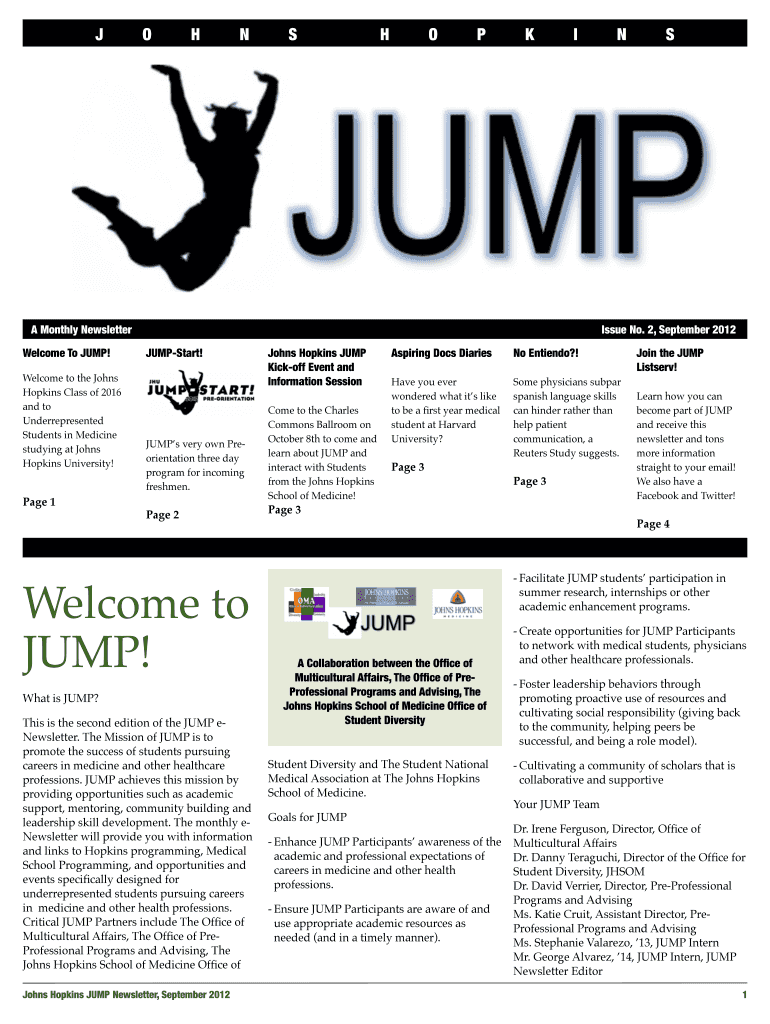
The Johns Hopkins JUMP Newsletter dated September 2012 focuses on the Multicultural Student Affairs (MSA) Program and serves as a resource for underrepresented students in medicine. It provides insights into the JUMP initiative—Johns Hopkins Underrepresented in Medicine Program—which aims to enhance academic support, offer mentorship, and foster community among students. This newsletter is not only an informational guide but also a tool to highlight events, accomplishments, and key aspects of the cultural diversity initiatives at Johns Hopkins University.
Key Elements of the Johns Hopkins JUMP Newsletter
The JUMP Newsletter incorporates several essential components, each contributing to its mission of supporting multicultural student affairs:
- Introduction of New Class: Features the Johns Hopkins Class of 2016, underscoring efforts to welcome and integrate new students into the medical community.
- JUMP-Start Pre-Orientation Program - An initiative designed to ease incoming freshmen into university life and their medical education pathways.
- Upcoming Events: Lists significant events such as the JUMP Kick-Off Event, aimed at fostering a sense of belonging and community among students.
- Articles and Discussions: Provides educational content that covers a range of topics, including experiences in medical education and strategies for overcoming language barriers in patient interactions.
Steps to Obtain the Newsletter
To gain access to the Johns Hopkins JUMP Newsletter dated September 2012:
- Visit the Official Johns Hopkins Website: Navigate to the Multicultural Student Affairs section.
- Search for Archived Newsletters: Find the archives where past editions, including the September 2012 issue, may be accessible.
- Contact the MSA Department: If the newsletter is not available online, reach out directly to the Multicultural Student Affairs department for access or information on obtaining a copy.
- Online Educational Platforms: Occasionally, educational platforms or digital libraries may host copies of such newsletters for academic research or public viewing.
How to Use the Johns Hopkins JUMP Newsletter
Engaging effectively with the JUMP Newsletter can be accomplished by following these approaches:
- Stay Informed: Use the newsletter as a source of current educational news and updates on multicultural student affairs and initiatives.
- Participate in Events: Take note of the upcoming events section and plan to attend or engage in those that are relevant.
- Utilize Resources: Identify resources and support systems outlined in the newsletter to enrich your academic and cultural experience at Johns Hopkins.
- Build Community: Connect with staff and fellow students featured in the newsletter to broaden your professional and personal network.
Who Typically Uses the Newsletter
The JUMP Newsletter caters to various audience groups within the Johns Hopkins community:
- Students: Primarily underrepresented students in medicine and those interested in multicultural affairs seeking support and guidance.
- Faculty and Staff: Members involved in mentoring or supporting diverse student populations and initiatives.
- Prospective Students: Individuals considering applying to Johns Hopkins who are interested in diversity efforts and student support systems.


Importance of Multicultural Student Affairs
The emphasis on Multicultural Student Affairs (MSA) within the JUMP Newsletter showcases Johns Hopkins' dedication to:
- Diversity and Inclusion: Promoting an environment where students from diverse backgrounds feel supported and valued.
- Community Building: Encouraging collaboration and solidarity among students from various cultural and social backgrounds.
- Academic Support and Resources: Providing specialized programs and mentoring efforts designed to equip students with the necessary tools for success.
Legal Use and Compliance
Using the information contained within the JUMP Newsletter requires adherence to legal and ethical standards:
- Privacy: Ensure confidential information or details not intended for public dissemination are respected.
- Intellectual Property: Acknowledge any proprietary content or data, complying with copyright laws as applicable.
- Appropriate Distribution: Only share the newsletter within authorized channels, particularly if it contains sensitive or institution-specific information.
Examples of Using the Newsletter
Practical applications of the JUMP Newsletter can be seen in the following scenarios:
- Event Planning: The newsletter can serve as a blueprint for organizing similar multicultural events at other institutions.
- Mentorship Programs: Educational departments can replicate JUMP's framework to design mentorship initiatives that support minority students.
- Research and Development: Scholars might use the newsletter's insights on educational challenges and strategies to develop research-focused articles or projects on multicultural student affairs.
Versions or Alternatives to the Newsletter
While the JUMP Newsletter of September 2012 holds specific historical and educational value, there may be other documents or iterations available:
- Subsequent Newsletters: Later issues of the JUMP Newsletter may offer updated information and expanded themes.
- Annual Reports: More comprehensive overviews of the Multicultural Student Affairs’ activities and progress at Johns Hopkins.
- Special Editions: Focused editions on specific topics such as special initiatives, guest speakers, or major developments in diversity programs.




