






Definition & Meaning
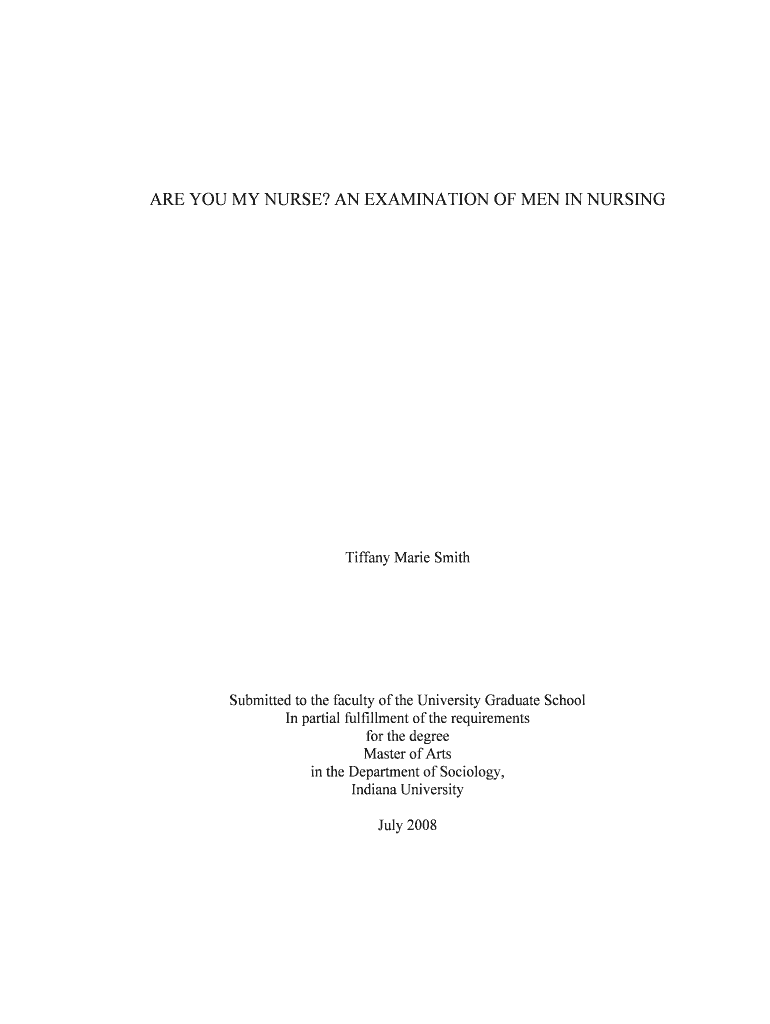
The thesis "Are You My Nurse? An Examination of Men in Nursing" by Tiffany Marie Smith, submitted to Indiana University, provides an in-depth exploration into the representation and experiences of men in the nursing profession. It examines key themes such as the motivations for men entering the field, their experiences within it, and factors influencing their retention. The study is notable for highlighting issues such as stereotypes, discrimination, and the potential advantages stemming from the 'glass escalator' effect. This document serves as a scholarly examination, offering insights into the changing dynamics of a predominantly female profession and aiming to enhance understanding of workforce diversity in healthcare.
Key Elements of the Thesis
The thesis elaborates on three distinct career patterns observed among male nurses: seekers, finders, and settlers. These categories help classify the diverse career trajectories and motivations among men in the nursing field. Seekers are individuals exploring various professions before finding a fit in nursing. Finders are those who discover their calling in nursing relatively early, whereas settlers transition into nursing from another career. This classification provides a framework for understanding why men choose to enter and remain in this field. The study also delves into challenges such as gender-based stereotypes and discrimination, emphasizing the necessity to address these issues for better workforce integration and satisfaction.
Legal Use of the Thesis
While the thesis itself is a scholarly work intended for academic consumption, its findings and recommendations can have practical applications in policy-making, particularly in the realms of professional development and gender diversity initiatives in healthcare. Institutions and educational bodies can leverage insights from this document to foster more inclusive practices and mitigate gender bias in nursing recruitment and retention strategies. Additionally, the thesis could serve as a reference for legal discussions around gender discrimination in healthcare settings, providing empirical data to support claims.
Important Terms Related to the Thesis
Understanding the thesis requires familiarity with key terms and concepts used within the study:
- Glass Escalator: A phenomenon where men in female-dominated professions may experience accelerated career advancement.
- Gender Stereotypes: Preconceived notions about the roles and abilities of men versus women in specific professions.
- Retention Factors: Elements that influence whether individuals remain in their chosen profession over time, such as job satisfaction and work environment.
Examples of Using the Thesis
Academic institutions and researchers could cite the thesis in studies focused on gender dynamics in healthcare professions. For instance, a university developing a program to attract more men into nursing might use the findings to tailor their recruitment strategies. Similarly, healthcare facilities aiming to improve employee retention may apply the study's insights to create more supportive environments for male nurses, addressing specific challenges highlighted in the thesis.
How to Obtain the Thesis
The thesis "Are You My Nurse? An Examination of Men in Nursing" can be accessed via the ScholarWorks repository at Indiana University Purdue University Indianapolis (IUPUI). This platform houses a collection of academic works submitted by students and faculty, providing open access to research materials. Users interested in obtaining this particular document can search the IUPUI ScholarWorks portal with the thesis title or author's name for direct download, subject to any repository access guidelines.
Steps to Complete a Research Study using the Thesis
- Define the Research Problem: Clearly articulate what aspect of male representation in nursing you wish to explore further.
- Review Existing Literature: Use the thesis as a foundational text, examining its premises, methodologies, and conclusions.
- Identify Hypotheses: Develop hypotheses that will be tested or explored in your study, building on gaps or questions raised in the thesis.
- Design the Study: Decide on the methodological approach, whether qualitative or quantitative, informed by the methods employed in the thesis.
- Collect Data: Gather data via surveys, interviews, or secondary data sources.
- Analyze Findings: Compare your data to the conclusions drawn in the thesis, identifying any new trends or patterns.
- Draw Conclusions: Formulate conclusions that either support or extend the findings of the thesis.
State-Specific Rules and Applications
Although the thesis primarily offers general insights applicable throughout the U.S., specific state regulations might influence how men in nursing experience their careers. For instance, Indiana might have unique licensing requirements or initiatives aimed at encouraging diversity in nursing. Understanding these state-specific elements can provide a nuanced perspective on how localized policies impact workforce dynamics, which could further enrich the academic discourse initiated by the thesis.
Who Typically Uses the Thesis
Scholars and educators in the fields of nursing, gender studies, and healthcare management are the primary users of this thesis. Educators may integrate its findings into curriculum development, while gender studies researchers might use its data for broader analyses on workforce equality. Additionally, policymakers interested in healthcare diversity initiatives could find the thesis valuable for crafting informed strategies.