







Definition and Meaning
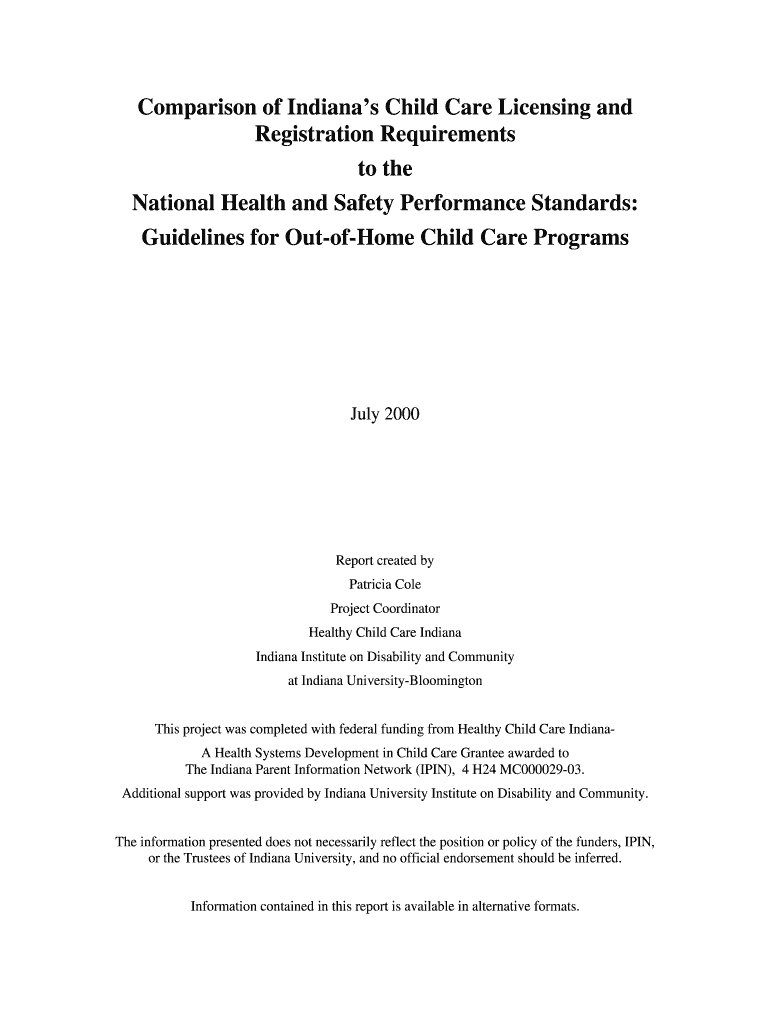
The "Comparison of Indiana's Child Care Licensing and" report serves as a critical evaluative tool, analyzing how Indiana's child care licensing standards measure up against the National Health and Safety Performance Standards for Out-of-Home Child Care Programs. This comparison is crucial for identifying areas where state regulations may fall short in safeguarding children's health and well-being and where enhancements are needed to meet national guidelines.
Key Elements of the Comparison
This document scrutinizes three primary categories of Indiana's child care facilities: child care centers, large family child care homes, and child care ministries. For each category, the percentage of national standards met is reported, revealing significant gaps. Specifically, it found compliance stands at only 62% for child care centers, 32% for large family homes, and less than 25% for child care ministries. These metrics underscore the varied levels of regulatory compliance and highlight areas requiring focused intervention.
Detailed Sections
- Child Care Centers: Compliance and challenges are identified, noting a 62% adherence to national standards.
- Large Family Child Care Homes: Detailed analysis of why only 32% compliance is achieved.
- Child Care Ministries: Critical issues leading to less than 25% compliance are explored.
Steps to Complete the Comparative Analysis
- Gather State Regulations: Obtain the latest set of child care licensing requirements specific to Indiana.
- Review National Standards: Secure a detailed copy of the National Health and Safety Performance Standards to serve as a benchmark.
- Compare and Analyze: Methodically compare Indiana's practices against national benchmarks.
- Document Findings: Record areas of compliance, partial compliance, and non-compliance.
- Recommendation Development: Prepare practical recommendations to address identified gaps.
Why Conduct a Comparison
This comparison is essential for ensuring that Indiana's child care facilities provide safe and healthy environments conducive to child development. The findings can influence policy initiatives, direct funding to necessary areas, and guide professional training efforts within the state.
Benefits
- Enhances children's safety and development.
- Directs policy formulation and resource allocation.
- Drives improvement in training programs for caregivers and administrators.
Who Typically Uses This Comparison
Typically, this analysis is utilized by policymakers, child care regulators, and advocacy groups focused on improving early childhood education standards. Additionally, child care facility operators might reference this document to evaluate their own compliance levels and make necessary improvements.
State-Specific Rules for Comparison
Indiana has specific requirements governing child care facilities, including staff training, safety measures, and facility conditions. These rules must be carefully evaluated and compared against national standards to ensure comprehensive coverage and accurate analyses.
Indiana Requirements
- Staff-to-child ratios
- Facility safety protocols
- Health and nutrition standards
Legal Use Considerations
Understanding the legal implications of the findings in the comparative report is crucial. Non-compliance with licensing standards can result in licensing penalties, reduced funding, or even closure of facilities. The comparison serves as a legal reference for required improvements.
Legal Implications
- Potential penalties for non-compliance.
- Necessity for regulatory compliance to avoid legal consequences.
- Guidance for legal reforms in child care policies.
Examples of Using the Comparison
Child care centers use the findings to adjust policies and procedures, while policy-makers might leverage the findings to propose new legislation that addresses identified gaps. Advocacy groups could launch campaigns to raise awareness on these issues, using data to support their initiatives.
Practical Scenarios
- A child care center adjusts its staff training programs to increase compliance.
- Legislators propose bills to increase safety measures.
- Advocacy groups initiate public awareness programs based on documented gaps.
Important Terms Related to the Comparison
Understanding key terminology is vital for interpreting the document effectively. Terms like "compliance," "national standards," and "licensing requirements" are critical for grasping the nuances of regulatory expectations and shortcomings.
Key Terms
- Compliance
- Licensing Requirements
- National Health and Safety Performance Standards
By delving deep into these essential blocks and exploring each facet of Indiana's child care licensing comparison, stakeholders gain a holistic view of the current landscape, guiding policies and practices that prioritize child safety and development.




