






Definition and Meaning of "The Death of Big Law"
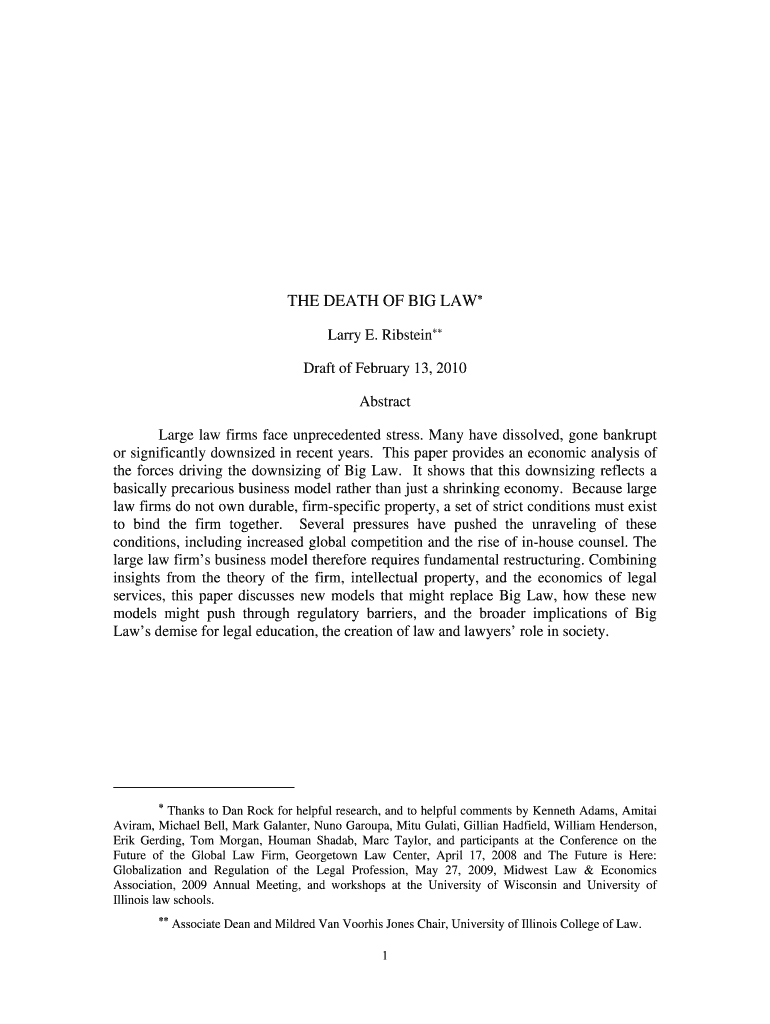
The concept of "The Death of Big Law" refers to the significant challenges and transformations facing large law firms, commonly known as "Big Law." These firms are characterized by their extensive reputational capital and heavy reliance on traditional business models that now face scrutiny due to emerging pressures within the legal industry. The theme underscores not just the financial struggles encountered due to economic downturns, but emphasizes inherent structural flaws, such as dependency on reputational assets instead of durable, tangible resources. The discussion is built on the assertion that these inadequacies necessitate a reevaluation of how large law firms operate to survive in a modern context.
Key Elements of "The Death of Big Law"
The paper detailing "The Death of Big Law" identifies several critical factors that contribute to the decline of large law firms:
- Increased Competition: The surge of boutique law firms and alternative legal service providers challenges Big Law's traditional dominance.
- Rise of In-House Counsel: Corporations increasingly prefer building internal legal teams that reduce reliance on outside firms.
- Changing Client Demands: Clients seek more efficiency, transparency, and value-for-money services, pressuring Big Law to adapt or lose clientele.
- Technological Advancements: Technology facilitates more dynamic, flexible legal solutions that Big Law must integrate into their practices.
Important Terms Related to "The Death of Big Law"
To fully comprehend the nuances of "The Death of Big Law," it's critical to understand relevant terminology:
- Reputational Capital: The collective value derived from a firm's reputation, often relied on for client retention.
- Durable Assets: Physical or tangible resources that provide stability, currently underrepresented in Big Law's business model.
- Alternative Legal Service Providers: New types of legal service models that offer specialized services, often at lower costs.
- In-House Counsel: Lawyers employed directly by corporations to manage their legal affairs internally.
Steps to Complete "The Death of Big Law" Analysis
Engaging with the concept of "The Death of Big Law" involves a structured analysis of the current state of large law firms:
- Examine the Current Market Landscape: Study the competitive pressures and client expectations affecting Big Law.
- Identify Structural Weaknesses: Analyze the internal business models and assess areas that lack resilience and adaptability.
- Explore Integration Strategies: Consider how legal firms can integrate other disciplines and allow for outside investments to enhance stability.
- Evaluate Legal Education and Roles: Reflect on how changes in Big Law impact legal education and the broader societal roles of lawyers.
- Propose New Business Models: Suggest innovative frameworks that align traditional legal practices with modern demands.
Examples of Using the Concept of "The Death of Big Law"
Practical examples illuminate how various stakeholders might engage with "The Death of Big Law":
- Legal Academics: Researchers may use the concept to evaluate curriculum alignment with industry shifts.
- Law Firm Strategists: Strategists might utilize the framework to design restructuring initiatives for greater adaptability and resilience.
- Corporate Legal Teams: In-house counsel could leverage insights to guide decisions regarding collaboration with external firms.
- Technologists in Legal Services: Those in tech roles might explore how digital tools can be implemented to meet evolving client expectations.
Legal Use and Implications of "The Death of Big Law"
The phrase "The Death of Big Law" implies substantial legal and operational repercussions, urging firms to legally reassess their strategies:
- Compliance and Ethical Standards: Examines the necessity of maintaining high ethical standards amidst transformational business strategies.
- Legal Education Reform: Challenges educators to adapt curricula to include innovation and technology in legal education.
- Personnel Policies: Consider reforms in hiring practices to include skills that align with emergent business models and technologies.
Business Types and Entities Affected
Different business structures within legal services have varying exposure to the themes presented in "The Death of Big Law":
- Large Partnerships: Particularly susceptible to shifts, needing to diversify reliance on reputational capital.
- Boutique Firms: Potential to capitalize on Big Law's weaknesses by offering specialized, niche services.
- Alternative Legal Service Providers: Positioned to benefit from evolving client demands for different legal service delivery methods.
Digital vs. Paper Version Considerations
With the predominance of digital transformation in the legal sector, distinctions between digital and paper-based practices become poignant:
- Efficiency: Digital tools offer real-time updates and collaboration not feasible in paper methods.
- Security: Paper-based systems are often less secure than encrypted digital methods.
- Accessibility: The digital format ensures ease of access across multiple platforms and devices, encouraging more agile legal practices.
These sections collectively enhance the understanding of "The Death of Big Law," providing both breadth and depth to the topic by exploring its implications, challenges, and potential strategies for adaptation.