







Definition & Understanding the Affidavit
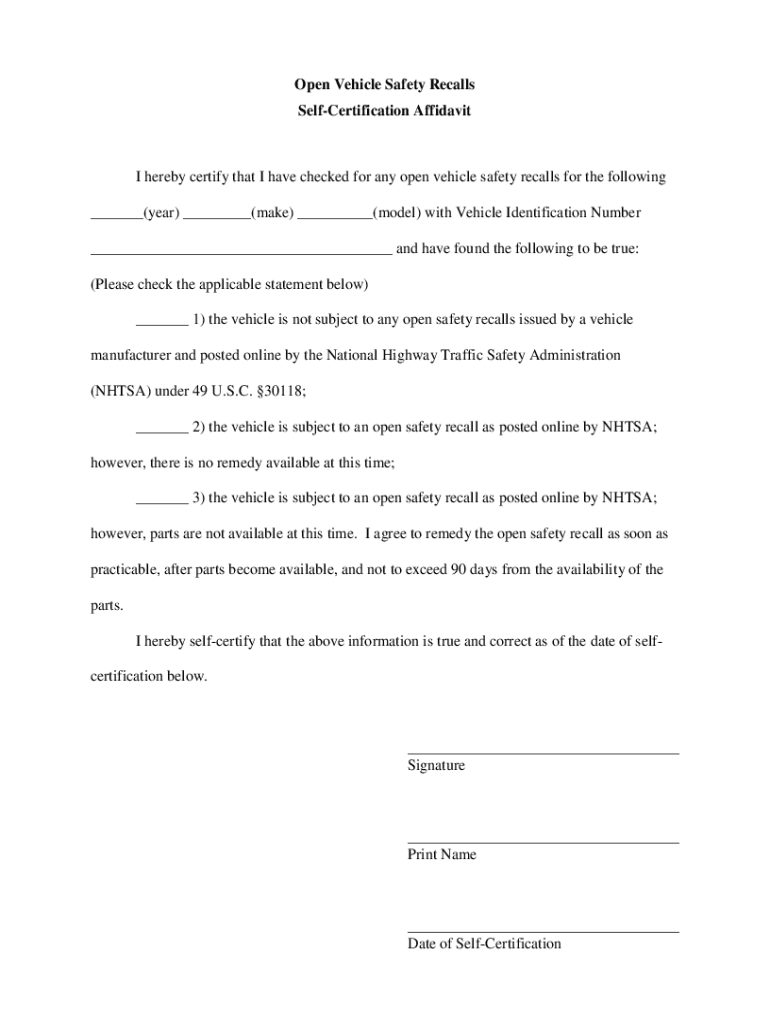
The "Open Vehicle Safety Recalls Self-Certification Affidavit" is a formal document that allows vehicle owners to declare the status of any open safety recalls on their specific vehicle. Identified by details such as year, make, model, and Vehicle Identification Number (VIN), this affidavit is primarily used to confirm whether a vehicle is subject to any open recalls as reported by the National Highway Traffic Safety Administration (NHTSA).
- Identification Details: Key aspects of the form include the year, make, model, and VIN of the vehicle. These details are crucial for ensuring that the affidavit corresponds to the correct vehicle.
- Recall Status Confirmation: The signer must choose one of three statements to certify if their vehicle is subject to any recalls and commit to resolving any identified issues within a specified timeframe if necessary.
Steps to Complete the Affidavit
Completing the Open Vehicle Safety Recalls Self-Certification Affidavit involves several clear steps to ensure accuracy and compliance.
- Retrieve Vehicle Information: Gather all relevant information about the car, such as the year, make, model, and VIN.
- Check for Recalls: Use resources such as the NHTSA online database to determine if there are any open safety recalls associated with the vehicle.
- Fill Out the Form: Accurately input the vehicle information and select the appropriate statement regarding the recall status.
- Sign the Affidavit: The vehicle owner or authorized individual must sign the affidavit to certify the information's truthfulness and their commitment to addressing any recall-related issues.
Key Elements of the Affidavit
The Open Vehicle Safety Recalls Self-Certification Affidavit contains several crucial components that ensure its effectiveness and legality.
- Certification Statements: The affidavit includes specific statements about the recall status of the vehicle, and the signer must select the most accurate representation.
- Commitment to Remediate: If applicable, the form contains agreements to address any safety recall issues based on the certification.
- Declaration of Accuracy: The signer's acknowledgment that all provided information is accurate and truthful, legally binding them to their statements.
Legal Use of the Affidavit
This affidavit serves as a legally binding document that encapsulates the vehicle owner's statement about the status of their vehicle concerning safety recalls.
- Compliance: Ensures compliance with state and federal requirements concerning vehicle safety and recall management.
- Evidence: Acts as evidence of due diligence in checking for and addressing potential safety recalls.
Who Typically Uses the Affidavit
The affidavit is used by various individuals in different scenarios:
- Vehicle Owners: Primarily used by vehicle owners who need to certify the recall status of their car, whether for personal reasons, during a sale, or for vehicle registration processes.
- Dealers: Car dealers might use the affidavit to certify to buyers that vehicles for sale have no open recalls.
- Lenders: Financial institutions could require this document to ensure the safety and compliance of vehicles used as collateral.


Important Terms Related to the Affidavit
Understanding the terminology associated with the Open Vehicle Safety Recalls Self-Certification Affidavit is crucial for its effective use.
- VIN (Vehicle Identification Number): A unique code used to identify individual motor vehicles, which is necessary to check recall status.
- NHTSA (National Highway Traffic Safety Administration): The federal agency responsible for traffic and vehicle safety, providing recall information.
State-Specific Rules
While the affidavit serves a general purpose, specific state regulations may influence its use.
- Regulatory Variations: Some states may have additional requirements or forms, influencing how the affidavit is prepared and utilized.
- Registration Requirements: Certain states might require an affidavit for registration, while others may not.
Penalties for Non-Compliance
Failing to comply with the terms and conditions outlined in this affidavit can result in legal and financial consequences:
- Fines and Penalties: Non-compliance or false certification can lead to fines or penalties under state or federal law.
- Legal Repercussions: Misrepresenting the recall status might expose the vehicle owner to liability issues in case of an accident related to uncorrected recall issues.
How to Obtain the Affidavit
Obtaining the Open Vehicle Safety Recalls Self-Certification Affidavit is straightforward:
- Downloadable Forms: The affidavit can often be downloaded from state DMV websites or obtained through local license offices.
- Online Platforms: Services like DocHub might allow users to access and fill out the affidavit digitally for convenience.
Examples of Using the Affidavit
Real-world scenarios illustrate the practical application of this affidavit:
- Selling a Vehicle: A seller uses the affidavit to assure a buyer that the vehicle has no outstanding recalls, fostering transparency.
- Loan Approval: An individual secures a car loan, using the affidavit to demonstrate vehicle safety compliance to the lender.
- Registration Renewal: A vehicle owner provides the affidavit during registration renewal to ensure compliance with state regulations.
Application Process & Approval Time
The affidavit can be a part of various application processes depending on its purpose:
- Efficient Processing: Generally processed quickly, especially when submitted online.
- Approval: Depends on the accuracy and completeness of the information provided; incorrect submissions may require resubmission.
Business Types That Benefit Most
Certain business entities gain valuable benefits from the use of this affidavit:
- Car Dealerships: Can utilize the affidavit to provide assurance to customers of vehicle safety and regulatory compliance.
- Leasing Companies: Benefit by ensuring their leased fleet remains compliant and safe for their clientele.
Required Documents
Before completing the affidavit, ensure you have the necessary documentation ready:
- Proof of Ownership: Such as the vehicle title or registration paperwork.
- Recall Reports: Ideally, a printout from the NHTSA database showing the vehicle's recall status.
This comprehensive coverage aims to provide maximum utility to all users seeking to understand and appropriately complete the Open Vehicle Safety Recalls Self-Certification Affidavit in the United States.




