






Definition & Meaning
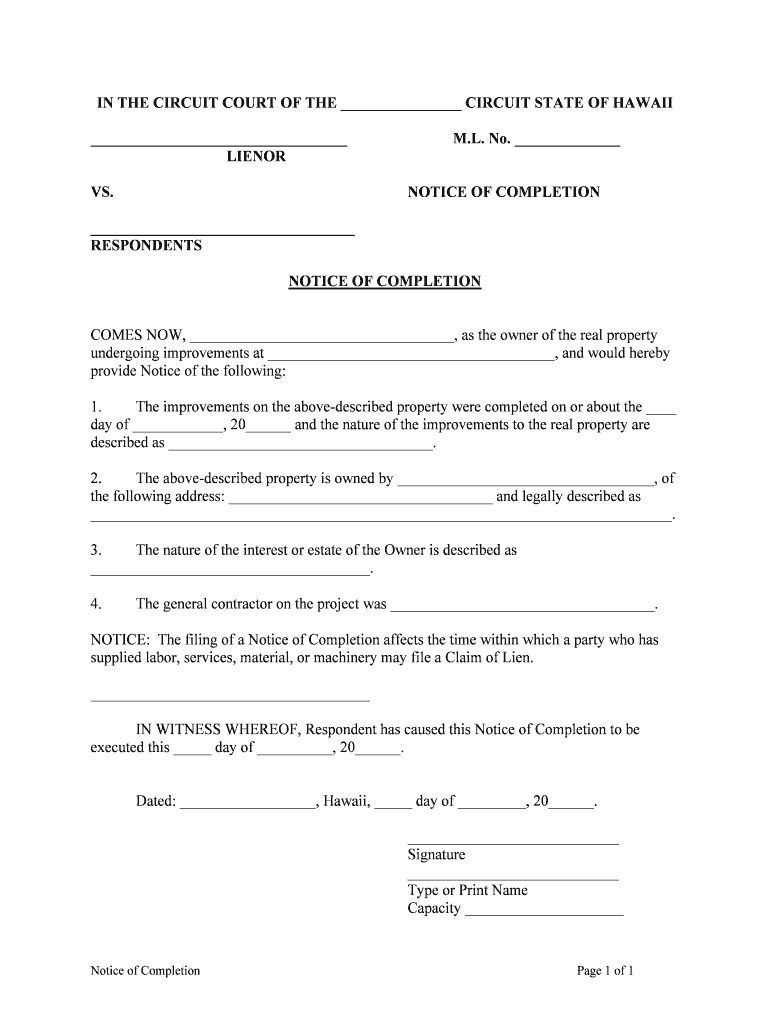
The "Notice of Completion" in Hawaii is a formal document filed in the Circuit Court, indicating that construction or improvements on a specific real property have been completed. This notice serves as a crucial step in the construction and legal processes in Hawaii. By filing this, property owners and contractors formally declare the completion of a project, effectively notifying interested parties that work on the property is finished. This document plays an essential role in the construction industry as it establishes a timeline for filing claims of lien and clarifying legal obligations between involved parties.
Core Features
- Filing Entity: Typically filed by the property owner or general contractor.
- Purpose: To officially notify the completion of construction or improvements.
- Effect: Triggers deadlines for lien claims by subcontractors or suppliers.
Practical Example
Consider a property developer who just completed building a residential complex. Filing a Notice of Completion in the Circuit Court formally concludes the developer's obligations to contractors, while starting a statutory period for subcontractors to file any claims for unpaid work.
Key Elements of the Notice of Completion Hawaii
Understanding the essential components of this document is critical. Each section of the form corresponds to an important piece of information.
Main Components
- Property Owner's Details: Includes the name and address of the property owner who initiated the improvement project.
- Description of the Property: A detailed description, including the address and legal description, ensures the notice is linked to the correct property.
- Nature of Improvements: A description of the work conducted, whether it is new construction, renovation, or other types of improvements.
- Final Completion Date: This date marks the official end of the improvement work and is crucial for determining lien filing deadlines.
Important Considerations
Filing inaccuracies such as a wrong completion date or incomplete property description can lead to legal issues and invalidate the notice.
Steps to Complete the Notice of Completion Hawaii
Completing this form accurately is vital for it to serve its purpose effectively.
Detailed Process
- Gather Required Information: Collect all necessary details, including owner and contractor information, as well as the project's specifics.
- Fill Out the Form: Carefully enter all collected information into the designated fields of the official form.
- Verify Information: Double-check for accuracy to avoid legal complications or delays.
- File with the Circuit Court: Submit the form to the correct circuit court jurisdiction where the property is located.
Expert Tip
Consulting with a legal professional during the completion process can prevent potential errors and enhance the document's validity.
Legal Use of the Notice of Completion Hawaii
This document is not only a procedural formality but a legally binding declaration.
Legal Implications
- Lien Period Trigger: By officially documenting project completion, it establishes a timeframe for subcontractors to file liens.
- Contract Obligations: Signals the fulfillment of contractual obligations by involved parties.
Case Study
Imagine a subcontractor who supplied materials for a project. The Notice of Completion enables the subcontractor to know precisely when their deadline for filing a lien starts, providing them with a fair opportunity to take legal action if necessary.
State-Specific Rules for the Notice of Completion Hawaii
Hawaii has unique rules and regulations concerning the filing and recognition of this form.
Key Regulations
- Mandatory Filing: Filing is not optional; it serves as the official closure of construction activities.
- Jurisdiction: The document must be filed within the appropriate Circuit Court that has authority over the property's location.
- Deadline for Filing: Must be submitted within 10 days after the actual completion of the project to ensure compliance with state laws.
Exception Handling
In cases where delays occur, documenting reasons and consulting legal advice can offer pathways to rectifying potential issues.
Filing Deadlines / Important Dates
Recognizing and adhering to key dates ensures smooth legal and construction processes.
Critical Timelines
- Filing Date: Must be filed within 10 days of project completion.
- Lien Filing Deadline: Starts once the notice is filed, typically giving subcontractors 45 days to file any claims.
Practical Scenario
If a commercial construction project wraps up on March 1st, filing the Notice of Completion by March 11th is necessary, with lien claims needing submission by April 25th.
Penalties for Non-Compliance
Failing to adhere to filing requirements can lead to significant consequences.
Potential Penalties
- Legal Challenges: Subcontractors can challenge the validity of the notice and make lien claims more complicated.
- Financial Liabilities: Without proper filing, owners may face extended lien periods or disputes.
Preventive Strategies
Adhering to filing requirements and consulting with legal experts can mitigate risk and ensure compliance.
Who Typically Uses the Notice of Completion Hawaii
The parties involved in construction projects are the primary users of this form, but it extends to others as well.


Typical Users
- Property Owners: Ensure that all project obligations are completed.
- General Contractors: Play a vital role in finalizing construction works.
- Subcontractors: Use the notice to determine deadlines for potential lien filings.
Business Entities
Large corporations, small businesses, and individual property developers all leverage this form to streamline project and legal processes effectively.
Properly understanding and utilizing the Notice of Completion in Hawaii can significantly impact the completion process and subsequent legal procedures. This document harmonizes construction and legal timelines, ensuring a controlled and legally sound conclusion to projects.