






Definition and Meaning of Agent's Certification
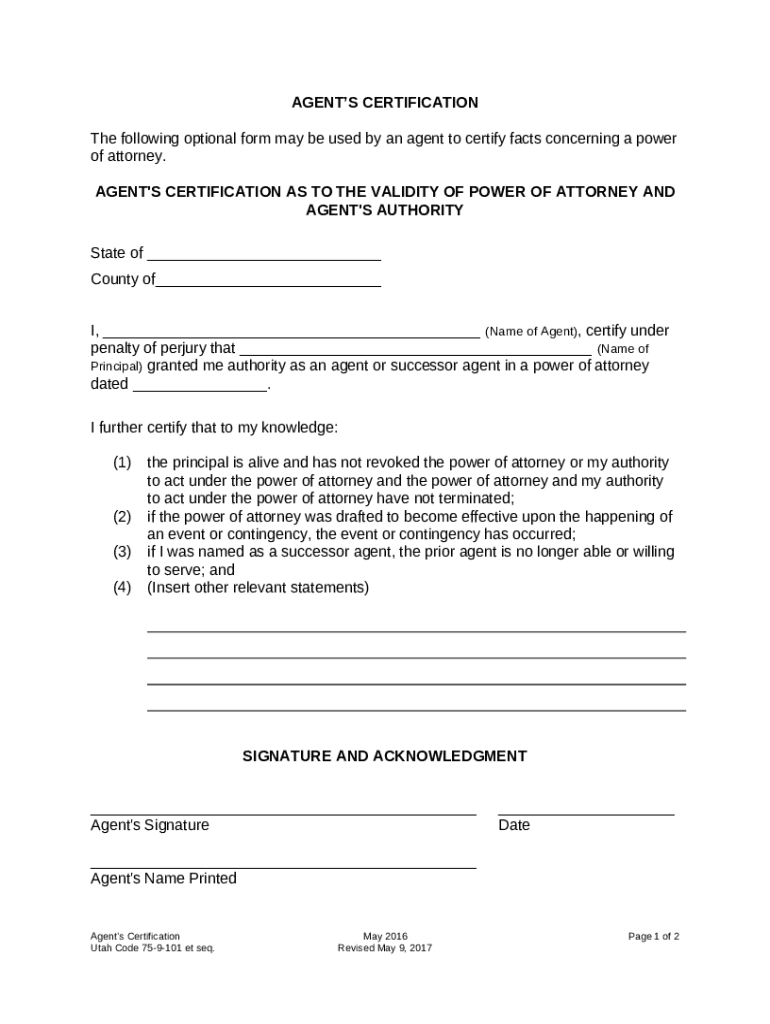
An Agent's Certification is a legal document used to verify the authority of an agent to act under a power of attorney. This form provides assurance that the agent has the right to make decisions on behalf of the principal, the individual who granted the power of attorney. An agent is required to certify that they understand their role and responsibilities, affirm the current validity of the power of attorney, and declare any relevant statements regarding their actions. The certification often includes sections that must be signed by the agent and a notary public to ensure legal validity.
How to Use the Agent's Certification
To utilize an Agent's Certification effectively, one must understand its purpose and role in legal processes. The certification form serves as a proof document for third parties such as banks, healthcare institutions, and legal entities that the agent is authorized to act on behalf of the principal. Here's how it can be used:
- Verification: Present the form to verify the agent's authority when conducting business transactions, handling finances, or attending medical appointments on behalf of the principal.
- Updating Details: Use the certification to update or confirm any changes in the agent's details or the scope of their authority.
- Compliance: Ensure compliance with any requirements from organizations or states that necessitate documented proof of power of attorney.
Steps to Complete the Agent's Certification
Completing the Agent's Certification involves several key steps to ensure accuracy and legal compliance. Here is a step-by-step guide:
- Review Instructions: Carefully read any instructions provided with the form to understand the requirements and mandatory sections.
- Fill in Personal Information: Enter details of both the principal and the agent, including full names, addresses, and contact information.
- Certify Statements: Complete sections certifying the effectiveness of the power of attorney and any particular conditions or limitations.
- Notarize: Obtain a notary's acknowledgment to validate the signatures and affirm the form’s legitimacy.
- Submit: Provide the completed certification to relevant parties, ensuring that copies are stored securely for future reference.
Legal Use of the Agent's Certification
The Agent's Certification is often used in legal contexts to demonstrate that an individual has been duly appointed and retains the authority to act as an agent. This is a crucial aspect in protecting both the agent and the principal, particularly when:
- Engaging in financial transactions where authorization is essential.
- Making healthcare decisions for the principal when they are incapacitated.
- Handling legal matters such as litigation or contractual agreements.
The document helps to prevent misuse and assures third parties that the actions taken are within the agent's lawful powers.
Key Elements of the Agent's Certification
An Agent's Certification typically includes several critical components, designed to confirm the authority and responsibilities of the agent:
- Principal Information: Details about the individual who granted the power of attorney, establishing the connection and legal basis.
- Agent’s Details: Complete information about the agent, ensuring clear identification.
- Authority Affirmation: Sections detailing the extent and limitations of the agent's powers, providing clarity on the scope of authority.
- Signature and Notary Section: Signatures of the agent and a notary public, who certifies the authenticity of the agent’s acknowledgment of duties.
State-Specific Rules for Agent's Certification
Each state in the U.S. may have specific rules and variations regarding the use and requirements of the Agent's Certification:
- Document Language: Some states mandate the inclusion of particular clauses or language to be legally recognized.
- Additional Filings: States might require additional documentation or registration of the power of attorney alongside the certification.
- Notary Requirements: Differences in notary public requirements, such as witness mandates or apostille authentication, vary by state.
Consult legal guidelines or a local attorney to ensure compliance with state-specific regulations.
Examples of Using the Agent's Certification
Here are practical scenarios where an Agent's Certification is commonly used:
- Real Estate: When buying or selling property, the agent can present the certification to legally sign documents on behalf of the principal.
- Bank Transactions: Opening, closing, or managing bank accounts necessitates proof of authority through the certification.
- Healthcare Decisions: Hospitals and doctors often require a certified copy before accepting the agent’s decisions for medical treatments.
Required Documents for Agent's Certification
To complete an Agent's Certification, several documents may be required, including:
- Original Power of Attorney: To cross-reference and verify the details cited in the certification.
- Identification: Government-issued ID for both the principal and the agent, required by notaries for verification.
- Witness Statements: In certain situations, additional affidavits or statements from witnesses may be needed for further validation.
Ensure these documents are organized and accessible to facilitate a smooth certification process.