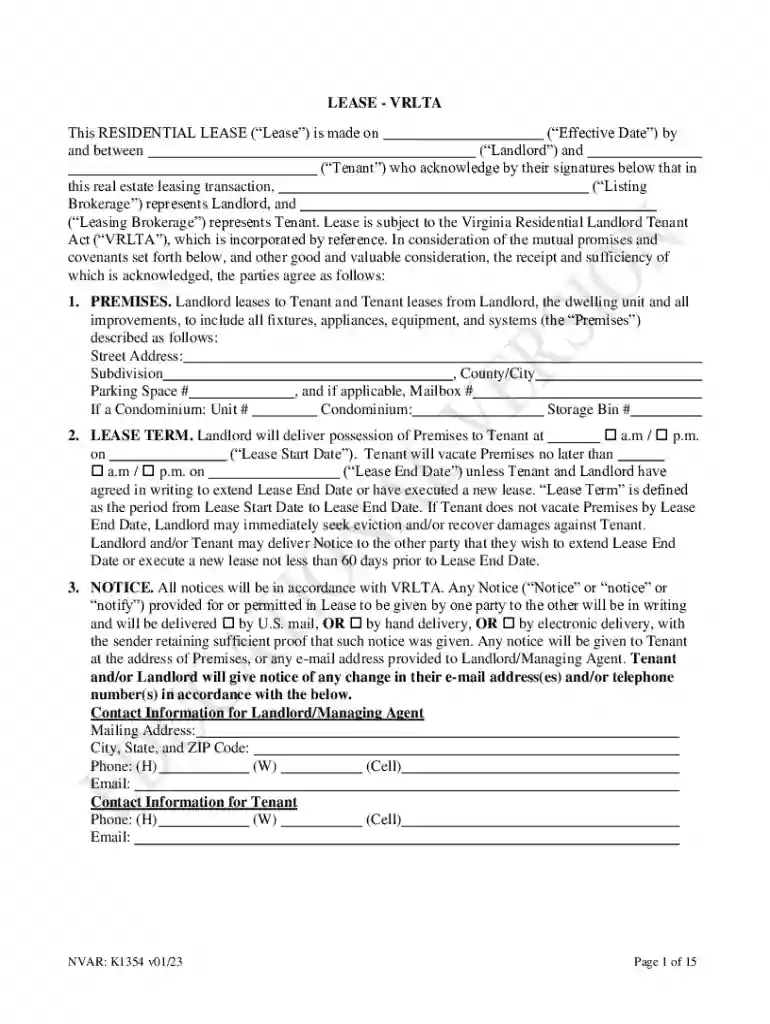
LEASE - VRLTA This RESIDENTIAL LEASE (Lease) is made on 2026

Get Form
vrlta lease pdf Preview on Page 1

Here's how it works

01. Edit your vrlta lease pdf online
Type text, add images, blackout confidential details, add comments, highlights and more.

02. Sign it in a few clicks
Draw your signature, type it, upload its image, or use your mobile device as a signature pad.

03. Share your form with others
Send lease via email, link, or fax. You can also download it, export it or print it out.

Definition & Purpose of the VRLTA Residential Lease

The "LEASE - VRLTA This RESIDENTIAL LEASE (Lease) is made on" refers to a legally binding document governed by the Virginia Residential Landlord Tenant Act (VRLTA). This lease agreement establishes a contractual relationship between landlord and tenant, detailing obligations and rights for both parties. It serves to facilitate a clear understanding of terms such as rent payment, lease term, and maintenance responsibilities, while ensuring compliance with state-specific housing laws. The lease covers tenant rights and conditions for lease termination, making it a crucial instrument for managing rental agreements.

Key Elements of the VRLTA Residential Lease

This lease includes several important components:

  • Premises Details: Describes the property to be leased, including its address and any specific conditions of use.
  • Lease Term: Specifies the duration of the lease, including start and end dates.
  • Rent Payment: Outlines the rent amount, due date, and acceptable methods of payment.
  • Security Deposit: Details the amount, terms for return, and conditions under which deductions may occur.
  • Tenant Obligations: Enumerates tenant responsibilities, such as keeping the premises in good condition.
  • Landlord Obligations: Covers maintenance and repair expectations.

These elements ensure clarity and legal compliance for both tenant and landlord.

Steps to Complete the VRLTA Residential Lease

  1. Review Lease Terms: Both parties need to read and understand the lease terms to ensure they agree with all conditions.
  2. Fill Out Required Information: Include necessary details such as tenant and landlord names, lease term, and payment specifics.
  3. Initial Each Page: Providing initials on each page signifies acknowledgment and agreement to all terms.
  4. Sign the Lease: Both parties must sign the lease for it to become legally binding.
  5. Provide a Copy to Each Party: Ensure both the landlord and tenant have a copy of the signed lease.

Completing these steps ensures legal enforceability and mutual understanding of lease conditions.

How to Obtain the VRLTA Residential Lease

The VRLTA Residential Lease can be obtained through various channels:

  • Legal Websites: Many websites offer templates that comply with the VRLTA.
  • Real Estate Agents: Professionals often supply leases as part of their services.
  • Property Management Companies: They typically provide standardized forms for rentals they manage.

Obtaining the right form ensures compliance with Virginia's legal requirements for residential leases.

Important Terms Found in the VRLTA Residential Lease

  • Default: Refers to a failure to fulfill the terms of the lease, which may result in penalties or eviction.
  • Quiet Enjoyment: Assures tenant's right to enjoy their premises without interference from the landlord.
  • Tenant Rights: Encompasses rights such as habitability, privacy, and the ability to withhold rent for serious maintenance issues.

Understanding these terms helps ensure fair treatment and legal protection for both tenants and landlords.

Who Typically Uses the VRLTA Residential Lease

  • Individual Landlords: Those who manage their rental properties rely on this form to establish legal agreements with tenants.
  • Property Managers: Companies managing multiple properties use the form to streamline lease agreements.
  • Renters in Virginia: Tenants entering a lease agreement for housing in Virginia use this document to understand their rights and obligations.

This lease caters to any individual or entity involved in renting residential property within Virginia.


decoration image ratings of Dochub

Legal Use of the VRLTA Residential Lease

Under the VRLTA, this lease must adhere to Virginia's laws regarding residential renting practices. It is used to formalize the landlord-tenant relationship legally, providing guidelines for rent, deposits, maintenance, and termination. Landlords must ensure the lease complies with state-specific legal standards to avoid disputes and potential legal action. Failure to use a compliant lease could result in unenforceable terms and penalties.

State-Specific Rules for the VRLTA Residential Lease

Virginia law encompasses specific provisions:

  • Security Deposit Limitations: Deposits must not exceed two months' rent.
  • Disclosure Requirements: Certain information, such as the presence of lead paint or mold, must be disclosed.
  • Notice Periods: Legal guidelines dictate notice periods for entering premises and terminating leases.

Complying with these state-specific rules ensures the lease is enforceable and fair to both parties.

Examples of Using the VRLTA Residential Lease

  • Scenario One: A landlord in Richmond offers a two-bedroom apartment. They provide a VRLTA lease detailing all relevant terms, which the tenant signs after reviewing.
  • Scenario Two: A tenant wishes to ensure their dog is allowed. The lease includes a pet addendum, spelling out specific guidelines for pet ownership on the premises.

These examples demonstrate how the lease adapts to different rental situations, providing clear directives and terms.

be ready to get more

Complete this form in 5 minutes or less

Get form

Got questions?

We have answers to the most popular questions from our customers. If you can't find an answer to your question, please contact us.
Contact us
A letter of intent (LOI), also known as a term sheet, sets the stage for a lease. Signed by both the owner and tenant, the LOI indicates that both parties intend to go through with a lease, and includes terms that are fundamentally important to the tenants operation, such as rent and ten- ant improvements.
A letter of intent (LOI) is a letter that represents your intent to purchase the property and defines the primary terms of your offer. It is non-binding, meaning you are not legally bound to the terms you propose.
A residential letter of intent to lease is a document used by lease applicants to express a formal interest in renting residential property. Its drafted after the landlord and applicant negotiate rental terms, but before the parties enter into a definitive contract.
A commercial lease letter of intent is a document that creates the foundation of a lease deed between a landlord and tenant. The letter will include a broad overview of the final lease agreement, showing that the company is serious about renting the space if terms can be reached.
A fixed-term lease is the most traditional lease. Theyre called fixed term because tenants and landlords are agreeing to abide by the lease for a fixed amount of time, normally six to 14 months.

Security and compliance

At DocHub, your data security is our priority. We follow HIPAA, SOC2, GDPR, and other standards, so you can work on your documents with confidence.

Learn more
ccpa2
pci-dss
gdpr-compliance
hipaa
soc-compliance
be ready to get more

Complete this form in 5 minutes or less

Get form

People also ask

The most common type of lease contract in residential real estate is Gross Lease. In a gross lease, the tenant pays a fixed amount of rent, and the landlord is responsible for paying all the expenses associated with the property, including property taxes, insurance, and maintenance costs.
It includes the basic terms of what theyre willing to pay for a property and under what conditions. The main purpose of an LOI is to help the owner and buyer reach a mutual understanding on deal terms before moving into a longer, more formalized due diligence period. It is important to note that LOIs are non-binding.
Tenant Provides First Signature Its best practice to have the tenant sign the lease agreement first for a few reasons. If you provide a lease with your signature and the tenant does not sign the document right away, then it makes it harder to move on to another tenant.

Related links