Definition and Meaning
The "Point Assessment for Traffic and Other Violations - Pages" refers to a structured system used by various states in the United States to evaluate and document the severity of traffic offenses. This point-based system is employed to help authorities track driving behaviors and enforce legal consequences on offenders. Accumulation of points can lead to penalties, such as fines, increased insurance rates, or even suspension of driving privileges, depending on state regulations.
- Points Assessment: Each traffic violation is assigned a specific point value based on its severity. For example, a speeding ticket may result in fewer points than a DUI offense.
- Purpose: The system encourages safe driving by imposing penalties for repeated infractions. It also serves as a standardized measure for assessing driver risk.
Key Elements of the Point Assessment System
The point assessment process comprises several critical aspects that determine its effectiveness and fairness when applied to traffic and other violations.
- Violation Categories: Different types of traffic offenses fall into varied categories with corresponding point values. Common categories include speeding, running a red light, and driving under the influence.
- Point Accumulation: Offenders accumulate points for each violation they commit. When points reach a certain threshold, more severe penalties are triggered.
- Penalty Enforcement: The consequences of accruing points may involve license suspension, mandatory driving courses, or legal action.
Steps to Complete the Point Assessment Form
Completing the point assessment form for traffic violations involves a series of systematic steps to ensure accuracy and compliance.
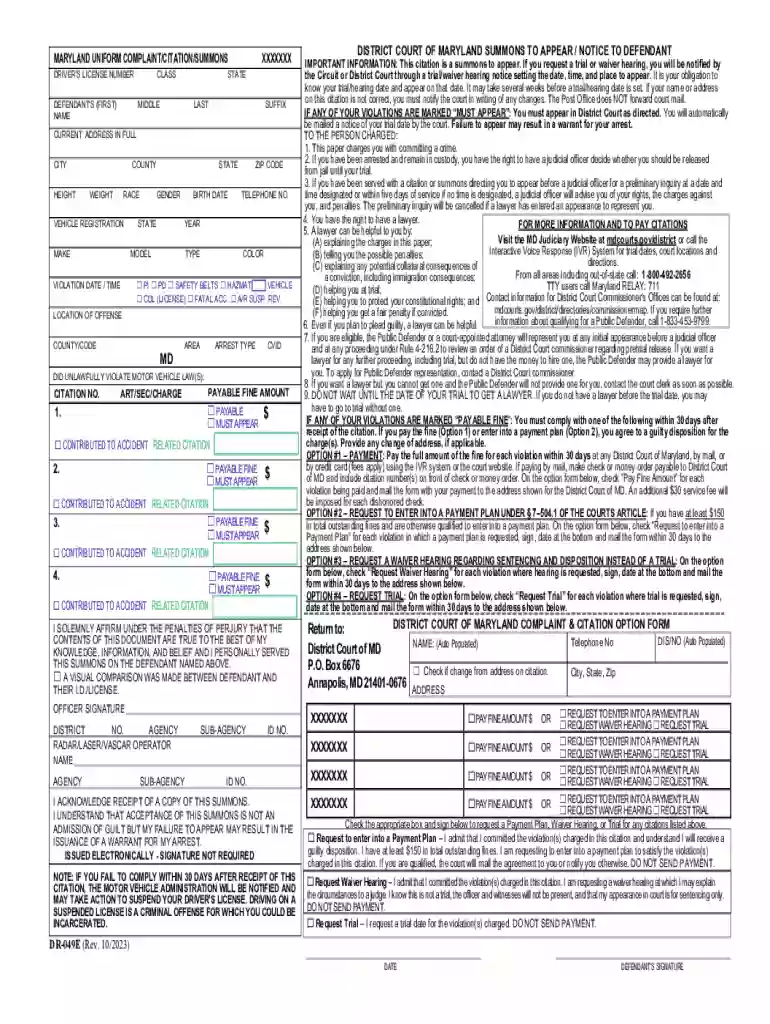
- Obtain the Form: Acquire the necessary form from the Department of Motor Vehicles (DMV) or equivalent state agency.
- Fill Out Personal Information: Provide accurate personal information, such as name, address, and driver's license number.
- Detail the Violation: Clearly record the nature of the traffic violation, including date, location, and specific offense.
- Submit Documentation: Attach any required documentation, such as court judgment or proof of payment for fines.
- Finalize and Submit: Review the completed form for accuracy and completeness before submission.
State-Specific Rules for Point Assessment
Different states may have distinct rules regarding the point assessment system. It is crucial for drivers to familiarize themselves with the specifics relevant to their jurisdiction.
- California: In California, for instance, accumulating four points within twelve months can lead to license suspension.
- New York: New York uses a different approach, where certain offenses, like speeding, can result in anywhere between three to eleven points, depending on speed and context.
Legal Use of the Point Assessment Form
The legal application of the point assessment system ensures fair processing of traffic offenses while also protecting the rights of the accused.
- Due Process: Offenders have the right to contest points and offenses through legal challenges or appeals.
- Record Keeping: Accurate record-keeping is imperative for legal consistency and helps prevent wrongful penalties.
Penalties for Non-Compliance
Failing to comply with point assessment requirements can result in significant penalties.
- License Suspension: In many states, non-compliance or a high number of accumulated points can lead to temporary or permanent license suspension.
- Increased Insurance Rates: Insurance companies often use point assessments to set premium rates; non-compliance could result in higher insurance costs.
Examples of Using the Point Assessment System
Real-life applications illustrate how the point assessment system operates in diverse scenarios.
- Speeding in a School Zone: Offenses in sensitive areas like school zones may carry double the usual point value.
- Repeat Offender: A driver accruing numerous points over a short period might face more drastic penalties compared to a one-time violator.
Digital vs. Paper Version
The format of the point assessment form may vary, influencing its accessibility and ease of use.
- Digital Forms: Increasingly, states are offering digital versions for online completion, simplifying submission and processing.
- Paper Forms: Traditional paper forms are still in use, especially in areas with limited digital infrastructure.
Important Terms Related to Point Assessment
Understanding terminologies related to the point assessment system can help navigate its complexities.
- Demerit Points: Another term for the points assigned to violations.
- Eligibility: Criteria determining whether an offense qualifies for point allocation.
Why the Point Assessment System is Important
The point assessment system serves crucial objectives in traffic regulation and safety management.
- Enhances Road Safety: By penalizing unsafe driving practices, the system aims to reduce accidents.
- Standardizes Offense Consequences: Provides a consistent framework for assessing and penalizing different traffic violations.