







Definition & Meaning
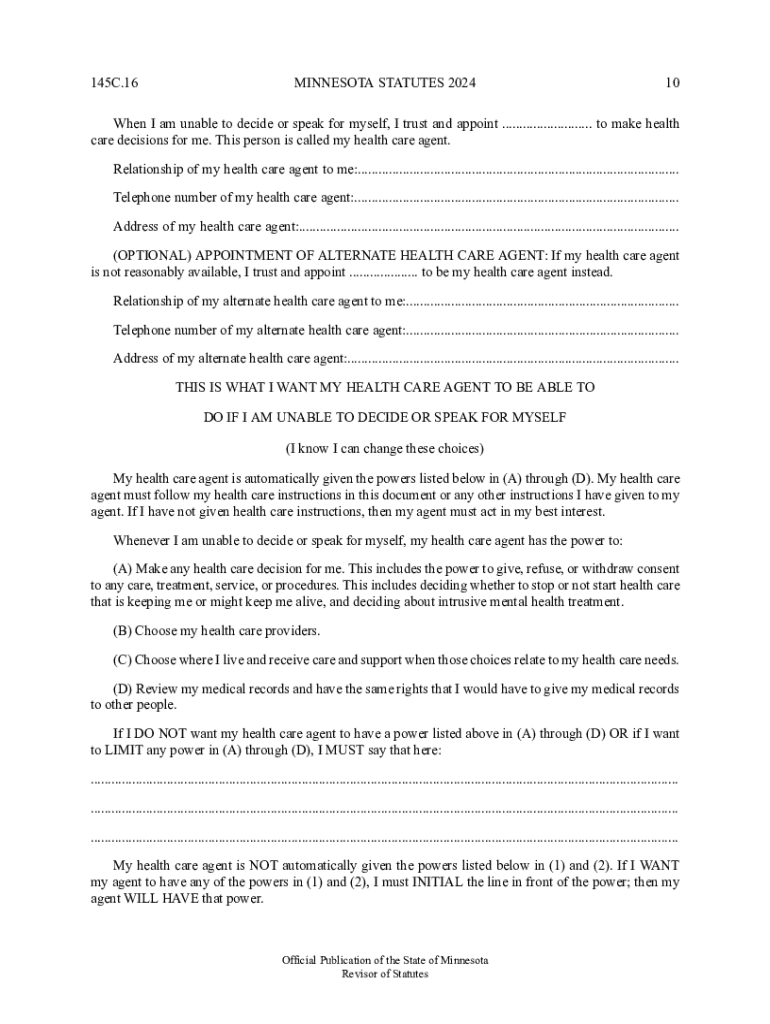
The Health Care Directive - Minnesota Attorney General is a legal document that lets individuals appoint a health care agent to make medical decisions on their behalf if they are unable to do so. It combines elements of a living will and a durable power of attorney for health care. This comprehensive directive allows for specifying health care preferences, ensuring that the person’s medical treatment choices are respected even if they cannot communicate them.
Key Elements of the Health Care Directive
When drafting the Health Care Directive, several elements must be included to ensure it is comprehensive:
- Appointment of Health Care Agent: This section names the individual or individuals who will have the authority to make medical decisions for the principal.
- Instructions and Preferences: Specific preferences regarding medical treatments and interventions, including life-sustaining measures, should be clearly outlined.
- End-of-Life Decisions: Details regarding the individual's wishes in situations where they face terminal illness or severe disability.
- Legal Formalities: The directive must be signed in the presence of witnesses or a notary to validate it.
How to Use the Health Care Directive
Using the Health Care Directive involves several logistical steps:
- Discussion with Agent: It's essential to discuss medical wishes and the scope of decision-making powers with the appointed health care agent.
- Completing the Document: Fill out the directive accurately, ensuring all sections are complete and preferences are clearly stated.
- Legal Verification: Have the document witnessed or notarized as per Minnesota state requirements to ensure legal standing.
Steps to Complete the Health Care Directive
Completing the Health Care Directive involves several crucial steps:
- Obtain the Form: Access the form from trusted sources such as the Minnesota Attorney General's website.
- Fill in Personal Information: Provide detailed information about the person creating the directive and the appointed agents.
- Articulate Medical Preferences: Clearly state any specific treatments or interventions preferred or declined.
- Review and Finalize: Double-check the document for any errors or omissions before signing.
- Sign and Witness: Ensure the document is signed and witnessed according to state laws to finalize its legality.
Legal Use of the Health Care Directive
The Health Care Directive - Minnesota Attorney General is used legally to ensure that an individual's medical wishes are respected:
- Power of Attorney: Grants the health care agent authority to make decisions if the principal is incapacitated.
- Living Will Provisions: Assures compliance with end-of-life decisions and treatment preferences.
Who Typically Uses the Health Care Directive
This directive is generally used by:
- Adults: Individuals over 18 who wish to control future medical decisions.
- Those with Chronic Conditions: People with ongoing health issues who are concerned about future incapacity.
- Elderly Individuals: Older adults who want to ensure their medical preferences are honored.


State-Specific Rules for the Directive
Minnesota has specific rules guiding the creation and use of the Health Care Directive:
- Witnessing Requirements: Minnesota law requires the directive to be witnessed by two adults or notarized.
- Revocation: The principal can revoke the directive at any time while competent.
- State Recognition: While designed for Minnesota, checking if it’s recognized by other states is crucial when residing or receiving care elsewhere.
Examples of Using the Health Care Directive
Practical scenarios illustrate the use of the directive:
- Incapacity Due to Surgery: A person undergoing surgery may use the directive to delegate decision-making while under anesthesia.
- Advanced Dementia Diagnosis: An individual diagnosed with dementia could use the directive to ensure their end-of-life care preferences are adhered to.
- Emergency Medical Situations: Ensures that emergency care aligns with the patient’s specified preferences in critical situations.
Important Terms Related to the Directive
Understanding key terms is crucial for effective use:
- Principal: The individual executing the directive.
- Health Care Agent: The appointed decision-maker in medical matters if the principal is incapacitated.
- Attending Physician: A doctor who may assess the principal's capacity to make medical decisions.
- Durable Power of Attorney: A document that remains in effect even if the principal becomes incapacitated.
How to Obtain the Health Care Directive
The directive can be obtained through:
- Online Resources: The Minnesota Attorney General's website provides downloadable versions.
- Legal Aid Organizations: Many organizations offer forms and guidance on completing them.
- Health Care Facilities: Hospitals and clinics may provide forms as part of their patient admission processes.




