







Definition & Meaning
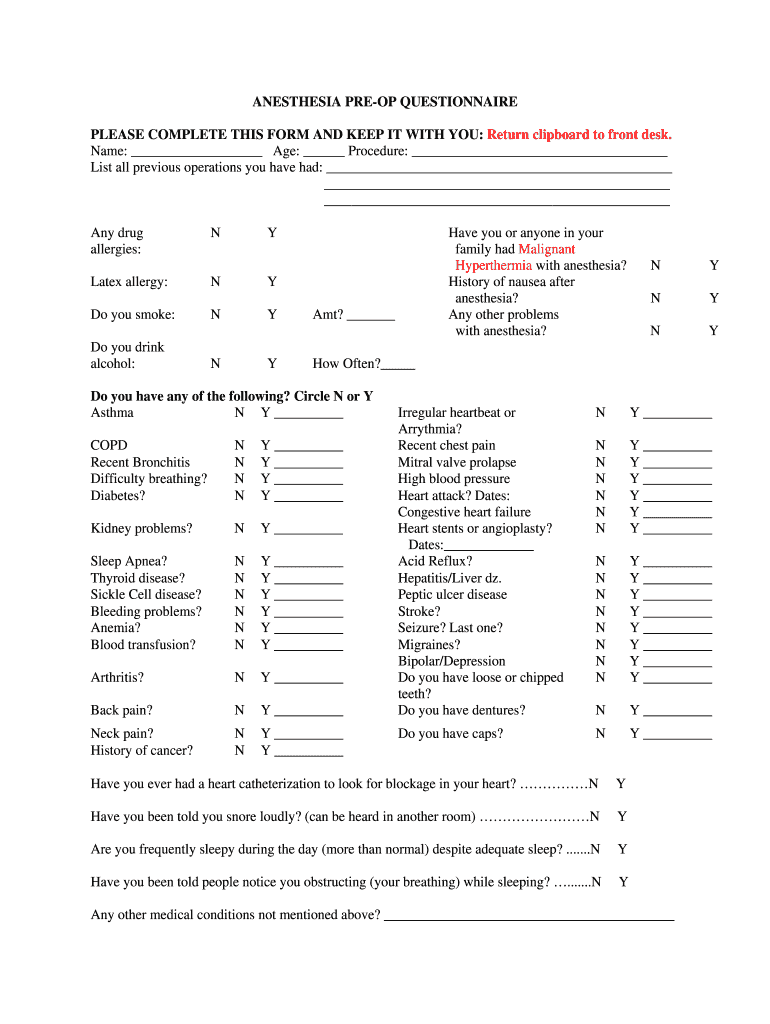
The Anesthesia Pre-Op Questionnaire is a critical document used in preparing patients for anesthesia prior to surgery. It gathers comprehensive medical history and essential personal information to assess any potential risks associated with anesthesia administration. The questionnaire includes sections that delve into personal details, past surgical experiences, allergies, lifestyle habits, family history—including any anesthesia-related issues—and medical conditions that could impact anesthesia safety.
Key Elements of the Anesthesia Pre-Op Questionnaire
The questionnaire features several key elements that ensure a thorough risk assessment. These include:
- Personal Information: Captures details such as name, age, weight, and contact information.
- Medical History: Inquires about previous surgeries and associated anesthesia experiences.
- Allergies: Documents any known allergies, particularly medication-related.
- Lifestyle Habits: Assesses smoking and alcohol consumption, which might influence anesthesia.
- Family History: Seeks information on family anesthesia-related complications.
- Specific Medical Conditions: Evaluates conditions like asthma, diabetes, or heart disease that could affect anesthesia.
How to Use the Anesthesia Pre-Op Questionnaire
Healthcare providers and patients use this questionnaire as a preparatory tool. Here’s how it can be effectively utilized:
- Patient Completes the Questionnaire: The patient fills out the document with detailed and accurate information.
- Review by Healthcare Professionals: The completed form is reviewed by anesthesiologists to identify potential risks.
- Clinical Assessment: Information is used alongside clinical evaluations to tailor anesthesia plans.
- Discussion with Patient: Any concerns or special instructions are communicated to the patient pre-surgery.
Steps to Complete the Anesthesia Pre-Op Questionnaire
Filling out the questionnaire requires careful attention and completeness to ensure patient safety. Follow these steps:
- Provide Personal Details: Complete the section with basic information including contact data.
- Detail Past Medical History: List all previous surgeries and any complications experienced.
- List Allergies: Include all known allergies, focusing on medication reactions.
- Disclose Lifestyle Habits: Inform about smoking and alcohol use.
- Family Anesthesia History: Note if immediate family members have had anesthesia issues.
- Report Medical Conditions: Indicate any chronic conditions like hypertension or breathing disorders.
Why Use the Anesthesia Pre-Op Questionnaire
The questionnaire is essential for minimizing the risks associated with anesthesia. Healthcare teams rely on the information to:
- Enhance Safety: By identifying potential complications early.
- Personalize Anesthetic Care: Tailoring plans to individual risk profiles.
- Improve Outcomes: Reducing the incidence of anesthesia-related adverse events.
Who Typically Uses the Anesthesia Pre-Op Questionnaire
This form is primarily used by:
- Patients: To communicate their health status before procedures requiring anesthesia.
- Anesthesiologists and Surgeons: To assess risks and plan suitable anesthetic treatments.
- Hospitals and Clinics: To maintain comprehensive medical records and ensure patient safety.

Required Documents
When filling out the questionnaire, patients should have:
- Medical Records: Past history of surgeries and treatments.
- List of Medications: Prescriptions and over-the-counter drugs used.
- Allergy Information: Documentations of any allergic reactions.
- Family Medical History: Information on family anesthesia experiences.
Legal Use of the Anesthesia Pre-Op Questionnaire
The legal application of this form ensures due diligence in pre-anesthetic evaluation. The details provided are used to:
- Mitigate Liability: By documenting informed consent and risk assessments.
- Ensure Compliance: With medical and legal standards of care.
- Maintain Records: For safeguarding patient history and interventions.
Digital vs. Paper Version
The Anesthesia Pre-Op Questionnaire is available in both digital and paper formats:
- Digital Version: Facilitates easy storage and sharing, with quick access via medical software.
- Paper Version: Ideal for direct handwritten entries, often used in settings without digital infrastructure.
Both versions aim to achieve comprehensive, accurate documentation of patient pre-procedure status.




