Research Credit Claims Audit Techniques Guide (RCCATG) 2026

Get Form
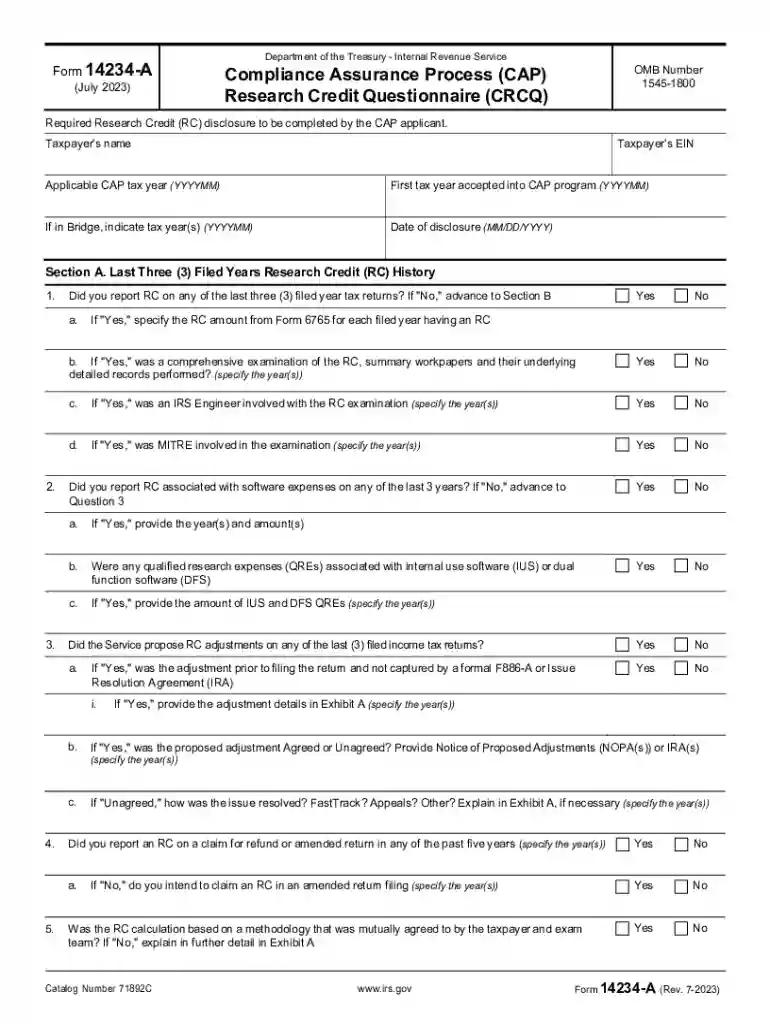
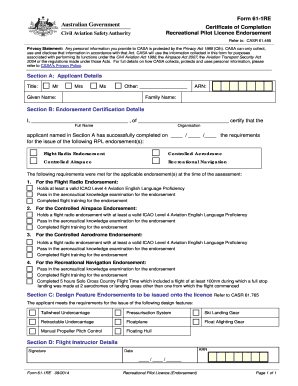
Research Credit Claims Audit Techniques Guide (RCCATG) Preview on Page 1

Here's how it works

01. Edit your form online
Type text, add images, blackout confidential details, add comments, highlights and more.

02. Sign it in a few clicks
Draw your signature, type it, upload its image, or use your mobile device as a signature pad.

03. Share your form with others
Send it via email, link, or fax. You can also download it, export it or print it out.

Definition and Purpose of Research Credit Claims Audit Techniques Guide (RCCATG)

The Research Credit Claims Audit Techniques Guide (RCCATG) is an essential resource provided by the IRS. It serves as a comprehensive manual that outlines the methodologies and procedures used by auditors when assessing claims for the Research Credit. This guide is specifically designed to streamline the audit process, ensuring that it is both thorough and consistent across multiple cases. It offers insights into the legal and practical framework of the tax credit, which is geared towards incentivizing innovation and research by businesses within the United States.

Key Elements of the RCCATG

  • Legal Framework: The guide delineates the legal basis for the Research Credit, detailing sections of the U.S. tax code that govern eligibility and compliance.
  • Audit Procedures: Step-by-step instructions are provided to standardize the review process, ensuring auditors systematically evaluate each claim.
  • Documentation Requirements: It specifies the types of documentation necessary to substantiate claims, such as detailed records of research activities and expenses.
  • Compliance Assurance: Provides guidelines for auditors to identify and address potential non-compliance, ensuring claims meet legal standards before approval.

How to Use the RCCATG Effectively

Using the RCCATG effectively involves understanding its structure and applying its guidelines when preparing or reviewing tax credit claims. Individuals and businesses can follow these steps to maximize utility:

Steps for Proper Utilization

  1. Familiarize with Content: Begin by thoroughly reading the guide to understand its scope and intent.
  2. Identify Relevant Sections: Focus on sections pertinent to your specific business activities or audit situations.
  3. Prepare Documentation: Gather and organize detailed records per the guide’s requirements to ensure compliance.
  4. Review for Compliance: Use the guide as a checklist to confirm that all eligibility criteria and documentation requirements are met before submission.

Practical Examples

  • Scenario 1: A small tech startup looking to apply for the Research Credit can use the RCCATG to determine what qualifies as a research expense, how to document it, and prepare their claim accordingly.
  • Scenario 2: An auditor using the RCCATG ensures that they apply standardized methods across all reviewed claims, maintaining consistency and fairness in evaluations.

Steps to Complete the RCCATG Process

Completing the Research Credit Claims Process

To effectively complete the RCCATG process, businesses and individuals must adhere to a structured approach:

  1. Gather Information: Collect all relevant data on research activities, expenditures, and associated documentation.
  2. Analyze Compliance: Use the RCCATG to analyze whether the collected data meets all stipulated requirements.
  3. Prepare Submission: Draft the application or audit response including all substantiating documents.
  4. Final Review: Conduct a thorough internal review to ensure all data aligns with the guide’s recommendations before submission.

IRS Guidelines for Research Credit

The IRS provides specific guidelines within the RCCATG designed to encourage adherence to legal and procedural aspects of claiming the Research Credit.

Important Considerations

  • Eligibility Criteria: Ensure that only qualified research expenses are claimed, following the definition given by the IRS.
  • Documentation: Maintain meticulous records as these serve as evidence for the claims made.
  • Audit Trail: Keep a comprehensive audit trail that can be reviewed by IRS auditors if necessary.
  • Timely Filing: Adhere to deadlines to avoid penalties, applying insights from the RCCATG to enhance the quality of submissions.

Eligibility and Disclosure Requirements

Understanding eligibility and disclosure requirements as outlined in the RCCATG is critical for ensuring that claims are legally compliant.

Key Requirements

  • Eligible Activities: Must meet specific IRS definitions, often involving development of new or improved business components.
  • Expense Documentation: Includes wages, supplies, and contract research expenses directly associated with research activities.
  • Disclosure Obligations: Full disclosure of methodologies and calculations used in claim preparations is necessary to avoid penalties.

State-Specific Rules and Variations

While the RCCATG provides federal guidelines, state-specific regulations may impact the applicability of the Research Credit.

Variations to Consider

  • State Regulations: Some states have specific rules or offer additional credits which may necessitate adjusting claims.
  • Combined Reporting: Firms operating in multiple states need to navigate varying state compliance requirements when applying the RCCATG.

Examples and Real-World Applications

The RCCATG is vital in numerous real-world scenarios, from small startups to large corporations, helping businesses adequately navigate the tax credit landscape.

Case Studies

  • Tech Corporations: These companies often lean heavily on the RCCATG to align their extensive R&D undertakings with compliant tax strategies.
  • Manufacturing Firms: Use of RCCATG assists in claiming credits through innovation in manufacturing processes and techniques.

Penalties and Compliance Issues

Failure to comply with the RCCATG guidelines can result in significant penalties, emphasizing the need for accuracy and thorough adherence to its protocols.

Consequences of Non-Compliance

  • Financial Penalties: Incorrect or fraudulent claims can lead to stiff financial penalties imposed by the IRS.
  • Audit Risks: Increased likelihood of audits for businesses that fail to meet compliance criteria outlined in the guide.
  • Reputation Damage: Potential loss of reputation and trust, affecting relationships with stakeholders and regulatory bodies.

The RCCATG, therefore, stands as a foundational document in promoting consistent and equitable treatment of research claims for tax purposes, offering actionable insights and structured guidance. Through meticulous adherence to its comprehensive provisions, businesses can effectively navigate the complexities associated with claiming research credits.

be ready to get more

Complete this form in 5 minutes or less

Get form

Got questions?

We have answers to the most popular questions from our customers. If you can't find an answer to your question, please contact us.
Contact us
Limitations and Restrictions of RD Credit Carryforward The TCJA includes a 25/25 limitation that restricts C-corporations with more than $25,000 in regular tax liability from offsetting more than 75 percent of their tax liability using the RD credit. Some states but not all permit RD credit carryforward.
Understanding the RD Tax Credit Audit Process The RD tax credit audit is an examination conducted by the IRS to review a taxpayers research tax credit claim.
Yes, under the TCJA, the 25/25 limitation restricts C-corporations with over $25,000 in regular tax liability from offsetting more than 75% of their tax liability using the RD tax credit.
If youre claiming under RDEC, the accounting treatment is quite simple, as the tax relief is considered to be profit before tax. This means when you claim RD tax credits under RDEC, the financial relief that you receive is subject to taxation.
Wages: The 80% Rule for Qualified Employees Under this rule, if an employee spends 80% or more of their time performing qualified RD activities, the business can take 100% of that employees wages as a qualified research expense (QRE) for RD credit purposes.

Security and compliance

At DocHub, your data security is our priority. We follow HIPAA, SOC2, GDPR, and other standards, so you can work on your documents with confidence.
Learn more
ccpa2
pci-dss
gdpr-compliance
hipaa
soc-compliance
be ready to get more

Complete this form in 5 minutes or less

Get form

People also ask

The consistency rule is designed to insure that there is an accurate determination of the relative increase in qualified research expenses over the amount typically spent by the taxpayer relative to its gross receipts.
The most commonly known application of the Substantially All rule is related to wages. Under this rule, if an employee spends 80% or more of their time performing qualified RD activities, the business can take 100% of that employees wages as a qualified research expense (QRE) for RD credit purposes.

Related links