




01. Edit your australia residential tenancy online
Type text, add images, blackout confidential details, add comments, highlights and more.

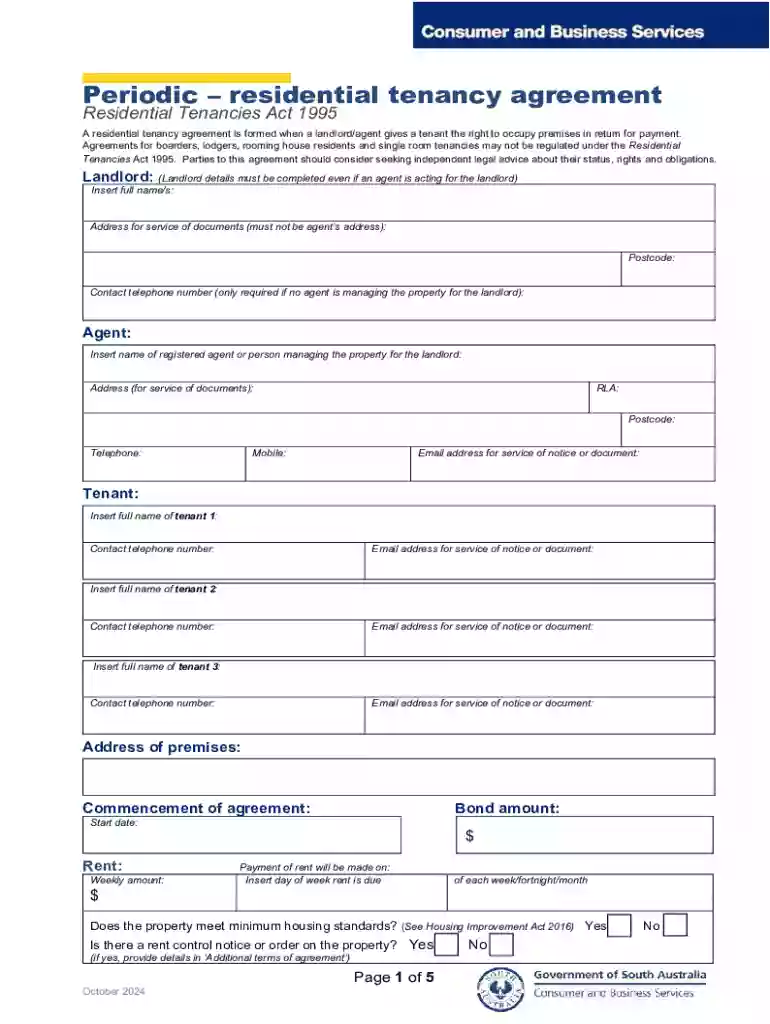
Type text, add images, blackout confidential details, add comments, highlights and more.

Draw your signature, type it, upload its image, or use your mobile device as a signature pad.

Send it via email, link, or fax. You can also download it, export it or print it out.
A periodic residential tenancy agreement is a legal contract between a landlord and tenant, outlining the terms of a rental arrangement without a fixed end date. This type of agreement typically continues on a month-to-month basis, automatically renewing until either party decides to terminate it. Periodic agreements provide flexibility for both landlords and tenants, allowing either to end the tenancy with proper notice. As opposed to fixed-term leases, which specify an end date, periodic agreements are often used when parties prefer the option of continuing or ending the lease without renegotiating the terms. Understanding this form is essential for managing expectations and responsibilities in a tenancy relationship, especially in jurisdictions with specific regulations.
Utilizing a periodic residential tenancy agreement effectively involves several steps to ensure that both parties understand their obligations. Initially, both the landlord and tenant should thoroughly read and comprehend the agreement terms, which include rent amount, payment schedule, and maintenance responsibilities. This agreement should be filled out with accurate information about the tenant's identity and contact details, and similar details for the landlord. Each party needs to sign the agreement to confirm their acceptance of its terms. Ensuring that this documentation is completed accurately can prevent legal disputes. It's also advisable for both parties to retain a copy of the signed agreement for future reference.
The periodic residential tenancy agreement includes several core elements that define the terms of tenancy. Key components include:
Each element must be carefully crafted to ensure fairness and legal compliance while safeguarding the interests of both parties. Having a clear understanding of these elements helps avoid misunderstandings and facilitates smooth tenancy management.
Understanding the terminology used in a periodic residential tenancy agreement is crucial for effective execution. Some critical terms include:
Familiarity with these terms helps in grasping the finer points of the agreement and enhances effective communication between landlords and tenants.
Compliance with legal standards is imperative when dealing with periodic residential tenancy agreements. Ensure the agreement adheres to tenancy laws applicable in the property's location. In the United States, these laws can vary significantly from state to state, affecting aspects like required notice periods and maximum allowable security deposit amounts. Consulting legal counsel or a local housing authority can provide valuable guidance to ensure that an agreement is both fair and compliant with regional regulations, thereby reducing the risk of legal disputes.
Periodic residential tenancy agreements are commonly used by landlords and property managers who require flexibility in managing their rental properties. Tenants who are uncertain about their long-term housing plans, such as students or individuals in transitional periods, may also prefer this type of agreement. Additionally, landlords managing properties in highly dynamic markets, where long-term tenant stability is uncertain, may opt for periodic tenancies as they allow adjustments to rental terms in response to market changes.


In the U.S., state-specific rules significantly influence periodic residential tenancy agreements. For instance, California requires a minimum 30-day notice for terminating a month-to-month tenancy, whereas New York mandates more extended notice periods depending on the tenant's duration of residency. Some states have detailed requirements regarding rent increases or tenant eviction processes, affecting how landlords and tenants can manage their agreements. Understanding these specific rules is crucial for ensuring compliance and avoiding disputes, making it beneficial to consult state laws or a legal advisor familiar with local regulations.
Completing a periodic residential tenancy agreement involves several critical steps:
Following these steps helps ensure the agreement is both comprehensive and legally acceptable, supporting a clear and mutually beneficial rental relationship.
We've got more versions of the australia residential tenancy form. Select the right australia residential tenancy version from the list and start editing it straight away!
At DocHub, your data security is our priority. We follow HIPAA, SOC2, GDPR, and other standards, so you can work on your documents with confidence.




A month-to-month tenancy is a periodic tenancy that does not have an expiration date and thus runs for an indefinite time.
A periodic tenancy is a tenancy that continues weekly or monthly with no specified end date. To end a periodic tenancy (for example, a month-to-month agreement)Read more


