Definition & Meaning
A Certificate of Stillbirth (Fetal Death) serves as an official document to record the birth and death of a fetus that has died in utero after a certain point in the gestation period, typically beyond the 20th week. This document is vital for legal, medical, and personal reasons, as it provides an official record of the stillbirth, ensuring that it is accounted for in vital statistics. The certificate includes essential details about the fetus, such as the gestational age and cause of death, if known. Understanding its meaning is important for anyone involved in registering a stillbirth, as it plays a critical role in acknowledging and documenting the loss.
How to Use the Certificate of Stillbirth (Fetal Death)
The Certificate of Stillbirth (Fetal Death) is primarily used by parents and medical professionals to officially document the event of a stillbirth. This document can be necessary for various administrative processes, such as arranging a burial or cremation. In practical terms, you would present this certificate to relevant entities, like funeral homes or government offices, to access related services or benefits. Parents might also use the certificate to apply for any potential assistance programs that are available in their state. Each use requires careful handling of this sensitive document, and users should ensure all information is accurately recorded.
Key Elements of the Certificate of Stillbirth (Fetal Death)
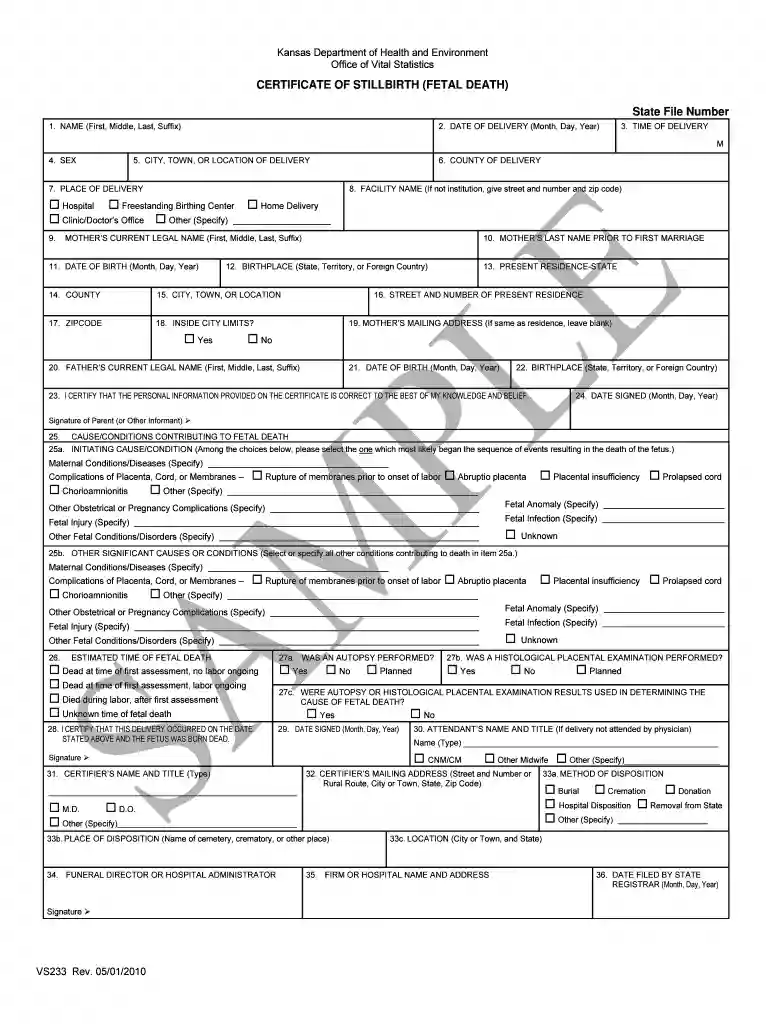
The Certificate of Stillbirth (Fetal Death) includes several key elements that must be correctly filled out:
- Fetal Information: Includes the gestational age at the time of stillbirth, fetal sex, and weight.
- Parental Information: Details about the mother and father, including names, dates of birth, and addresses.
- Medical Details: Information about the delivery and any medical history or conditions relevant to the stillbirth.
- Cause of Fetal Death: Documentation about any known causes or contributing factors to the fetal death, as determined by medical analysis.
- Certifier’s Information: Details about the medical professional or certifier who has authenticated the occurrence of the stillbirth.
How to Obtain the Certificate of Stillbirth (Fetal Death)
Obtaining a Certificate of Stillbirth (Fetal Death) typically involves contacting the vital records office in the state where the stillbirth occurred. Here is a general procedure to follow:
- Contact Local Office: Reach out to the state's department of health or vital records.
- Submit an Application: Fill out and submit an application form, which usually requires identification and a fee.
- Provide Necessary Information: Supply detailed information about the stillbirth event, such as the date, location, and medical circumstances.
- Wait for Processing: The processing time can vary; expect several days to weeks depending on the state's procedures.
- Receive the Certificate: Once processed, the certificate will be mailed to the applicant, often with options for expedited shipping if required.
Steps to Complete the Certificate of Stillbirth (Fetal Death)
Completing the Certificate of Stillbirth (Fetal Death) involves a methodical approach to ensure accuracy and completeness:
- Gather Information: Collect all necessary information about the fetus, parents, and delivery.
- Fill Out Personal Data: Input accurate details about the mother and father, including full names and dates of birth.
- Provide Medical Details: Include pertinent medical information, ensured through collaboration with healthcare providers.
- Specify Cause of Death: Document any medical determinations regarding the cause or contributing factors to the fetal death.
- Certification by Medical Professional: Have a qualified healthcare provider certify the document by signing it, confirming its accuracy.
- Submit the Form: Send the completed form to the relevant state department for registration and record-keeping.
Legal Use of the Certificate of Stillbirth (Fetal Death)
The legal use of a Certificate of Stillbirth (Fetal Death) underscores its importance. It is recognized by state authorities as the official documentation of a stillbirth and may be required for:
- Arranging Memorial Services: Mandated by funeral homes to proceed with burials or cremations.
- Insurance Claims: Necessary for any parental insurance claims related to pregnancy and childbirth.
- State Assistance Programs: Proof required to access certain supports or benefits offered to parents in the wake of a stillbirth.
- Vital Records: Contributing to state vital records for demographic and healthcare planning.
State-Specific Rules for the Certificate of Stillbirth (Fetal Death)
State-specific rules greatly influence how the Certificate of Stillbirth (Fetal Death) is issued and used:
- Gestational Age Requirements: Varies from state to state, generally recognized after 20 weeks of gestation.
- Filing Deadlines: Each state may have different time frames for filing the certificate post-incident.
- Fees and Access: The cost and access level to the certificate may differ, with some states offering reduced fees for grieving parents.
- Required Documentation: Additional documentation or proof may be needed to process the certificate, depending on state regulations.
- Procedural Variations: States might have unique procedures for submitting and obtaining the certificate, so localized information is critical.
Who Typically Uses the Certificate of Stillbirth (Fetal Death)
The Certificate of Stillbirth (Fetal Death) is utilized by a diverse group of people and entities:
- Parents: For legal acknowledgment and closure, as well as for any benefit claims.
- Healthcare Providers: To maintain accurate records for medical and statistical purposes.
- Vital Records Offices: To ensure proper documentation and inclusion in state population statistics.
- Funeral Service Providers: To arrange proper final rituals in compliance with legal requirements.
Ensuring that only authorized and relevant individuals handle this sensitive document is crucial for maintaining privacy and respect for the families involved.

Software Compatibility and Document Workflow Integration
Digitalization has enabled applications like DocHub to streamline the handling of sensitive documents like the Certificate of Stillbirth (Fetal Death). While this particular certificate is typically managed in paper form given its sensitive nature, digital platforms can assist in related tasks through:
- Secure Document Storage: Ensuring sensitive documents are securely stored and accessed, maintaining confidentiality.
- Collaborative Editing: Utilizing digital tools for any supporting documentation that requires collaborative input.
- Signature Collection: Securely collecting electronic signatures or authorizations for associated documents through encrypted methods.
- Seamless Integration: Platforms like DocHub ensure compatibility with tools such as Google Workspace, enhancing the efficiency of document handling and sharing.
The integration of such technologies can provide efficiency, security, and ease of management, supporting a smoother process for those involved in sensitive documentation.