
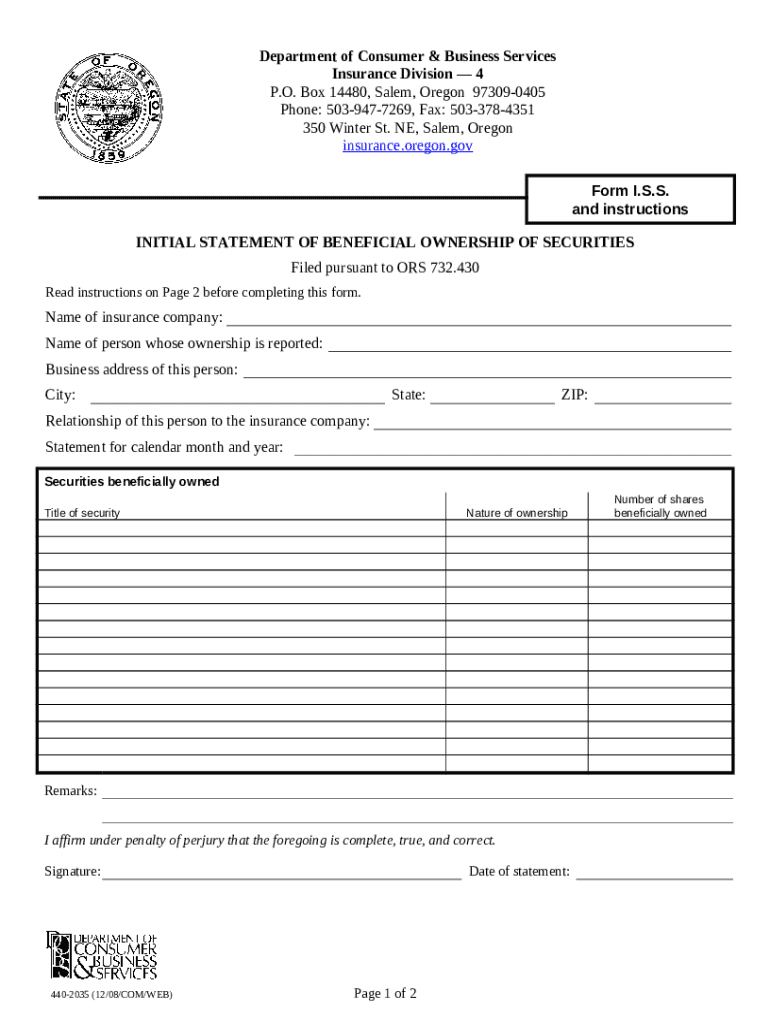







Definition and Purpose of the Declaration by Registered Holder Beneficial Owner of Shares
The Declaration by Registered Holder Beneficial Owner of Shares is a legal document that establishes the relationship between registered holders and beneficial owners concerning share ownership. This document clarifies who holds the ownership rights and who possesses the beneficial interest in the shares. Such distinctions are crucial in legal and financial contexts, where the rights to dividends, voting, and transferability hinge upon beneficial ownership rather than merely registered ownership. Beneficial owners enjoy the economic benefits of the shares, while the registered holders have their names on the corporate books.
Essential Elements of the Declaration by Registered Holder Beneficial Owner of Shares
The key components of the Declaration by Registered Holder Beneficial Owner of Shares involve several critical sections:
- Identifying Information: This includes the names and contact details of both the registered holder and the beneficial owner. Accurate identification is crucial for transparency and compliance.
- Description of Shares: Detailed information about the shares, such as the number, type, and issuer, ensures clarity.
- Statement of Beneficial Ownership: A declaration by the registered holder acknowledging the beneficial owner's rights.
- Consent and Agreement Terms: Conditions under which both parties agree to the declaration's terms, including rights to dividends and voting.
How to Use the Declaration by Registered Holder Beneficial Owner of Shares
To utilize this form effectively:
- Gather Necessary Information: Collect all required details of the registered holder and beneficial owner, including essential share information.
- Review Terms and Conditions: Both parties should understand their rights and obligations as stipulated in the document.
- Draft the Declaration: Utilize legal expertise to ensure the format and language align with legal standards.
- Sign and Notarize: Obtain necessary signatures and notarization, if required, to validate the document legally.
- File with Relevant Entities: Submit copies to corporate entities, financial institutions, or government agencies, as applicable.
Steps to Complete the Declaration by Registered Holder Beneficial Owner of Shares
Completing the declaration involves a structured approach:
- Fill in Identification Details: Start by accurately recording the names and contact information for both parties involved.
- Detail Share Information: Provide a precise description of the shares, including their unique identifiers.
- Acknowledge Beneficial Ownership: The registered holder formally acknowledges the beneficial owner's rights.
- Agree on Terms: Ensure all parties consent to the terms of the declaration, including economic and voting rights.
- Signatures and Authentication: Secure all necessary signatures and, if required, have the document notarized.
- Submit the Declaration: Ensure the document is filed with appropriate bodies to effectuate the declaration legally.
Legal Use and Compliance
The declaration serves various legal purposes:
- Clarifying Legal Rights: It clarifies the rights of beneficial ownership, aiding in legal resolutions and ensuring compliance with corporate law.
- Tax Compliance: Accurate declarations assist in filing taxes correctly, as beneficial ownership often dictates tax responsibilities.
- Corporate Governance: This document supports robust corporate governance practices by delineating the distinction between beneficial and registered ownership.
Who Typically Uses the Declaration by Registered Holder Beneficial Owner of Shares
Several entities and individuals can benefit from this declaration:
- Corporations and Shareholders: Particularly in family-owned businesses or conglomerates where shares may have multiple layers of ownership.
- Trusts and Trustees: To establish clear beneficial ownership when shares are held in trust.
- Legal and Financial Advisors: To provide their clients with a proper framework for managing share ownership and related rights.

Important Terms and Concepts
Understanding the declaration involves familiarity with key terms:
- Beneficial Owner: The person entitled to the benefits of ownership even if the title is in another's name.
- Registered Holder: The individual or entity whose name appears on the corporation’s books as the shareholder.
- Dividends: Distributions of a company's earnings to its shareholders, typically allocated based on beneficial ownership.
- Voting Rights: The rights to vote on corporate matters, often linked to beneficial ownership rather than mere registration.
Examples and Case Studies
Real-world applications highlight the declaration's importance:
- Corporate Structures: Large corporations often separate registered and beneficial ownership to comply with regulatory requirements.
- Estate Planning: Beneficial ownership declarations are crucial in estate planning to ensure intended parties receive economic benefits.
- Tax Strategies: Recognizing beneficial ownership can optimize tax liabilities by allocating income to the correct parties.
Required Documents and Filing Methods
To complete and file the declaration:
- Required Documents: Include a copy of share certificates and identification documents for each party.
- Filing Methods: Depending on jurisdiction, filings may be conducted online, via mail, or in person, often dictated by corporate or regulatory body requirements.
Understanding and accurately completing the Declaration by Registered Holder Beneficial Owner of Shares ensure proper legal standing and compliance in shared ownership scenarios.




