Definition and Purpose of the Resident Stool Record Chart
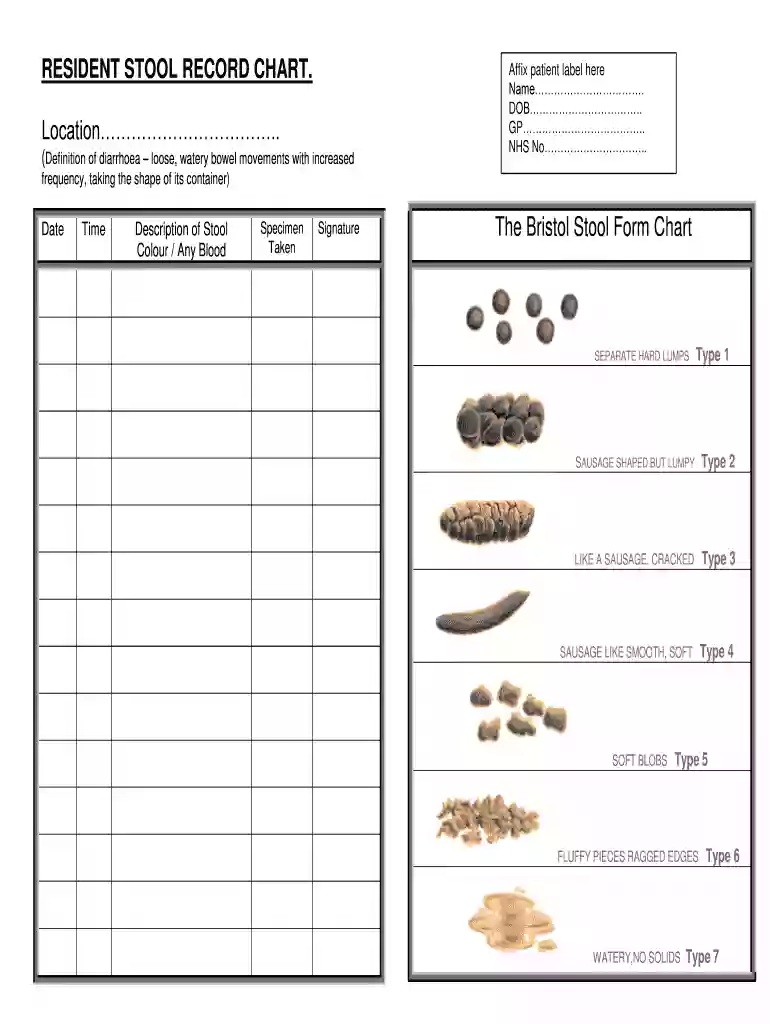
The Resident Stool Record Chart is a detailed tool used for systematically logging bowel movements, with a primary focus on identifying and classifying instances of diarrhoea. It serves to track various parameters such as patient information, date, time, stool description, color, presence of blood, and any specimen collections. This chart is particularly beneficial in medical settings for monitoring patients, aiding in diagnosis, and developing treatment plans for gastrointestinal issues.
Key Features and Sections
- Patient Information: This section records the name, age, and other identification details of the patient.
- Bowel Movement Log: Includes fields for date and time to track the frequency and timing of bowel movements.
- Stool Description: Detailed descriptions of stool based on parameters like color and consistency.
- Blood Presence Indicator: A checkbox or field to note whether blood is present in the stool, which can indicate serious conditions.
- Specimen Collection: Notes if and when a sample is collected for laboratory analysis.
- Reference to Bristol Stool Form Chart: Aligns stool types according to the Bristol Stool Form Chart, which categorizes them from hard lumps to watery consistency.
Steps to Complete the Resident Stool Record Chart
Completing the Resident Stool Record Chart involves several steps designed to ensure accurate and comprehensive data collection:
- Gather Patient Information: Accurately enter the patient’s full name, age, and any relevant identification numbers.
- Log Each Bowel Movement: Record the date and time each bowel movement occurs, ensuring no event is missed.
- Describe Stool Characteristics: Utilize the Bristol Stool Form Chart for consistency in description, noting the type, color, and any unusual features.
- Check for Blood Presence: If blood is visible, tick the appropriate box and consider immediate consultation.
- Note Specimen Collection: Record if a stool sample is collected for further testing, including the collection date and specimen number.
- Review and Update Regularly: Ensure the chart is reviewed by healthcare professionals regularly to track changes and make necessary medical decisions.
Why Healthcare Providers Use the Resident Stool Record Chart
Healthcare providers rely on the Resident Stool Record Chart to facilitate a thorough understanding of a patient’s bowel health. It is essential for:
- Diagnosing Conditions: Helps in identifying digestive disorders such as IBS, Crohn's disease, or colorectal cancer.
- Monitoring Treatment Progress: Allows tracking of responses to medications or dietary adjustments.
- Research and Studies: Provides data for clinical research and studies related to gastrointestinal health.
- Comprehensive Patient Care: Ensures that all aspects of bowel health are monitored, contributing to holistic patient care.
Who Typically Utilizes the Resident Stool Record Chart
The Resident Stool Record Chart is primarily used by healthcare professionals in various settings:
- Hospitals: To monitor patients with ongoing digestive issues or postoperative recovery related to bowel surgery.
- Nursing Homes: Assists in managing the bowel health of elderly residents.
- Outpatient Clinics: Used by gastroenterologists or primary care physicians during regular check-ups.
- Home Care Providers: Enables caregivers to maintain accurate logs for patients under home-based care.
Key Elements of the Resident Stool Record Chart
A comprehensive Resident Stool Record Chart encompasses the following critical elements:
- Patient Identification Details: Ensures correct association of records with the patient.
- Bowel Relieving Frequency and Timing: Tracks consistency in bowel routine.
- Stool Characteristics: Provides valuable insight into potential digestive issues.
- Presence of Blood: An important marker for potential serious gastrointestinal conditions.
- Specimen Collection and Analysis: Facilitates further laboratory study if needed.
- Bristol Stool Form Chart Reference: Standardizes stool descriptions for consistent reporting.
How to Obtain the Resident Stool Record Chart
Accessing a Resident Stool Record Chart can be done through several channels:
- Healthcare Facilities: Available at hospitals, clinics, and nursing homes for in-house use.
- Online Medical Resources: Many medical websites offer downloadable versions of the chart for professional use.
- Healthcare Applications: Some digital health apps include customizable stool record charts for patient monitoring.
Important Terms Related to the Chart
Understanding key terminology related to the Resident Stool Record Chart is crucial:
- Diarrhoea: Frequent and watery bowel movements, a primary focus of the chart.
- Bristol Stool Form Chart: A scale used to classify stool forms into seven types based on consistency.
- Specimen Collection: The process of collecting stool samples for laboratory examination.
- Gastrointestinal Health: Overall health and function of the digestive tract, which the chart aims to monitor and improve.