






Definition and Meaning
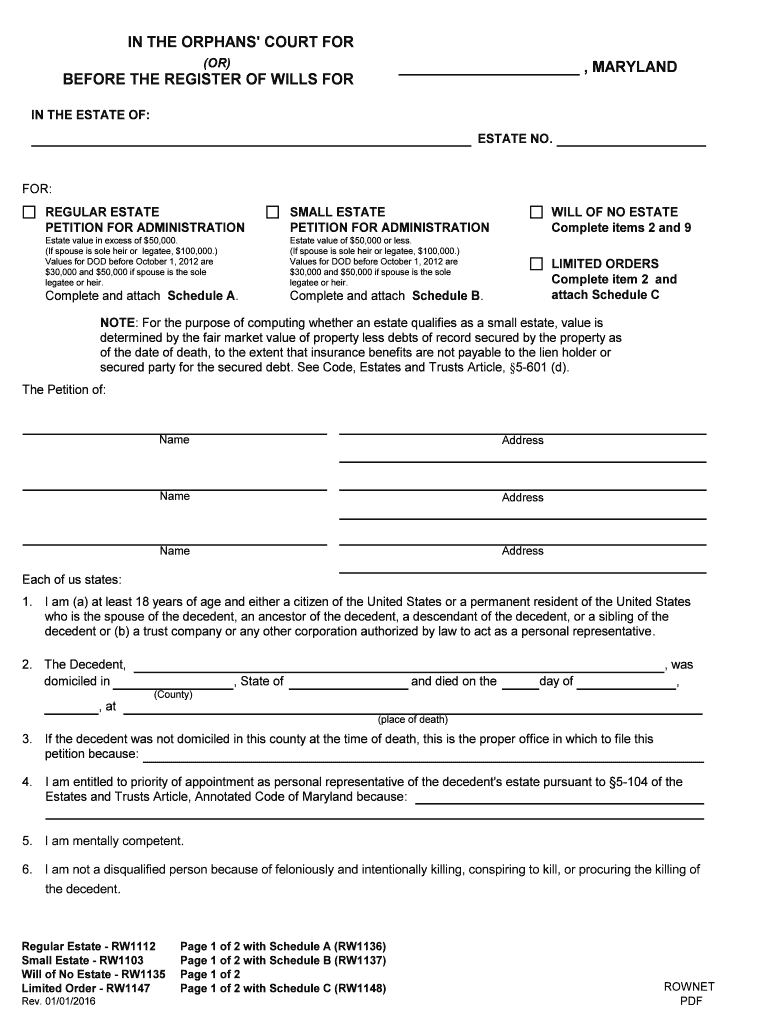
The Maryland Small Estate Affidavit is a legal document used in the administration of smaller estates in Maryland without the need for full probate proceedings. Specifically designed to streamline the process for estates valued below a certain threshold, this affidavit allows a personal representative to manage and distribute the decedent's assets without extensive court involvement.
- Typically considered for estates with a value under $50,000, or $100,000 if the spouse is the sole heir.
- It simplifies the transfer of assets to beneficiaries, reducing both time and legal expenses.
- Designed to provide a more efficient process for handling less complex estate matters.
Who Typically Uses the Maryland Small Estate Affidavit
Individuals who find themselves acting as personal representatives for a decedent's estate most commonly use this affidavit. These representatives are often family members or close associates of the deceased who need to handle the distribution of the estate's assets.
- Personal representatives, such as executors or administrators designated in a will.
- Surviving family members, particularly those in straightforward family situations like a surviving spouse.
- Legal professionals who assist in the management and closure of smaller estates.


How to Obtain the Maryland Small Estate Affidavit
To obtain the Maryland Small Estate Affidavit, specific steps must be followed to ensure compliance with state requirements.
-
Visit the Maryland Courts Website: The official website of the Maryland Judiciary offers the necessary forms for download.
-
Request from the Orphans' Court: The affidavit can be obtained directly from the Orphans' Court within the county where the decedent resided.
-
Engage a Legal Professional: Attorneys specializing in estate planning and probate can assist in obtaining and completing the affidavit.
-
Check Local Court Services: Some counties may offer legal self-help services where individuals can acquire necessary forms and guidance.
Steps to Complete the Maryland Small Estate Affidavit
Completing the Maryland Small Estate Affidavit involves several detailed steps to ensure the accuracy and legality of the document.
-
Gather Information: Collect necessary details about the decedent, including death certificates, asset inventories, and valuations.
-
Fill in the Affidavit Form:
- Enter personal information about the decedent.
- List assets, including bank accounts, vehicles, and real property, along with their values.
- Detail any existing debts or obligations tied to the estate.
-
Affirm Eligibility: Declare your eligibility as a personal representative to ensure you are authorized to act on behalf of the estate.
-
Legalizing the Document: Notarization is often required to affirm the validity of the completed affidavit.
-
Submit to Orphans' Court: File the completed affidavit with the relevant Orphans’ Court which will review and approve the document if all conditions are met.
Key Elements of the Maryland Small Estate Affidavit
Understanding the key elements of the affidavit is essential for ensuring it is completed accurately.
- Decedent Information: Full name, address, and date of death.
- Affiant’s Information: Details of the person completing the affidavit, including address and contact information.
- Estate Inventory: A comprehensive list of the decedent’s assets.
- Liabilities: Any debts or claims against the estate that must be addressed during distribution.
- Signature and Notarization: Requirements for signing and possibly notarizing the affidavit.
Important Terms Related to the Maryland Small Estate Affidavit
Familiarity with key terminology is important to navigate the process effectively.
- Decedent: The person who has passed away, leaving behind the estate.
- Affiant: The individual completing the affidavit, typically the personal representative.
- Orphans' Court: The court that oversees the administration of estates within Maryland.
- Estate Inventory: Documentation detailing all assets and liabilities of the decedent.
Legal Use of the Maryland Small Estate Affidavit
The legal use of this affidavit facilitates a streamlined process for estate administration under Maryland law.
- Utilized within the confines of Maryland's probate laws to process estates valued under the designated threshold for small estates.
- Allows for straightforward transfer and distribution of assets to named beneficiaries with reduced paperwork and legal hurdles.
- Offers protection and legal recognition for personal representatives within their scope of duties.
State-Specific Rules for the Maryland Small Estate Affidavit
The effective use of the affidavit requires compliance with Maryland's legal requirements specific to estate size and administration procedures.
- Maryland sets specific thresholds for what constitutes a small estate and requires adherence to these limits for affidavit use.
- The process is governed primarily by state statutes found in the Maryland Estates and Trusts Article.
- State law requires that the affidavit be filed in the county where the decedent was domiciled at the time of death.
In-depth understanding and adherence to these guidelines ensure the lawful handling of smaller estate matters in Maryland, providing utility and efficacy for personal representatives and beneficiaries alike.