
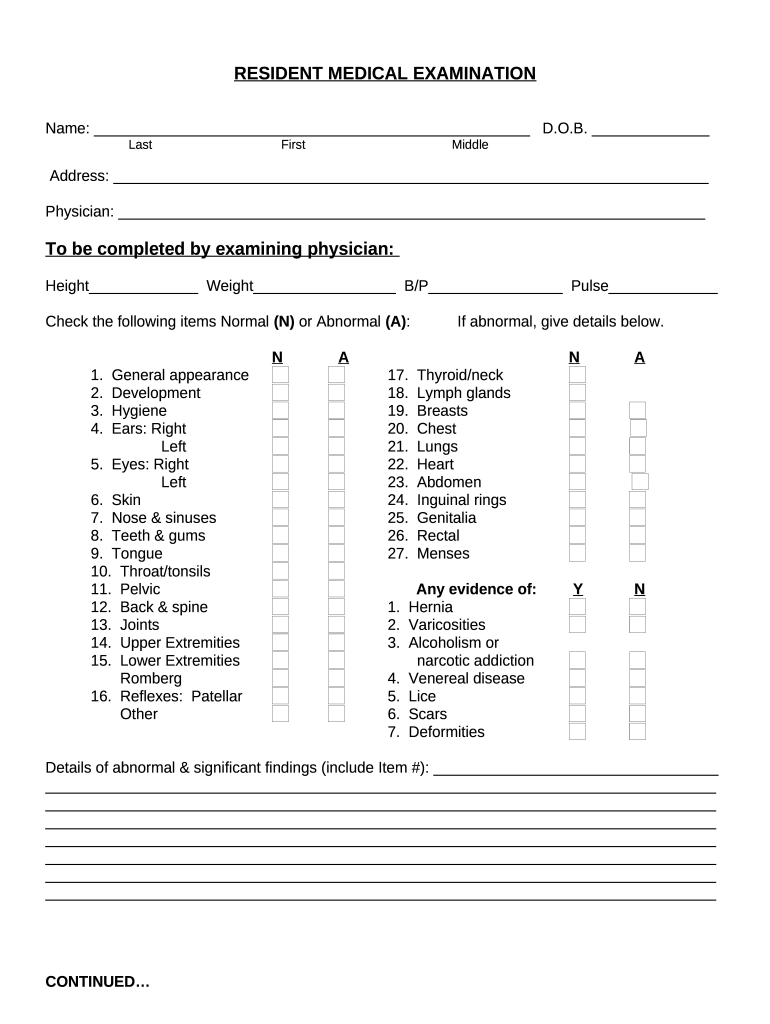







Definition and Meaning of the ANNUAL RESIDENT MEDICAL EXAMINATION
The Annual Resident Medical Examination is a comprehensive evaluation designed to assess the overall health and well-being of residents in medical boarding facilities, nursing homes, or similar settings. It helps in identifying any changes in health status, documenting medical history, and advising on any necessary treatments or interventions needed for maintaining optimal health. The form is essential for ensuring that the residents are free from communicable diseases and to document any ongoing health concerns that need attention.
How to Use the ANNUAL RESIDENT MEDICAL EXAMINATION Form
The Annual Resident Medical Examination form is designed for easy completion by healthcare professionals. Initially, the healthcare provider collects the individual's personal and contact information. Following this, a thorough examination is conducted covering physical measurements, medical history review, and assessment of current health conditions. Healthcare providers document the results of the examination on the form, noting any notable findings or abnormalities. This thorough documentation aids in creating a reliable health record that can be referred to during future examinations or when addressing any health issues.
Key Sections of the Form
- Personal Information: Collection of name, age, gender, and contact details.
- Medical History: Documentation of past illnesses, surgeries, and any chronic conditions.
- Physical Examination Results: Includes height, weight, blood pressure, and other vital signs.
- Detailed Observations: Space for healthcare providers to record findings on various physical and mental health parameters.
How to Obtain the ANNUAL RESIDENT MEDICAL EXAMINATION Form
To obtain the Annual Resident Medical Examination form, healthcare facilities can typically download it from internal health management systems or request it from relevant health oversight bodies or licensure authorities. In many cases, these forms are provided by state health departments or available through professional medical associations that govern residential care facilities.
Steps for Obtaining
- Identify the Source: Ascertain whether your facility’s health management system has the form for download.
- Request from Authorities: Contact state health departments or relevant bodies for a standardized form.
- Digital Access: If available, download a digital version from authorized websites or platforms.
Steps to Complete the ANNUAL RESIDENT MEDICAL EXAMINATION Form
Completing the Annual Resident Medical Examination form requires careful attention to detail to ensure the accuracy and reliability of the health information recorded.
- Gather Information: Collect all personal and historical medical information of the patient.
- Conduct the Examination: Perform a comprehensive physical and mental health assessment.
- Record Results: Document the findings in each relevant section of the form.
- Review and Sign: Healthcare provider should review the completed form for accuracy and sign it, confirming that all information is correct.
Considerations During Completion
- Ensure all fields are adequately filled to avoid information gaps.
- Discuss any notable health findings with the resident or their representatives.
- Confirm the resident’s understanding and consent where necessary.
Why Should You Use the ANNUAL RESIDENT MEDICAL EXAMINATION
Using the Annual Resident Medical Examination is critical for maintaining continuity in healthcare for residents. It provides multiple benefits, such as early detection of potential health issues, effective monitoring of chronic conditions, and ensuring compliance with health standards set by overseeing bodies.
Benefits
- Health Monitoring: Helps in tracking health changes and needs over time.
- Compliance: Meets regulatory requirements for resident health assessments.
- Preventive Care: Serves as an opportunity for healthcare providers to offer preventative advice and interventions.
Who Typically Uses the ANNUAL RESIDENT MEDICAL EXAMINATION
The form is primarily utilized by healthcare providers, including doctors and nurses in residential care settings. It is also an essential tool for facility managers and health administrators responsible for ensuring that all residents receive their annual examinations.


Typical Users
- Healthcare Providers: Conduct assessments and record findings.
- Facility Administrators: Oversee the scheduling and completion of examinations.
- State Regulatory Bodies: May review the examinations for compliance and auditing purposes.
Key Elements of the ANNUAL RESIDENT MEDICAL EXAMINATION
The examination form is structured to ensure a comprehensive health review and includes several key components.
- Identification and Personal Data: Ensures correct attribution of health data.
- Detailed Medical History: Captures past illnesses, treatments, and allergies.
- Examination Findings: Documents the results of physical and health assessments.
- Healthcare Recommendations: Space to provide future health management advice and necessary treatment plans.
Legal Use of the ANNUAL RESIDENT MEDICAL EXAMINATION
The information collected on the Annual Resident Medical Examination form must be used in accordance with federal and state privacy laws, including HIPAA regulations. It ensures that resident data is safeguarded and only accessed by authorized personnel.
Legal Guidelines
- Data Protection: Healthcare providers must ensure that all data is securely stored and protected.
- Confidentiality: Resident information should only be shared with relevant healthcare workers and authorities.
- Compliance Obligations: Adherence to legal standards for maintaining and accessing medical records.
State-Specific Rules for the ANNUAL RESIDENT MEDICAL EXAMINATION
While the general structure of the form remains consistent, variations may exist based on state regulations.
Examples of Variations
- Frequency Requirements: Some states may require more frequent health assessments.
- Documentation Standards: Specifics on the level of detail required in the examination results may differ.
- Mandatory Inclusions: Certain conditions or health indicators might be prioritized based on regional health concerns.




