







Definition & Meaning
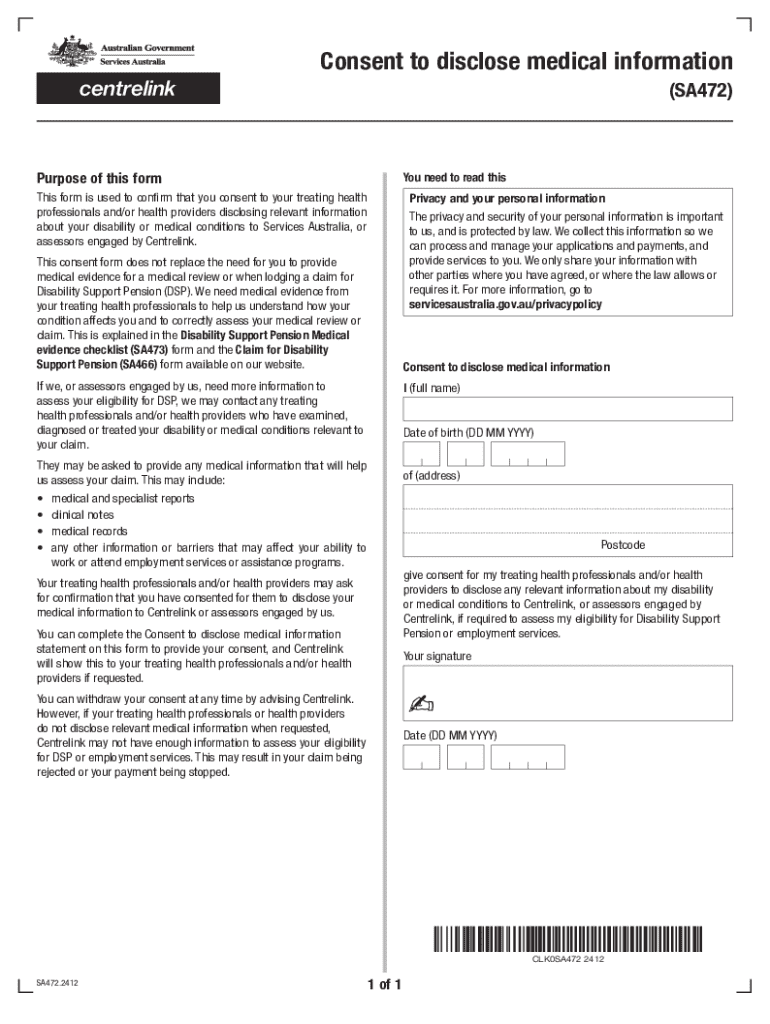
Consent to disclose medical information is a formal authorization given by an individual allowing healthcare providers to share their medical data with designated parties. This typically involves disclosing patient health information to assess eligibility for benefits such as the Disability Support Pension (DSP) or employment services. The form emphasizes the importance of privacy laws and allows individuals to have control over how their sensitive information is shared or utilized. It provides individuals with the ability to specify which information can be disclosed, thereby ensuring compliance with regulations protecting patient confidentiality.
Steps to Complete the Consent to Disclose Medical Information
Completing the consent form for disclosing medical information involves several key steps:
- Personal Information: Begin by accurately filling out your personal details, such as name, date of birth, and contact information, to properly identify the individual whose information is being disclosed.
- Details of the Receiving Party: Specify the organization or individual to whom the information should be disclosed. This could be government agencies like Services Australia or Centrelink.
- Type of Information: Clearly define the scope of medical information that the consent covers, such as medical histories, diagnoses, or specific test results.
- Purpose of Disclosure: State the reason for disclosure, for example, supporting eligibility assessment for DSP or other services.
- Duration of Consent: Indicate the period during which the consent is valid. This ensures the disclosure is limited to a specific timeline.
- Authorization: Include a signature section to provide formal consent. Ensure both the individual and any required witnesses sign and date the form.
Why Should You Consent to Disclose Medical Information
Providing consent to disclose medical information can have several advantages:
- Eligibility Verification: It assists government agencies in verifying your eligibility for benefits efficiently.
- Improved Health Coordination: Sharing information with selected parties ensures better coordination and more accurate medical treatment.
- Streamlined Processes: Speeds up the application process for disability support or employment services by allowing rapid data sharing.
- Regulatory Compliance: Ensures compliance with legal obligations for transparency and patient rights.
Consider scenarios where sharing medical data leads to timely support for disability claims or aids in coordinating care across different healthcare providers.
Key Elements of the Consent to Disclose Medical Information
Understanding the essential elements of the consent form ensures comprehensive and correct completion:
- Identification of Parties Involved: This section must specify the individual giving consent and the third parties authorized to receive the information.
- Extent of Information: Clearly outline what medical information is covered under the consent.
- Consent Terms: Describe terms and conditions under which consent is granted, including limitations or special conditions.
- Withdrawal Rights: Highlight how individuals can revoke their consent, ensuring they maintain control over their data.
Legal Use of the Consent to Disclose Medical Information
The legal framework around the consent form ensures privacy and proper use:
- Compliance with Privacy Laws: The form adheres to regulations such as HIPAA in the United States, safeguarding patient health information.
- Binding Agreement: Once signed, the consent becomes a legally binding document empowering authorized parties to use specified data.
- Revocation Procedures: Legally, individuals have the right to withdraw consent at any time, preventing further data use.
Real-world implications include situations where legal compliance prevents the misuse of disclosed data and protects individual rights.
Form Submission Methods (Online / Mail / In-Person)
Multiple submission methods ensure flexibility:
- Online Submission: Forms can often be filled and submitted electronically through secure portals, providing convenience and speed.
- Mail: For those who prefer traditional methods, the consent form can be printed and mailed to the intended recipient.
- In-Person Delivery: Personal handover of the form can be necessary when verification of identity is crucial, ensuring direct transfer to the right entity.
Consider scenarios like submitting forms electronically for faster processing versus mailing when digital options are limited.
State-Specific Rules for the Consent to Disclose Medical Information
State regulations can impact the handling of these forms:
- Variation in Laws: Different states may have varying laws regarding what constitutes valid consent and how long it remains effective.
- Special Requirements: Some states might require additional notarization or witnesses to validate the consent.
- Jurisdictional Differences: Understanding which state laws apply can affect the processing of forms and the legality of the data shared.
For example, a form consented in California may have different expiration conditions compared to one processed in Texas.
Important Terms Related to Consent to Disclose Medical Information
Being familiar with specific terminology enhances understanding:
- HIPAA: Health Insurance Portability and Accountability Act, foundational for privacy protection.
- PHI: Protected Health Information, any data that connects an individual to their health status.
- Authorization: A formal agreement allowing the use of personal health information for specified purposes.
These terms help delineate the obligations and rights of all parties involved in the data sharing process.


