01. Edit your california dmv release of liability online
Type text, add images, blackout confidential details, add comments, highlights and more.

Type text, add images, blackout confidential details, add comments, highlights and more.

Draw your signature, type it, upload its image, or use your mobile device as a signature pad.

Send dmv release of liability form via email, link, or fax. You can also download it, export it or print it out.
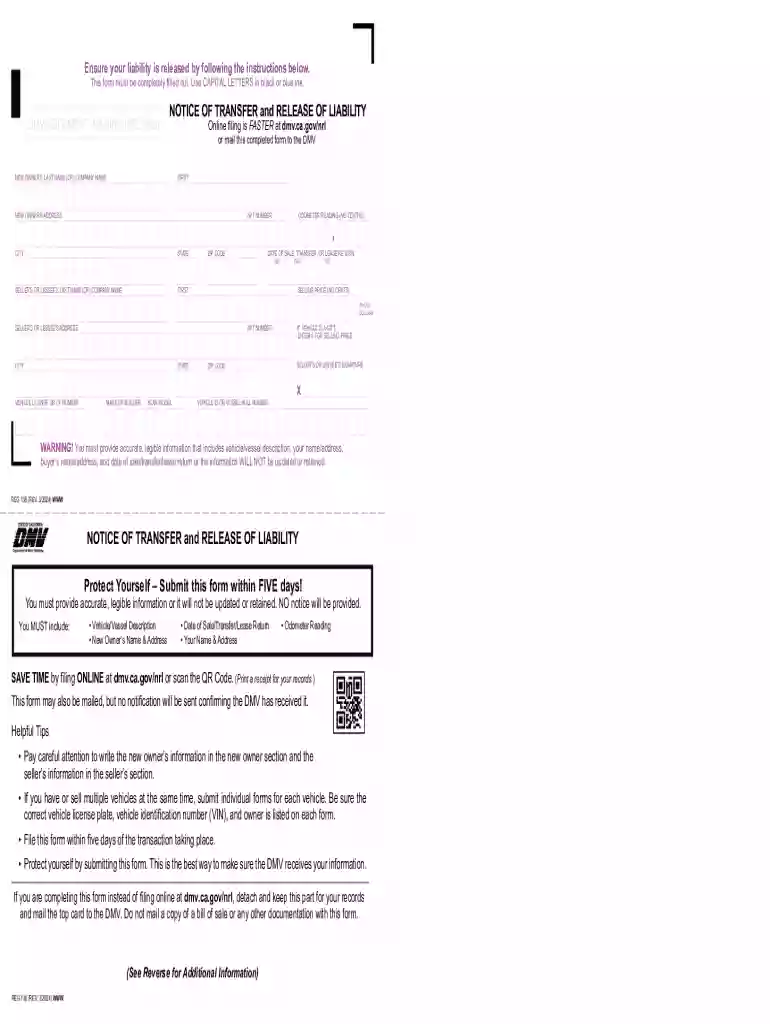
The DMV Release of Liability is a crucial form used to inform the Department of Motor Vehicles (DMV) about the transfer of ownership of a vehicle or vessel. It effectively transfers responsibility for the vehicle from the seller to the new owner, ensuring that the seller is not held liable for future incidents or obligations involving the vehicle, such as parking tickets or accidents. The document needs to be filled out accurately, capturing specific details like the date of sale, the buyer's information, and a description of the vehicle.
Gather Required Information: Before you begin, ensure you have all necessary details, including the vehicle’s identification number (VIN), the sale date, and the new owner’s contact information.
Fill Out the Form: Accurately complete all sections of the form. Be precise with the entry of data to prevent processing delays or errors.
Verify for Accuracy: Double-check all entries to ensure correctness. Errors or omissions can result in the form being rejected.
Submit the Form: Depending on the state regulations, you can submit the form online, via mail, or in person at a DMV office.
Retain a Copy: Keep a copy of the completed form for your records as proof of submission, should any future disputes arise.
Filing this form is imperative for protecting the previous owner from any liabilities post-sale. Without submitting this notice, the seller could remain accountable for incidents such as traffic violations or accidents linked to the vehicle, underlining the form’s necessity in the vehicle sale process.
Visit the DMV’s Official Website: Most DMV websites offer a downloadable version of the form. This is often the most convenient method.
In-Person Visit: Alternatively, you can collect the form at your local DMV office.
Request by Mail: Some DMVs provide the option to request the form by mail, although this method may take longer.
To submit the form, ensure you have the following:
Having these documents readily available ensures a smooth and timely submission process.
Each state may have varying rules regarding the submission of this form. Some states mandate online submission, while others allow for mail or in-person options. Furthermore, deadlines for submission can vary, often ranging from within five to thirty days post-sale. It’s essential to review specific state guidelines to ensure compliance.
This form is primarily used as a legal shield for the seller against future liabilities once a vehicle changes hands. It acts within the legal frameworks established by vehicle and vessel registration laws to officially acknowledge the transfer’s occurrence and to update the title records accordingly.
Failing to submit the DMV Release of Liability can have significant consequences for the seller. The previous owner may be held responsible for tickets or legal issues involving the vehicle until the new ownership is officially acknowledged. This could include fines or legal battles, highlighting the importance of prompt and accurate form submission.
Consider a scenario where a vehicle is sold, and the new owner incurs parking fines or is involved in an accident. If the form is submitted correctly, the seller is protected from being held accountable for these incidents. However, without the form, the seller remains at risk for any legal or financial responsibilities. This example illustrates why this process is a vital component of transferring vehicle ownership.
This form is utilized by vehicle sellers, anyone transferring ownership of a vehicle, whether private individuals, dealerships, or businesses. It's especially significant for private sales, where legal protections for sellers might otherwise not be explicitly documented.


We've got more versions of the california dmv release of liability form. Select the right california dmv release of liability version from the list and start editing it straight away!
At DocHub, your data security is our priority. We follow HIPAA, SOC2, GDPR, and other standards, so you can work on your documents with confidence.