






Definition and Meaning of Form IT-602
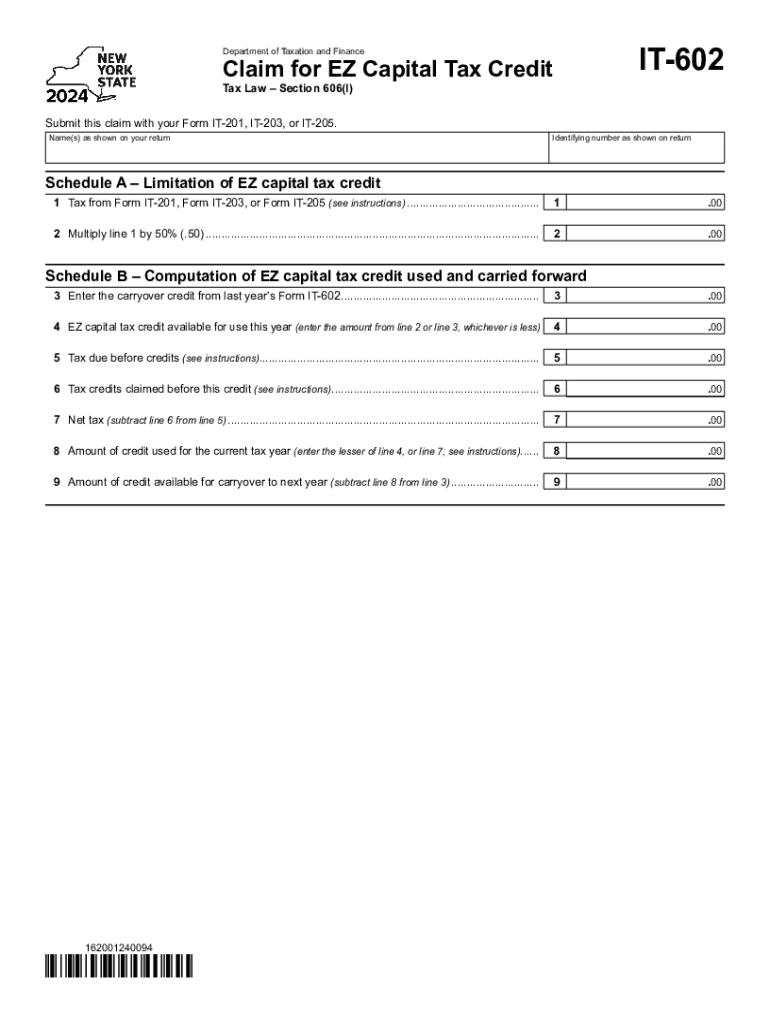
Form IT-602 is designed to facilitate claiming the EZ Capital Tax Credit under New York State tax law. This credit applies to taxpayers who have investments in designated Economic Development Zones (EZs), encouraging economic growth within those areas. The form allows taxpayers to report their investments and calculate the credit they are eligible to receive. While new claims for the EZ capital tax credit have expired, carryovers from previous years are still applicable, making it important for ongoing tax planning.
Obtaining the Form IT-602 for 2024
Taxpayers can access Form IT-602 on the New York State Department of Taxation and Finance website. You can download the form in PDF format, allowing you to complete it electronically or print and fill it out manually. Alternatively, many tax preparation software programs, such as TurboTax and QuickBooks, integrate this form into their systems, offering a convenient way to complete it digitally.
Completing the Form IT-602, Step by Step
-
Identify Eligible Investments: Gather your investment information related to Economic Development Zones, ensuring these are documented according to New York state requirements.
-
Calculate the Initial Credit: Use the provided instructions within the form to compute the initial amount of credit based on your qualifying investments.
-
Carryover Credits: Determine any carryovers from previous tax years that are still applicable. This requires a review of prior tax filings and any unused credits.
-
Fill in Required Details: Enter personal information, including your name and taxpayer identification number, along with details of the investments being claimed.
-
Attach Supporting Documents: Ensure all relevant proof of investments and prior year carryovers are attached to substantiate your claim.
-
Review and Submit: Thoroughly check the form for accuracy and completeness before submitting it with your state tax return.
Importance of Claiming the EZ Capital Tax Credit
Claiming the EZ capital tax credit can significantly reduce your state tax liability, freeing up more capital to reinvest in your business. This credit supports investments in underdeveloped regions, aligning with New York's goals to stimulate community development. By utilizing available credits and carryovers, businesses can strategically plan their finances and potentially reduce taxable income.
Typical Users of Form IT-602
The form is predominantly used by businesses and individuals who have invested in New York's Economic Development Zones. It is particularly relevant for business owners, investors, and corporations looking to optimize their tax profiles by applying available credits efficiently within their financial structure.
Key Elements in the Form IT-602
- Investment Details: Specific sections require detailed information about the types of investments made in the specified zones.
- Credit Calculations: Clear guidance is provided for calculating eligible credits, including any applicable limitations or ceilings.
- Carryover Credits: Documentation and computation of any unused credits from previous years, allowing continuity in claiming tax benefits.
State-Specific Rules and Conditions
New York's tax law outlines specific conditions for eligibility. Investment must be in designated zones and meet certain criteria to qualify for the credit. The precise calculation includes limitations based on the number of zones in which businesses are active. Taxpayers must adhere to these rules to ensure successful credit claims.
Important Deadlines for Filing
- Due Dates: For most taxpayers, Form IT-602 should be submitted alongside the New York State tax return, typically due on April 15.
- Extensions: If you file for an extension on your state tax return, ensure to also extend the filing of Form IT-602 to avoid penalties.
Required Documents and Verification
When completing Form IT-602, specific documentation proving the legitimacy of investments in economic zones is mandatory. This may include contracts, financing arrangements, or partnership agreements. Ensuring all supportive materials are in order can prevent delays in processing and ensure full compliance with tax laws.